Friday, March 04, 2011

Don't buy a Kindle or shop at Amazon!

Woman reading a Kindle on the Tube
I've just been to London for a few days to promote my Sustainable Home Renovation book, and expected to see lots of e-readers in evidence on the Tube, but instead only saw ads for them.

Imagining if I had one, I realised I would probably be using it to skim read, not properly read, books with which I wanted to familiarise myself but not actually sink deeply into - which I'd still buy for real.

But if I bought an e-reader it would not be a Kindle, since Amazon is not on balance a benign influence on the publishing trade and writers' welfare.

For example, Amazon monitors your use of the Kindle. You are being watched and your reading habits reported back to their marketing department.
Big Brother is Watching You from Orwell's 1984
Furthermore, you don't own the e-books you purchase, only the right to browse them, and Amazon has the right to withdraw them from your Kindle without compensating you if its own rights over that book change. This famously and ironically happened with Orwell's 1984 - anyone who had downloaded it found suddenly that it disappeared from their machine with no compensation.

It's as if the bookshop owner came into your house one night and took back a book you'd bought from them.

In its T&C, Section 3, which deals with "Digital Content" (such as downloaded books), Amazon says that "Unless specifically indicated otherwise, you may not sell, rent, lease, distribute, broadcast, sublicense or otherwise assign any rights to the Digital Content or any portion of it to any third party, and you may not remove any proprietary notices or labels on the Digital Content."

In other words, you are forbidden to lend or sell the book you've just "bought". You can't lend your copy of 1984 to a friend or donate it to the school jumble sale.

Moreover, you can't back up your electronic books on to any other device – which means that if your Kindle fails, or if Amazon changes its technical standard, your entire digital library will disappear (where are your audio cassettes now? but books last forever).

Amazon is bad for writers


What's more, Amazon squeezes royalty rates for writers in its deals with publishers, so the more bookshops go out of business as a result of its price squeezing, the less royalty we get even if we were to sell more books.

It also encourages the purchase of second hand copies on which we get no royalty at all.

So I don't have Amazon links on my website, because they'll buy a copy that someone is selling for 1p plus postage. Instead I let people purchase directly from me using PayPal the copies I buy from my publisher at discount, so I make substantially more per sale - although of course I recognise most people opt to buy a copy for 1p from Amazon rather than a £5 one from me.

I recently redesigned George Monbiot's website and initially put in links to Amazon so people could buy his books there. After we had a conversation about this the anti-capitalist campaigner opted to remove the links and let people buy wherever they chose - and for example support their local bookshop - surely a good idea - even if he lost sales as a result.

Come on, let's not conspire as writers against our own interests, however seductive the temptation is! And readers - think about how writers need to eat before you buy that book from Amazon!

Thursday, February 10, 2011

Hybrids is optioned for film/tv!

Boulder TV
The film & tv rights to my novel 'Hybrids' have been optioned by Dublin-based production company Boulder Media's rights holding sister company, Beholder. Am I happy? You bet!

It seems ages ago when I was so lucky that the novel won a competition to find a new children's author. First published in 2007 it is currently being reprinted with some very nice review quotes on the cover.

'Hybrids' takes place in the near future, when the nation is in the grip of a virus that causes its victims to become fused with technology, creating 'hybrids' - people neither wholly human nor machine.

Johnny (half-computer) and Kestrella (her hand is a mobile phone) unite to find Kestrella's missing mother as the Government's Gene Police hunts down hybrids, sending them to the sinister Centre for Genetic Rehabilitation. Their quest takes them to the heart of a conspiracy.
Foster's Home for Imaginary Friends
Boulder is well known as the service studio behind shows such as the witty and wacky (and multi-award-winning) 'Foster's Home for Imaginary Friends' and has recently completed work on Cartoon Network Europe's upcoming "live-action/animation 2D and 3D hybrid" 'The Amazing World of Gumball', which is pushing the boundaries of what is technically possible. How come young children get the most surreal telly?

The Amazing World of Gumball

Beholder says 'Hybrids' is "a compelling, thought-provoking sci-fi thriller" which it sees becoming "slick, gripping, older children's 'event' television".

[Incidentally I recently had an invitation to go and run workshops in a girls' technology school in Birmingham where the teachers, librarian and their kids had all read Hybrids. They said "We will be using Hybrids as a perfect example of a modern science fiction book". Wow.]

Anyway, Boulder's producers are Peter Lewis & Anne Tweedy and the Emmy-nominated Robert Cullen is to be the director.

I'd like to thank HarperCollins' Head of Licensing and Content Development, Melanie Beer for her great patience and help in negotiating the deal.

Look, I am trying not to get too excited about this - I have been here more than once before with a previous tv series, Doc Chaos, which was optioned and was nearly produced three times, twice for Channel Four and once for Warner Bros TV. But the vagaries of funders and producers meant the dice didn't land 'yes'-side up on those occasions.

I know that nowadays it is harder than ever to secure development finance. However I believe Anne and Pete are very serious and they have a proven track record of making the utmost effort to secure the backing required - which includes getting the toy people on board.

Just imagine model Johnnies and Kestrellas!

And, er, the computer game. Which surely undermines the watch-out-for-technology message of the book?

Let's not go there.

Pete and Annie are also open to team working, and I really hope we can keep whatever emerges true to the spirit of the book.

The tv series would hopefully encompass the whole story arc that continues from book one through the as-yet-unpublished other two books in the series. HarperCollins have indicated they will publish these when/if the series is to be broadcast.


We've discussed whether the treatment should be live action or animation. I said that although I love animation, especially Japanese anime such as Stand Alone Complex (the video above is a live-action-CGI composite from Animax TV), I have always seen Hybrids as live-action with CGI. Luckily, Pete and Anne agreed.

So now is the long wait - which could take years - to find out if Creep, the hybrid virus, will ever infect a screen near you!

Tuesday, January 18, 2011

Libraries are important because...

Up to 800 libraries are faxed with the axe in the coming days. The Government back-down over Booktrust over Christmas, and its watering down of tuition fees, shows that it is not immune to pressure.

But here's some good news, from The Bookseller:

A simple tweet from a Shropshire ICT lecturer musing on libraries while doing her laundry of a Sunday morning resulted in the hashtag #savelibraries trending worldwide yesterday.

"Libraries are important because ... [fill in your answer & RT] #savelibraries", Mar Dixon tweeted. More than 5,000 people responded spontaneously to her invitation, which was retweeted by, among others, Margaret Atwood and Neil Gaiman.

Top tweets under the hashtag include @genrelibrarian's, retweeted by Neil Gaiman and more than 100 others: "Google can bring back a hundred thousand answers. A librarian can bring you back the right one." Other most retweeted comments include @JoannaCannon's "Libraries are important because, as a child, some of my best friends lived within the pages of a book" and actor Samuel West as @exitthelemming's "Times says Govt. report wants children to be 'school ready'. Perhaps not closing libraries would be a good start?" Radio and TV presenter Lauren Laverne also got involved this morning, tweeting: "Knowledge is power and all that but our libraries need us to help defend them". So too did comedian Robin Ince, asking "do you remember the first book you took out of the library?"

Hundreds more offered personal perspectives. @flangelina_iow wrote: "Library books fed my passion for reading as a child. Please don't steal these moments from our children, they are our future!" while @bootbrush wrote: "I learned more by exploring knowledge in the library than I ever did at school."

Dixon, an American living in Bridgenorth in Shropshire, said the reaction to her tweet was totally unexpected. "It was not a planned campaign," she said. "My day was doing the laundry and going to the shops and writing my assignment and taking back the dog we'd been dog-sitting. But I read a news piece online about libraries closing which I thought was very London-based, so I tweeted to invite people to give their own take on libraries. One person retweeted it, then another, and @Ukpling [the Twitter address for campaign group Voices for the Library] also got involved. When Neil Gaiman picked it up it really took off in the US, where they also have this plight with libraries hit by cuts."

The hashtag was also picked up in Portugal and Italy, and was world trending in second or third place by Sunday mid-afternoon, Dixon said. "It's reached over 5,000 tweets and is still going today, but I've got to teach this morning so I'll check in with it tonight," she added.

The Bookseller has launched a campaign to oppose the "wantonly destructive cuts to the national library service".

Called Fight for Libraries, the campaign will be centred around a Facebook site where news about library cuts and opposition to them will be reported, and which will also function as a hub for all news, sites and information on the struggle against library cuts. The site will operate from http://bit.ly/fight4libraries and on Twitter at www.twitter.com/fight4libraries

Monday, January 17, 2011

Save Theatr Powys from the cuts!

Theatr Powys and Mid Powys Youth Theatre have just had their funding cut by the Arts Council of Wales. Please sign this petition against this act of cultural vandalism!

This group has provided consistently high quality drama for young people for many many years. They are one of the last Theatre in Education touring companies in the UK. Their abolition is part of the Coalition Government's attack on culture, education and literature.

Children's education benefits immensely from this kind of work. I've seen them many times. Their last show ever, The man who walked through walls, is on tour in mid-Wales.
poster for The man who walked through walls by Theatr Powys
Do go and see them and sign the petition please.

Friday, January 14, 2011

The ghosts of stories

We were talking in my Future Visions Book Group last night about this, at one point talking about hunter-gathering peoples and their oral traditions. Adam Thorogood mentioned The Songlines by Bruce Chatwin, and how the aborgines of Australia encode information necessary for the continued survival of their tribes and clans in ways that embed individuals in their landscape, their ancestry and the flora and fauna that surrounds them.

This type of racial memory is the trans-generational correlate of DNA - instinctive memory that promotes survival down the generations. I'm not trying to be reductionist, but it's marvellous to me how the origin of stories lies here - how the human imagination can construct a marvellous epic like an Oddysey or Gilgamesh unconsciously from this basic drive.

Songlines and other oral stories are no less great for not being written down, and it's sad to think that whenever an indigenous tribal culture is destroyed by 'development' or colonialism or commercial interests all their oral tradition is lost too.

Of course, this happened in Wales - when the Romans came and massacred the Druids in 61AD, who were the guardians of the oral tradition. Then the country was Christianised. Both of these cultures destroyed the original oral tradition which is why there are no gods in the Mabinogion, only kings, prices and bards, with quasi-magical powers.

If you squint, you can see that these characters are pale shadows perhaps of Gods and Goddesses in earlier stories, lost hundreds of years earlier in the sieve of tribal memory.

Some of the druidic stories made it to Ireland, but even there, after centuries of disapproval from Christian priests, the gods were demoted to the Tuatha de Danaan.

So the Celtic tradition has no Thor, Odin or Freya. Instead in the British Isles we take our gods from later conquerors, the Viking Norsemen. They gave us our day names - Thursday for Thor, Wednesday fore Odin, or Woden, Friday for Freya or Frigga. The Romans gave us Saturn-day. Our pagan roots are revealed in Moon-Day and Sun-Day. Tiu'sDay belongs to a Germanic God of War.

What would our day names be if the Druids and Boudicaa had never been conquered, or if they had discovered writing, I wonder?

Friday, December 10, 2010

Deganwy Authors’ Day and Book Fair

David Thorpe is giving a reading from his book Hybrids and a signing tomorrow as part of Deganwy Authors’ Day and Book Fair, from 10-4pm at Quay Hotel, Deganwy, near Conwy, LL31 9DJ. More at: http://www.jeanmead.com/#/authors-day/4544004220.

The day's schedule is:

10.15 Dewi Roberts
Anthology:
Christmas in Wales
Publisher: Seren Books
Dewi Roberts has compiled many anthologies. Christmas in Wales and A Childhood Anthology were both published by Seren Books.

10.30 Rosalie Marsh Winner of International Book Award
Adventure and Travel Writer
Just us Two
Publisher: Author House
Ned and Rosie were empty nesters, and born again bikers. They travelled thousands of miles across Europe and rediscovered their lost youth.

10. 45 Natalie Scott
Poet
Brushed
Publisher: Mudfrog
Natalie is based in Teesside and has been involved in writing projects for 15 years. Currently works at Prior Pursglove College in Guisborough.

11.00 Elaine Walker
Fiction
The Horses
Publisher: Cinnamon
Has a doctorate in English literature. Elaine lectures for the Open
University, the University of Wales, and the Open College of the Arts. She is also a successful Rock Musician. The Horses is her second novel.

11.15 David Thorpe Winner of Harper Collins Award
Children’s Fiction
Hybrids
Publisher: Harper Collins
David is the author of How the World Works, Doc Chaos: the Chernobyl
Effect, besides writing comic and cartoon strips. He has also written much environmental material.

11.40 Peter Griffiths
Fiction
Tongue Tied
Publisher: Y Lolfa
Peter’s background is Investment Business and he moved to the States in 1972. Returning to Wales in the late Nineties.


12.00 Bryce Thomas
Fiction
Rhamin
Publisher: Thomas Hamilton
Bryce graduated from Leeds University with a degree in law but left the legal world behind him to become a farmer. Living close to the land, and his involvement with nature, inspired him to write Rhamin.


12.20 Angela Topping
Poet
Publisher: Salt
Her poems have been published widely and her children’s work is included in 45 anthologies.

12.40 Dr Graham Lawler
Writer and Educator
Back to the Black
Publisher: Aber
Graham is the BBC Bitesize Maths author. Also wrote Understanding
Maths with a foreword by the late Arthur C Clarke and co-wrote Channel 4 TV’S Family Counts.

1.00 Break for Lunch and the Colwyn Bay Male Voice Choir in the Conference Room.


2.30 Clare Dudman Winner Kathleen Fiddler Award.
Historical Novel Winner Art Council of England Award
A Place Of Meadows And Tall Trees.
Publisher: Seren Books
To research for her novel Clare travelled across the Patagonian desert in a bus, and then took The Old Patagonian Express in the Andes. Along the way she met the descendants of Welsh settlers who came here in 1865. Other research included intensive courses in Welsh and shamanism. Written several non-fiction books

3.00 Gwen Davies
Anthology of Folk Horror
Sing Sorrow Sorrow, Dark and Chilling Tales
Publisher: Seren Books
Sing Sorrow Sorrow is a chilling collection of supernatural myth and otherworldly horror stories.

3.20 Gladys Mary Coles Winner of Welsh Arts Council Writers’ Award.
Fiction
Clay
Publisher: Flambard
Gladys Mary has written 10 collections of poetry. Clay is her debut novel. She runs the Ruthin based Headland Publications, and tutors creative writing at Liverpool University.

3.45 Mike Wood
Talks About Publishing
Ward Wood Publishing
Ward Wood Publishing is based in London and Wales.


4.00 Finish.

Tuesday, August 10, 2010

New book, blogs and appearances

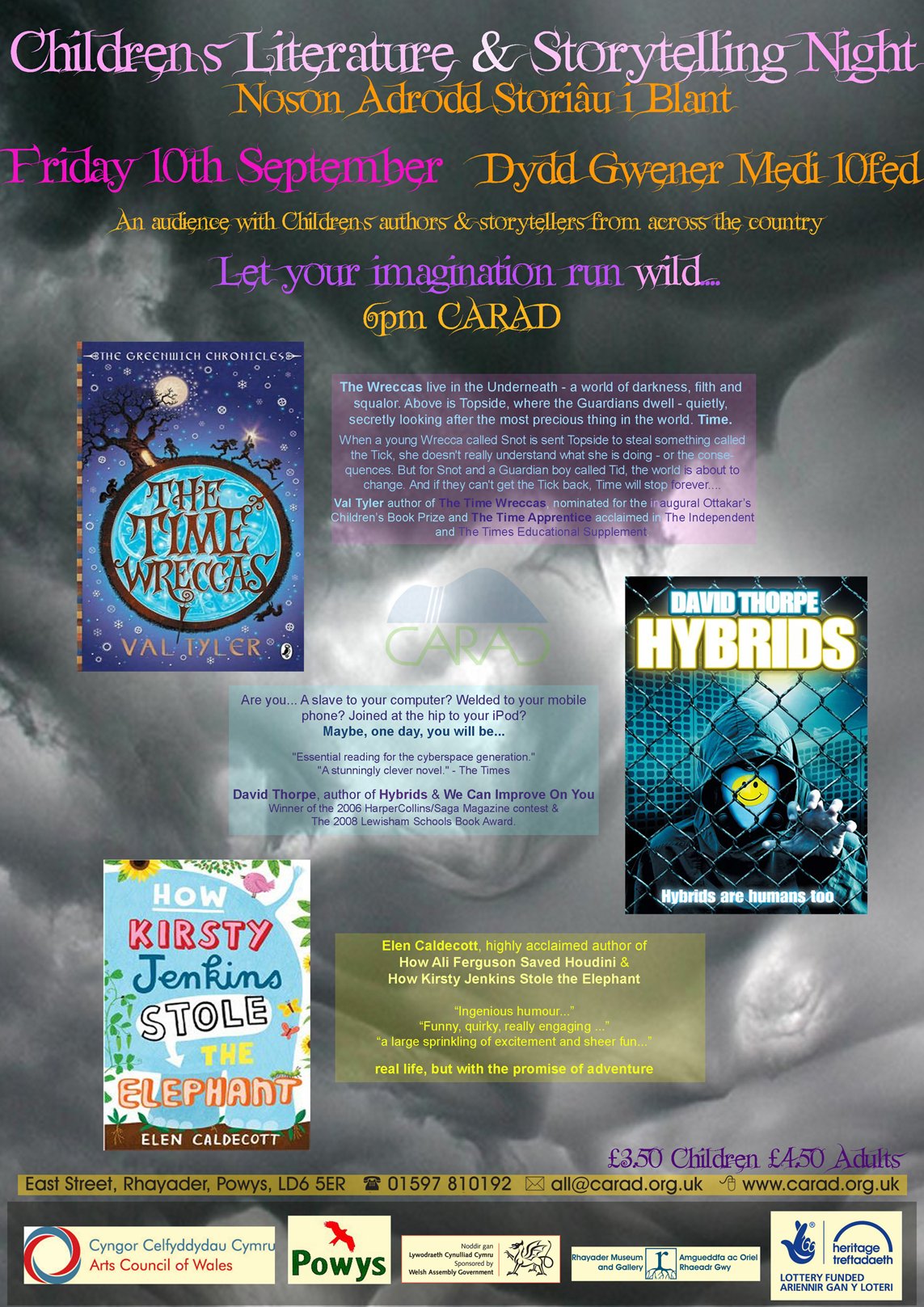
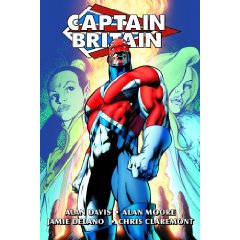
Captain Britain Hard Cover OmnibusDavid will be reading and answering questions at a literature and storytelling night for children on Friday, 10 September, 6pm in Carad, East Street, Rhayader, LD6 5ER, mid-Wales. Tel. 01597 810192.


Captain Britain Hard Cover OmnibusNew Captain Britain Hard Cover Omnibus out.


• Guest blog at The Ecologist magazine on the great British Refurbishment campaign and the new Coalition Government's Green Deal.


• Guest blog at Dragon Tongue about the influence of landscape in mid-Wales on writers.

Wednesday, May 05, 2010

How to vote tactically for a greener new government

Thanks to Frannie Armstrong for this!

A Tory government would be a disaster for the environment and climate change.

Their candidates rank climate change as 19th out of 19 most important issues and want to decrease onshore wind and increase North Sea oil drilling. Their party is riddled with climate sceptics (with one even rumoured to be lurking in the shadow cabinet).

There are six seats (Battersea, Brighton Kemptown, Calder Valley, Colne Valley, Hove and Stroud) where the Green vote is large enough to give a Labour seat to the Tories.

There are at least three (including Carshalton and Wallington, Dorset West and Torridge and West Devon) where it would either give a Lib Dem seat to the Tories or prevent the Lib Dems from taking one from them.

So we urge everyone who understands the precipice on which we all stand to be highly tactical with their vote:

  • If you live in a hope-in-hell constituency, vote Green: Caroline Lucas in Brighton Pavilion (now the bookies' favourite), Tony Juniper in Cambridge, Adrian Ramsay in Norwich South and Darren Johnson in Lewisham Deptford.
  • If you're in a Labour-Tory marginal, steel your environmentalist's heart and vote Labour rather than Green
  • If you're in a Lib Dem-Tory marginal, vote Lib Dem rather than Green
  • If you're in a Labour-Lib Dem marginal, vote for Labour, with an eye on helping stop Clegg siding with the Tories if there's a hung parliament. (Clegg said last week that he'd be happy to work with the Tories as long as they concurred on four policies - fairer taxes, a shake-up of the education system and economic and political reform. Nothing else important, Nick?)
  • If you're in a safe seat for any of the three main parties vote Green to add one more to the Greens' total and strengthen the case for proportional representation next time.

Meanwhile, till Friday morning, you can watch The Age of Stupid free for 48 hours - from now till the polls close tomorrow night.

Captain Britain and The Siege of Camelot is out!

cover of Captain Britain and The Siege of CamelotCaptain Britain and The Siege of Camelot is out, which contains my work on Captain Britain and a new introduction written by myself - plus one by the writer of the Black Knight series, Steve Parkhouse, as well as the feature and art from the Captain Britain Summer Special and Inside Comics - A short history of Captain Britain by Alan Moore.

It contains the Captain Britain strips from Marvel Super Heroes Nos.377 - 389 and The Daredevils Nos. 1 - 11 chronicling the stories by myself, Alan Moore and Alan Davis. It costs £12 from Forbidden Planet.

Sunday, April 18, 2010

Bored with the election? Try these new political parties...

Fed up of the same old politics and policies?


I thought I'd invent a few more. These are parties you can trust:

The Utopia Party


Believe: Utopia is a state of mind not a place.

Happiness is more important than wealth; and happiness is an attitude: we are already in the best of all possible worlds. It's just your mindset that needs adjusting.

Vote for us and we'll help you to change it.

The Retro Party


Believe: Things were better in the old days.

Vote for us and we'll turn the clock back. We'll:
  • Close down the internet

  • Bring back hanging

  • Bring back pounds shillings and pence (and farthings)

  • Only two tv channels

  • And four Trebor Chews for a penny


Vote for simpler times!

The Parity Party


Believe: The Poverty Gap - the difference between incomes in society - is responsible for most of our social ills.

So in future everyone will be paid the same salary pro rata no matter what job they do. Then people will choose the job they do because they want to do it not because it pays more.

Greedy people will leave the country: good riddance.

Bonus: besides creating an equal and happier society we'll save billions on paperwork in tax and NI since it'll be the same for everyone.

UKIP 2: The UK International Party


Believe: We will get the UK out of Europe by towing it to the Indian Ocean - and everyone benefits from a warmer climate.

UKIP 3: The UK Interplanetary Party


Believe: The World is going to hell in a handcart.

So we'll work to take the whole country into space and leave everyone else to fester in their own fetid juices.

The Nothing Party


Believe: We stand for nothing.

Vote for us and you won't be disappointed.

The Criminal Party


Believe: Only known lawbreakers can be MPs.

Result: for the first time you will have fully transparent MPs - you will know that they break the rules. Let's be honest: everyone breaks the rules if they can get away with it.

The Lazy Party


Believe: If you can be arsed to vote for us maybe we'll do something sometime.

Or not.

Like, how about the two day week?

Or is that too much?

Which one will you vote for?

Saturday, April 03, 2010

Some nice comments on The Drowning

I'm starting to get some good critical feedback from the first draft... thank you very much. Especially nice to have the very successful Jenny Woolf call the writing "brilliant" and "accomplished".

She asked me soe questions in her email and as they're very interesting it's worth posting some of my responses:

Influences: Alan Garner began as an influence - I remember vividly re-reading The Owl Service (set nearby) when I moved here and admiring again his sparse style, but when I tried to read him again in preparation for writing this I found the style too old fashioned. The influence in style came from more a MEMORY of him, but also a touch of Cormac McCarthy and a beautiful classic of ornithological writing - The Peregrine by J A Baker which is absolutely extraordinary in the number of different ways he finds to describe, say, a bird flying, with powerful observation. This is the first time I've set a book in a place where I live, and I did a lot of exploring and photography and talking to people.

Publisher: I have no publisher as yet. A Welsh publisher, Seren, has expressed interest, but they have little reach outside Wales unfortunately. Seren has an interesting new series updating/reinterpreting Welsh myths.


Structure: I'd pictured the opening as curling into the narrative. You see Gary, then Bryn, then Gary again. You realise both are victims in their own way, though Bryn only of Gary. So, why? Gary is the character with the furthest development arc to travel. You follow Gary through the storm, and its aftermath until he is forced into the company of Bryn on the run and the core story begins.

Bryn and Gary represent polar opposites. One endures the other dies. But it's suggested that what the one who died represents is a quality that is really the more enduring. We've sacrificed so much and we will lose more, but it is nature that endures. The land outlives us and we are blinks in its eyes. Even the legends have life beyond us.

Gary's disability cannot be used as an excuse for his irresponsibility. That's what he learns.

The website: The Chance To Create team (see the credits page) stipulated a website in their grant conditions. You wouldn't believe what else - I have to give a seminar to tourism providers in the area about local legends and other novels set locally (there are quite a few - cf also the late great Susan Cooper's Dark Is Rising series) to make the area an attractive literary destination! The things a writer has to do to earn a crust!

Anyway, I'm still buzzing from Jenny's comments!

Wednesday, March 31, 2010

The Drowning Novel - draft completed and new website

I've finished a draft of my current novel, The Drowning, and published a website all about it. Go to: The Drowning Novel.

I've begun work on my next non-fiction book - an introduction to solar technology. It's great to alternate between fiction and non-fiction!

Sunday, February 07, 2010

My house is for sale - near the Centre for Alternative Technology

We've just put our house on the market! It's near the Centre for Alternative Technology and is a 3-4 bedroom house plus a self-contained one-bed 'granny-flat' or sublet on the side, by a river! It's been well-renovated and has a large garden and has loads of potential. Only £185k! I love the whole valley - I'm just moving to a smaller place in the valley. I even spent a while commuting to London for work - you can go there and back in a day by train. More info?
http://www.davidthorpe.info/house-for-sale-mid-wales.htm

Monday, January 25, 2010

Bounty for the first citizen's arrest on Tony Blair!

Today we are launching a new fund – arrestblair.org – to reward people who attempt to arrest the former prime minister for his crimes in Iraq. George Monbiot has written the text - and it's his idea. My part is to design and manage the site. More on the website and George's blog.

Monday, January 18, 2010

Murals, myths and Mid-Wales

I'm hard at work writing The Drowning, and it's when you're deeply immersed in something that coincidences start to happen.

I was going to Borth (the village I drown in the book), and pulled up at random, by the sea front. I'd always known there were mosaics embedded in the wall at one point, but finding myself parked right beside them I took a closer look.

They depict two myths I am using in The Drowning. Here they are:

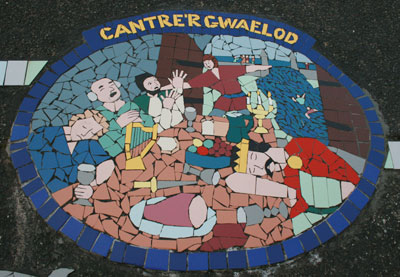
Mosaic by Pod Clare of the Cantre'r Gwaelod myth in Borth, Ceredigion, Wales

This is a mosaic by Pod Clare of the Cantre'r Gwaelod myth in Borth, Ceredigion, Wales. The myth tells of the drowning of Cardigan Bay when a prince meant to be keeping guard over the floodgates falls asleep, drunk on the job. On the right you can see the water flooding in to cover the land.

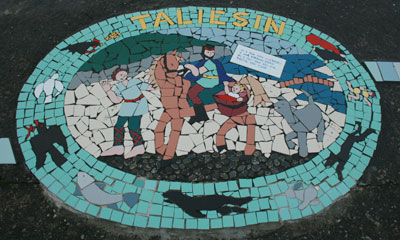
Mosaic by Pod Clare of the myth of the origin of Taliesin, in Borth, Ceredigion, Wales

This depicts the origin of Taliesin, and shows him being discovered floating in the reeds after his birth, by Elffin, the son of King Gwyddno Garanhir, 'Lord of Ceredigion', while fishing for salmon. As soon as he was found he announced that he was a poet, and began spouting poetry. The prince called him Shining Brow, which means Talisein, or blessed (radiant) one. Round the edge you can see the chase, when Ceridwen tried to kill him because he stole the special wisdom-bestowing broth meant for her ugly son, Avagddu. Using his new magical powers, Gwion, as he was then, turned himself into a hare, fish, bird and grain of corn. In turn, Ceridwen transformed into a greyhound, otter, hawk and hen, and pecked at the grain until she had swallowed Gwion.

Wednesday, January 13, 2010

Captain Britain - order it!

David Thorpe's work is in this Captain Britain omnibus• David has a profile on the new website for school visits Author Hotline.

And although it's behind schedule you can order the Captain Britain collection featuring his work from Marvel Comics, and while you're at it, the omnibus published last year

Thursday, January 07, 2010

Ideas behind The Drowning

A note on the context of the writing of The Drowning, and the philosophical approach I'm taking to conceiving and writing the book.

It touches on the theme of how 'nature' is a human cultural construct - cf Simon Schama's brilliant book Landscape and Memory.

The two main characters in my novel epitomise opposing attitudes to 'nature':
• as a place in which you must survive, and therefore understand and know how to use, and
• as an unknown out-there-ness.

Climate change in my book presents a crisis that suggests to the reader that enduring, but changing, nature puts the brief period of  human 'civilisation' in its tiny context.

The book does this partly by using Welsh mythology and updating it.

Thursday, December 31, 2009

Earth: Art of a Changing World at the Royal Academy

Yesterday I visited the Earth: Art of a Changing World exhibition at the Royal Academy. It's fantastic, the best show I've been to in a long time - superior to the Radical Nature one at the Barbican earlier this year.

It collects works by many artists that have enviromental themes, especially addressing climate change. In many ways it does what the Centre for Alternative Technology's (CAT) Arts in Transition initiative wants artists to do.

It's not overwhelmingly polemical. Many of the works are oblique, some funny, many sad or touching, some make you angry, and a surprising number are very beautiful.

36 pieces are gathered under the following themes: Introduction; External, Perceived Reality; Destruction; the Artist as Explorer; and Re-Reality. Many current art world stars are represented, including David Nash, Anthony Gormley, Keith Tyson, Sophie Calle, and Tracey Emin - whose 3 pieces are the best things by her I've seen - touching and beautifully executed.

Several artists have been to Greenland on Cape Farewell tours, specifically organised to expose artists to the physical effects of climat change in the arctic. Novelist Ian McEwan, who went on one such trip, is represented by a text he wrote in response.

Yael Bartana's video about Israeli men driving their 4x4s over sand dunes for kicks is crazy - is this the summit of human progress? 'Progress' is also questioned by Lemn Sissay's poem, performed in a video with a jazz trio, "What if?" - poignant and challenging.

Another video, 'Doomed', by Tracey Moffat, is a hilarious compilation of disaster sequences from Hollywood movies. Yao Lu alters an image of rubbish dumps to make them seem at first glance like traditional Chinese landscapes.

Clare Twomey's ceramic flowers and Adriane Colburne's fabulous installation Up From Under the Edge of the Earth, are among pieces that by being incredibly beautiful and fragile remind us of the care we need to take to preserve our awesome natural environment, while Edward Burtynsky's photographs of Canadian tar sand exploitation, quarries and a Chinese chicken-processing factory (whose rows of women workers themselves look like factory farmed chicks), show us how little care some industries are taking.

Finally, we are made to hope that Antti Laitinen's documention of his long, futile attempt to make an island in the freezing Baltic Sea, striving like King Canute to fight the inevitable tidal forces, is not a prophetic allegory for humanity's attempt to stave off the effects of global warming.

Wednesday, December 30, 2009

The Drowning has begun

Earlier this year I won a grant [scroll down from this link to the item] from Powys' Chance to Create to write a novel for older children called The Drowning. One of the grant conditions was the production of a blog to document the writing of the novel. Now I have begun to write it this is a fine time to start.

What is The Drowning?

The story is set in Borth, Taliesin, and West Powys in the not-too-distant future when sea level rise threatens low-lying dwellings and the smooth running of society.

It is a mystery story - what happened when a boy died one stormy evening on the moors north of Nant-y-Moch?

It is a story of the love-hate relationship between two very different boys from contrasting backgrounds forced to get on together in order to survive, and how the arrival of a girl affects this.

It mixes in and updates Welsh legends - specifically the origin of Taliesin and a reinterpretation of his character and this story, and the story of Cantre'r Gwaelod which, besides having obvious resonance with climate change-related sea level rise and weather events, is situated in this same area.

There are other elements as well, and one challenge of writing a blog about a work in progress is to not reveal the plot and spoil it for future readers!

Progress

I have so far:

  • researched all of the mythological elements I wish to use
  • walked in most of the areas where the story is set - but will need to revisit some during the writing
  • done some research on the flora and fauna - need to do a little more
  • conducted most of the research on the science of climate change and sea level rise; sources include articles in the New Scientist; Ranyl Rhydwen, a lecturer on climate science at CAT; a study of the Dyfi Valley coastline (near Borth) by a German researcher/Ceredigion Council; and Bill Thompson of Woods Hole Oceanographic Institution
  • need to in particular find out more about the Eastern Greenland coast and the behaviour of melting ice sheets there
  • I have worked on the characters, learnt some Welsh, and plotted the novel out on scene (index) cards)
  • begun to write it (a week ago) - 2000 words completed. Projected length: 40,000 words, maybe less, mixed media format
More to follow. Offers of help (research information) welcome.

Thursday, December 17, 2009

Captain Britain revisited

Here is an introduction I have just been asked to write for an anthology of Captain Britain strips that will include my stint on the character. It will be published by Panini in 2010.


Captain Britain reborn


It had been a childhood ambition to work for Marvel. Following a conversation in 1980 with editor-in-chief Jim Shooter at the New York office I contacted the London office in Kentish Town to ask if there was a vacancy for a writer. Paul Neary, then editor, told me that one would materialise soon and in the meantime would I like a job as an editorial and art assistant? I jumped at the chance, hoping that my degree -- in Dada and Surrealism -- would prove adequate training.

It proved more than adequate: nothing could have been more surreal than working for Marvel UK at that time.

The rickety-floored office lay above a cobblers and a second-hand shop. Marvel UK was then licensed by an absurd duo, the Babani Brothers, whose main interest was and still is publishing technical manuals, and who employed someone to polish their Rolls-Royces out the back while we toiled on meagre wages. Bernie Jaye edited the monthly anthologies, in one of which, Marvel Superheroes, Captain Britain would appear.

After a few weeks Paul explained his plan to me for relaunching Captain Britain, who had lain moribund in comics limbo for a good while. He wanted to team me up with a new artist, Alan Davis, and completely overhaul the character, with a new costume and introducing him into an alternative England in order to create a different identity to the derivative Claremont-Trimpe creation and Parkhouse's Celtic epic. The idea was to produce a superhero relevant to a modern British readership that would reflect something of contemporary UK. It was Paul who, despite my reservations, came up with the idea of a comic sidekick in the form of an elf on a surfboard.

Both Alan and I had much enthusiasm but little experience - we were learning on the job. I concentrated on creating a new pantheon of villains and supporting characters to populate a new storyworld. I realised that we had to do more than import an American formula to make Captain Britain work. Comics like 2000 AD, at the time the most popular amongst the target readership in the UK, had a totally different flavour to American comics. They are more throwaway, humorous, self-aware and anarchic - they don't take themselves so seriously. Americans are generally prepared to be much more nationalistic than us and use their flag patriotically. Over here only fascists do that with the Union Jack. Captain Britain can never be an Anglicised Captain America.

So I introduced a peculiarly British surreality, drawing on the tradition of Jonathan Swift, Lewis Carroll, Charles Dickens, HG Wells, John Wyndham, and Dr Who, embodying eccentricities which I associated with the upper-class world that Brian Braddock comes from; hence characters like the Avant Guard and Mad Jim Jaspers. The latter is a take on the notorious "Mad" Frankie Fraser from the Richardson gang which operated in London in the '60s and '70s. They had a turf war with the Krays and another gang called -- seriously -- the Quality Street Gang. Calling James' gang the Crazy Gang actually seemed less surreal than the reality.

(As an aside, even more surreally, I was asked eight years later by gang-leader Charlie Richardson and Frankie Fraser themselves to write Charlie's life story in comics form, clearly a case of reality imitating comics!)

My thought was, you had this muscle-bound upper class twit with a brain the size of a pea draped in a Union Jack jumping from tall building to tall building -- what can you do that isn't ridiculous?

The first story had an environmental theme - The Junkheap That Walked Like A Man - environmentalism being a parallel passion in my life. Another story introduced a multicultural flavour, as I was living in Brixton, and so had Captain Britain taking a young Afro-Carribean girl for a fly-around, to convey a sense of wonder. I developed an overarching storyline of cosmic proportions involving Saturnyne, a beautiful enigmatic figure from another dimension modeled visually on Lauren Bacall, and developing the concept of alternative Captain Britains -- Captains UK, England, Albion, etc - and Merlyn's overall control theme.

Many of these characters and concepts were developed and expanded upon by subsequent writers such as Alan Moore and the Excalibur team.

After I had been working on the strip for about a year I received a letter from a reader pointing out that a younger me had written to the first Captain Britain comic, wondering what the Captain might think about political issues such as the civil war in Northern Ireland. This had completely slipped my mind, but everyone knows Marvel fandom's memories put elephants' to shame. It set me thinking, and in some ways I regret receiving that letter because of what was to follow.

I figured this reader and therefore others wanted to see such a story and drafted one which made reference to the conflict in Northern Ireland - then spilling over to a bombing campaign on the mainland - trying to avoid favouring one side or the other. I wanted it to sympathise with kids living there caught up in the conflict. It revolved around a sad, true story, which seemed to epitomise the tragedy of the province, of two children who had met and become friends while away on holiday. But when they returned home to Belfast they realised that they came from opposite sides of the divide -- one Protestant and the other Catholic. So when one visited the other's neighbourhood he was attacked. Captain Britain, flying overhead, on a mission that was part of the overarching storyline, noticed this and came down to break up the fight. That was the sum of it. I naively felt that as this was an alternative world we could play around with it without risking offending people.

Boy, was I wrong.

First of all Alan Davis, who lived in Corby where there was an Orange (Protestant) population, refused to draw it. In response, to soften it, inspired by Swift's Gulliver's Travels, I changed it into an allegory and made the names into anagrams -- e.g., Belfast became Fablest. This cut no ice with Davis. I remember sitting one evening alongside Bernie Jaye as she scrubbed out every reference to Northern Ireland. This explains why the bland story which you'll read in these pages seems just to be about gang warfare between rivals in different blocks of flats. How utterly flat. Jaye - a woman with a sociology degree who tried vainly to conduct debates on feminism in the letters pages of the Savage Sword of Conan - actually said that if she received one letter from an irate vicar in Surbiton her job would be on the line. I found this hard to credit, but this was an object lsson in how censorship happens - people fear for their jobs. We were two years from 1984 but in Marvel it had already arrived.

I thought we would get away with it because Alan Moore was already writing his own 1984 - V for Vendetta - but more relevantly Marvel US had in the 'seventies run a Captain America story written by Steve Engelhart, reflecting the Watergate scandal and its resulting political upheavals. In it, Steve Rogers (a.k.a. Captain America) had stopped being Captain America because he believed that the founding values of America had gotten lost. Engelhart created a symbolic new identity for him -- Nomad, the man without a country -- and the title had no Captain America in its pages for 14 months, until Rogers eventually resumed his old identity, concluding that "the values I stood for still apply even if they're not embodied in the present administration". I greatly admired Engelhart's work and thought if they could do that in America surely I would be able to do a much milder thing here.

But it was ahead of its time -- eight years later, in the overtly political Crisis comic, Fleetway was to publish Garth Ennis' True Faith, about the Troubles (but even that graphic novel was scandalously withdrawn from sale, following complaints).

Paul and Bernie did ask me to come up with further storylines, but did not accept them, and I was terribly disillusioned. I left to take a scriptwriting course in film and television scriptwriting, and went on to produce independent comic stories, such as Doc Chaos, and to edit for publishers such as Titan and McDonald-Futura.

Alan Moore took over, continuing with many of my ideas but losing interest in what he saw as a two-dimensional character so that he became a mere punchbag, which I know offended Alan Davis.

Davis and I had had dreams of Captain Britain becoming a kind of superhero Doctor Who. Personally, I think it is when his stories approach this kind of feel and don't shy away from the complexities resulting from the Union Jack on his spandex that he is at his most engaging and dramatic.

© David Thorpe, Tre Taliesin, Wales, December 2009