I'm very excited because this month I am to achieve a long-time ambition of being on stage at a literary festival. Not just any literary festival, but Hay, and not just once but twice! I'm not at all nervous, no.
Both events are part of the festival's 'green' strand.
The first will be about my new non-fiction book The One Planet Life where I will be in conversation with Jane Davidson, director of INSPIRE and a fellow patron of the One Planet Council.
The second will be to do with children's writing and climate fiction, where I will be joined by Saci Lloyd, Jane, and climate change campaigner George Marshall. I hope other members of the Facebook group of cli-fi authors will be there, too.
Saci, plus other cli-fi authors, took part in a week of activity on the Guardian's children's books website last month about writing about ecological and environmental matters for children, culminating in a Twitter chat [#GdnEcoChat] on the evening of World Book Night with Frank Cottrell-Boyce, Kate Kelly, Sarah Holding, Tony Bradman and others. The Guardian's record of it is here.
One of the questions that was asked was: is cli-fi just a passing fad? My answer, which was favourited a few times, was: 'NO! We've only just begun! One day all books will contain an element of cli-fi. They'll have to.'
It's now recognised by almost everybody that climate change is real and happening and caused by human beings burning fossil fuels. Any story that is set in the future which paints a picture of a world that hasn't been affected by climate change in one way or another will just look daft, especially if read in a few years' time.
It doesn't have to have disasters in it, it doesn't have to be a dystopia and it doesn't have to be science fiction. The lives of any characters, whether living 10, 50 or 200 years in the future, will have been affected in one way or another, whether it is how they get about, what the technology is like, what their home is like, or where they live.
I usually write about the near future. Stormteller and Hybrids both take current trends and extrapolate them, but the former is almost exclusively cli-fi and the latter only contains one tiny nod to it: a description of a swollen River Thames in London.
The novel I'm writing now is set in 2089-2104 and, while it is not about climate change at all, I still have to describe the ways that people get about (in their self-driving electric cars, rapid transit buses, or high-speed trains), the buildings that people live and work in (where attempts have been made, successfully or not, to retrofit them to save and/or generate electricity and to bring nature back into cities), the food they eat and where it comes from, the energy they use (all kinds of renewables), where the coastline happens to be (usually not where it is now) and what has happened to former seafronts.
This is a radical reimagining of life. It's neither dystopic nor utopian, just looking at how life and society might have to adapt in one way or another.
In this election there has been little talk of climate change, but all of the main parties (even UKIP, but with the striking exception of the DUP) recognise the huge contribution the low carbon or clean technology sector already makes to the UK economy, employing as it does close to one million people. Inevitably this contribution will continue to rise. Some parties (LibDems, Greens) attach more importance to the way that green jobs can make life better and improve the economy generally. It's a win-win-win scenario.
Yes, predicting the future is notoriously difficult, but the predictions about climate change have, ever since 1993, been consistent in saying that a certain list of impacts is likely to happen; exactly when is less certain.
We also know that human nature tends to leave everything to the last minute, only responding to disasters when they are imminent or actually happening.
Put the two together and you begin to get an idea of the way things might go; except that climate change is not one disaster but a whole succession of transformations with all sorts of ramifications that will continue for the next few centuries.
In the past, quite a few writers who have tried to predict the future have found life imitating art, such as Ray Bradbury's description of “little seashells… thimble radios” that brought an “electronic ocean of sound, of music and talk and music and talk” in Farenheit 451; John Brunner’s description of electric cars powered by fuel cells and Detroit as an abandoned wasteland in Stand on Zanzibar; tablet computers in Arthur C Clarke's 2001: A Space Oddysey; Google Glass type goggles in Willliam Gibson's Neuromancer; not to mention ubiquitous people watching (CCTV) in Orwell's 1984.
Not written for kids? Actually, almost all of these books I read as a teenager.
I will leave you with two thoughts: encouragement to contemporary writers not to ignore developments that are consistent with a world predicted by climate science, and the infographic below that I discovered, which records many predictions made by writers that have come to pass.
David Thorpe is the author of cli-fi YA fantasy Stormteller and the YA SF Hybrids.
Monday, May 11, 2015
Thursday, April 16, 2015
New Cli-Fi Book Portrays a Rough Eight Decades Ahead
The Vandervelde Documents by Richard Turner is an ambitious novel that attempts to envisage how the rest of the century will pan out for planet Earth as it suffers from the increasingly severe impacts of climate change, followed by the response of fragmented governments to the ensuing cataclysms.
It collects three e-books into one printed novel. The separate books cover in chronological order: in Book 1, The Carbon Brief, the period 2020-2044; in Book 2, The Phoenix Nation, from then up to 2078; and in Book 3, The Warden, 2084-2092 with a prologue from 2120.
This is a work of climate fiction, or cli-fi, particularly the first book. Since it is written by someone with a knowledge of engineering and technology the proposed technological solutions to meeting the challenges of climate change make some sense.
Predicting what will happen in the future is a thankless game and there will be readers who disagree with Richard's prognostications. One can always argue about details. The point of the book is to provoke discussion.
It is not a novel in a conventional sense. Instead it is a collection of documents or archive records, including blogs and diaries from the main protagonists.
It also sits securely within the realms of fantasy or science fiction, since it proposes a small group of people called the Elders – also known as "Sapients" – who have extended lifespans and manipulate events through some unknown means behind the scenes. They work on behalf of Gaia – the spirit of the Earth in its biosphere – from whose perspective humanity is a destructive virus.
It also, unusually, views world events from a Welsh perspective. The author is not Welsh but has lived there most of his life. This leads him to speculate about how small nations might, following the disruption of a cataclysmic event in 2044 which upturns the old world order, enter diplomatic dialogue with each other regarding alliances, with the intention of attempting to avoid in their new forms of governance the mistakes made by the former large global players that led us into this mess. It comes as no surprise to find that the author, in a previous life, for several years organised a Small Nations Music Festival in Wales.
This is a thought-provoking and enthralling novel that will captivate anyone interested in how climate change will affect the power plays of the future. It is also, frustratingly, one of the most poorly proofread novels I have ever read, but don't let that deter you.
It collects three e-books into one printed novel. The separate books cover in chronological order: in Book 1, The Carbon Brief, the period 2020-2044; in Book 2, The Phoenix Nation, from then up to 2078; and in Book 3, The Warden, 2084-2092 with a prologue from 2120.
This is a work of climate fiction, or cli-fi, particularly the first book. Since it is written by someone with a knowledge of engineering and technology the proposed technological solutions to meeting the challenges of climate change make some sense.
Predicting what will happen in the future is a thankless game and there will be readers who disagree with Richard's prognostications. One can always argue about details. The point of the book is to provoke discussion.
It is not a novel in a conventional sense. Instead it is a collection of documents or archive records, including blogs and diaries from the main protagonists.
It also sits securely within the realms of fantasy or science fiction, since it proposes a small group of people called the Elders – also known as "Sapients" – who have extended lifespans and manipulate events through some unknown means behind the scenes. They work on behalf of Gaia – the spirit of the Earth in its biosphere – from whose perspective humanity is a destructive virus.
It also, unusually, views world events from a Welsh perspective. The author is not Welsh but has lived there most of his life. This leads him to speculate about how small nations might, following the disruption of a cataclysmic event in 2044 which upturns the old world order, enter diplomatic dialogue with each other regarding alliances, with the intention of attempting to avoid in their new forms of governance the mistakes made by the former large global players that led us into this mess. It comes as no surprise to find that the author, in a previous life, for several years organised a Small Nations Music Festival in Wales.
This is a thought-provoking and enthralling novel that will captivate anyone interested in how climate change will affect the power plays of the future. It is also, frustratingly, one of the most poorly proofread novels I have ever read, but don't let that deter you.
Tuesday, April 14, 2015
Going Underground: The City Where People Continue To Live In Caves

Nottingham Rock Cemetery cave interior.
On a recent weekend I took a small tour of some of the tunnels under Nottingham as research for my next novel, which is partly set in the city; and one of the main characters is, for a while, forced to live in the caves.
It was a fascinating experience.
Nottingham is a city that is built on a system of caves that have been expanded by the city's occupants over the centuries for living and working space. Some of them are available for the public to tour, others continue to be used by homeless people as they always have.
The city, which dates back over 1000 years, was built a particularly soft form of sandstone called Bunter sandstone. It has played a major part in the way that the city has expanded. This is the city that I grew up in and to which I regularly return.
Nottingham is most famous for being the city of Robin Hood, Sherwood Forest and the Sheriff of Nottingham. The castle which now sits on top of the splendid rock overlooking the city centre is not the original one, which burned down in a fire in the 18th century.
A cave system extends from the castle down to the ground level and into neighbouring built-up areas. Directly below, at the bottom of the cliff, is probably the oldest pub in the world: the Trip to Jerusalem Inn.
In the days of pilgrimages to the Holy Land documented in the Canterbury Tales by Chaucer, pilgrims would begin their journey at the castle gate and the first stop would be the Inn. The habits of Brits travelling abroad have not changed much over the centuries! The Inn is carved out of the cliff base. Looking up to the ceiling you can see a chimney extending right upwards to the castle above.

The Trip to Jerusalem Inn chimney carved in the rock.
Many of the buildings in central area of Nottingham have cellars and extended underground areas that were carved out, particularly in the 17th and 18th century.
The reason for this is that during the Industrial Revolution tens of thousands of people migrated from the countryside to work in the factories in the cities of England. In Nottingham's this was in the lacemaking factories.
The city could not expand beyond its tight boundaries because of a complex system of land ownership around the outside. Everybody living inside had the rights to farm strips of land outside the city walls to grow food, a relic of the feudal system. They also had the right to walk in the surrounding countryside to get fresh air.
Inside the city walls conditions were dire due to pollution from burning coal and the lack of a sewerage system. Overcrowding was terrible and in an effort to make more space people burrowed into the soft sandstone, carving out more rooms for both workspace and living space. The dispossessed lived in the caves.

But this was not a sustainable solution. As in many English cities at this time there was an outbreak of cholera in Nottingham. Hundreds of people died. The proper solution was not just to build sewers but to extend the city and build on the surrounding land.
This was the time of the Enclosure Acts in England which were used to appropriate agricultural land for building and development. In many cases this led to agricultural land, much of which was common land which everybody had a right to use, being grabbed by the rich and fenced off. Many people starved as a result.
But in Nottingham it was different. The 1845 Enclosure Act specified that developers or builders must come to an agreement with the owners of the land and those who had the right to use it before it could be built upon. This process took 15 years to pan out in the courts. But it was worth it because it was done amicably. Everyone benefited.

The map extract above from George Sanderson’s ‘Twenty Miles Around Mansfield’, published in 1835, gives some idea of the density of development and overcrowding which Nottingham suffered from prior to the enclosure of the fields around the town. Also visible are the Sand Field and Clay Field which were enclosed to the north of Nottingham. The field pattern is clearly visible.
One result of this is that certain corridors of green space and parks were kept and are still there today for all people to enjoy. They provide a vital means by which the city can breathe.
Today you can look at Nottingham from the air or walk around it and see the result of this expansion. Outside the original compact city is a ring of Victorian buildings, large homes which would have had a room for servants. These are now in the main subdivided into apartments or used by businesses.
Around that was built rows of small tenement homes for the workers. Many of these still remain, as in Hyson Green, but others have been since demolished because they grew to be slums, such as the notorious Meadows area between the castle and the River Trent immortalised in local author Alan Sillitoe's novel (and film adaptation) Saturday Night and Sunday Morning.

The 1930s saw further urban sprawl (above) in the form of large, planned estates of council houses on the lines of garden cities, with generous gardens for the workers to grow their own vegetables, two or three bedrooms and wide roads. Nowadays hardly anybody unfortunately grows vegetables in these gardens and the front gardens have been paved over for cars, because nobody thought that workers would own one, let alone two or three cars, in those days so no room was provided for them.
Nottingham has sprawled much more since then, with endless badly designed housing estates extending into the countryside. Very little of Sherwood Forest remains although in mediaeval times it came almost up to the castle itself.
Who knows? Perhaps Robin Hood and his outlaws used to live in some of the cave systems and used them to creep up upon the Sheriff in his castle.
When I visited one small part of the caves yesterday I found evidence that they are still being used by the homeless.
The part I accessed is through Rock Cemetery, one of the green spaces preserved by the Enclosure Act in the area known as the Forest (although it does not resemble a forest at all).

Rock Cemetery.
The entrance to the system is meant to be protected by iron railings but they had been tampered with to provide enough space for someone to crawl through.

Inside is evidence that people do in fact sleep there:

There is also evidence of drinking and drug use:

I talked to Dwayne, the council officer responsible for the upkeep of the cemetery, who confirmed that drug users and homeless people do use the caves. He had a relaxed, laissez-faire atitude to this. I met a German journalist doing a feature on Nottingham who told me she had told by a charity official that cutbacks in council spending have caused an increase in homelessness.
It's very dark and quiet in the caves. The rock is soft and crumbly and dry. It's also quite scary at first. There are occasionally roof-falls.
While some of the caves in Nottingham are accessible only through private property, and some are available for visitors to tour, the full extent of the system is unknown and it's possible to find entrances all over the central part of the city.
Nottingham's underground culture looks set to continue far into the future.
For further information about the 1845 Enclosure Act in Nottingham see John Beckett and Ken Brand, ‘Enclosure, Improvement and the Rise of “New Nottingham”, 1845-67′ (PDF), Transactions of the Thoroton Society, XCVIII (1994, published in 1995), pp. 92-111.
Wednesday, April 08, 2015
Wonder or Despair: What Are We Giving our Kids to Think About?
This week I was doing an event at our local library, in Ammanford, Carmarthenshire, which has just undergone a very nice refit and upgrade. It's always great to see libraries being renovated and improved rather than closed, which happens all too often these days.
For my event I was put in the section containing racks of books for older children and young adults and graphic novels. Casting my eye across them, and having read quite a few, I was struck by the overwhelming mood of many of them: dystopic and preoccupied with doom, gloom, death, hate, angst.
I suddenly felt sorry for children if that was the entirety of their choice of reading matter.
Of course, I am guilty of writing books that probably fall into this category as well, but I suppose what depressed me was seeing that this type of book is mostly what either the librarians or publishers in general think the kids want to read.
Well, maybe they do. But one book stood out amongst all the others as being exceptionally different. I know, because I've read it and it's by one of my favourite – and the country's most celebrated – authors.
It is a book of wonder, that celebrates creativity, being different, and the splendours of the natural world.
It does not follow any particular page-turning plot structure. Nor does it correspond to any particular genre, although I suppose you could call it in the end fantasy or magical realism, but really it's about imagination.
(The author is on record as saying: "When people began to describe me as a magic realist I thought - I'm just me.")
David Almond's My Name is Mina is about a girl who doesn't fit in, who finds that the constrictive pressures of the school system are too much for her huge personality.
It celebrates learning at your own pace, following your instinct, writing, a love of words and language, finding the marvellous in the everyday, and so on.
Above: a page from the book.
At the same time you can feel the anger that Almond has towards the school system and teachers caught within it. No doubt he is drawing upon his own experience of being a teacher for five years.
I should say that any child reading this, who feels a little bit different, will sense validation for their unique perspective on life.
And anyone else, who was ever looked at a bird, or the sky, or a leaf on a tree and just wondered how it came into being, will also find validation for their purposeless gaze.
I have put passages in my books a bit like this, but I have not ever considered writing a whole book like this. It was a revelation to read.
This is not a book that trades upon the existence of a sense of desperation for its page turning qualities. Although it is in part a kind of an us-versus-them story, Mina's reactions to adversity, particularly from her teacher, are always gentle and loving.
The book shows readers another way to be, and that is to its immense credit. It's a book that takes its time even though it is short.
It's interspersed with lots of exercises, called experiments, for children to try, almost like a self-help book.
It takes courage to go against the grain and write a book like this. Too many writers think that they just have to follow the herd or go with publishing trends. It's your own vision that's the most important and that will last beyond such trends.
David Thorpe is the author of clifi YA fantasy Stormteller and the SF dystopia Hybrids.
For my event I was put in the section containing racks of books for older children and young adults and graphic novels. Casting my eye across them, and having read quite a few, I was struck by the overwhelming mood of many of them: dystopic and preoccupied with doom, gloom, death, hate, angst.
I suddenly felt sorry for children if that was the entirety of their choice of reading matter.
Of course, I am guilty of writing books that probably fall into this category as well, but I suppose what depressed me was seeing that this type of book is mostly what either the librarians or publishers in general think the kids want to read.
Well, maybe they do. But one book stood out amongst all the others as being exceptionally different. I know, because I've read it and it's by one of my favourite – and the country's most celebrated – authors.
It is a book of wonder, that celebrates creativity, being different, and the splendours of the natural world.
It does not follow any particular page-turning plot structure. Nor does it correspond to any particular genre, although I suppose you could call it in the end fantasy or magical realism, but really it's about imagination.
(The author is on record as saying: "When people began to describe me as a magic realist I thought - I'm just me.")
David Almond's My Name is Mina is about a girl who doesn't fit in, who finds that the constrictive pressures of the school system are too much for her huge personality.
It celebrates learning at your own pace, following your instinct, writing, a love of words and language, finding the marvellous in the everyday, and so on.
Above: a page from the book.
At the same time you can feel the anger that Almond has towards the school system and teachers caught within it. No doubt he is drawing upon his own experience of being a teacher for five years.
I should say that any child reading this, who feels a little bit different, will sense validation for their unique perspective on life.
And anyone else, who was ever looked at a bird, or the sky, or a leaf on a tree and just wondered how it came into being, will also find validation for their purposeless gaze.
I have put passages in my books a bit like this, but I have not ever considered writing a whole book like this. It was a revelation to read.
This is not a book that trades upon the existence of a sense of desperation for its page turning qualities. Although it is in part a kind of an us-versus-them story, Mina's reactions to adversity, particularly from her teacher, are always gentle and loving.
The book shows readers another way to be, and that is to its immense credit. It's a book that takes its time even though it is short.
It's interspersed with lots of exercises, called experiments, for children to try, almost like a self-help book.
It takes courage to go against the grain and write a book like this. Too many writers think that they just have to follow the herd or go with publishing trends. It's your own vision that's the most important and that will last beyond such trends.
David Thorpe is the author of clifi YA fantasy Stormteller and the SF dystopia Hybrids.
Sunday, March 08, 2015
Birds of a Feather are Gathering
Since my post last month on cli-fi (climate fiction) there have been a couple of very nice developments involving authors crawling out of their garretts to coalesce around shared interests.
The best platform we could find was to set up a Facebook group. Not ideal since not everyone is on Facebook: apologies to Nick Green!
Nevertheless anyone who either considers themselves be writing fiction connected with climate change, or who even touches upon it in some of their work, is welcome to join.
The aim of the group is to share experience, marketing, information, etc. the members so far include, besides yours truly:
One of our first achievements has been to be offered an event at next May's Hay Festival debating Cli-Fi. The discussion will be chaired by Jane Davidson, former Welsh Environment Minister, and will include two other panellists besides myself:
Our first South Wales meeting will be this Saturday at 11 AM in Calon Cafe and Interiors, 2 Mansel Street, SA31 1QX Carmarthen. Anyone is welcome to attend. I'm looking forward to it.
We will also be meeting at 2pm on Sunday 29 March at the Cardiff Children's Literature Festival, which any of you might also like to attend, and where we will be joining up with Malachy Doyle who has a session at 5 PM.
As they say here, Croeso i Bawb!
David Thorpe is the author of clifi YA fantasy Stormteller and the SF dystopia Hybrids.
Climate Fiction Facebook group
This last post caused a flutter on Twitter which resulted in several climate fiction authors deciding to get together. There's safety in numbers.The best platform we could find was to set up a Facebook group. Not ideal since not everyone is on Facebook: apologies to Nick Green!
Nevertheless anyone who either considers themselves be writing fiction connected with climate change, or who even touches upon it in some of their work, is welcome to join.
The aim of the group is to share experience, marketing, information, etc. the members so far include, besides yours truly:
One of our first achievements has been to be offered an event at next May's Hay Festival debating Cli-Fi. The discussion will be chaired by Jane Davidson, former Welsh Environment Minister, and will include two other panellists besides myself:
- Saci Lloyd author of The Carbon Diaries
- George Marshall, author of Don't Even Think About It: Why Our Brains Are Brains Are Wired to Ignore Climate Change.
This is very exciting because I have always wanted to be on a panel at the Hay Festival! The discussion will take place on May 22 at 5.30 p.m. We hope to see you there.
Welsh Branch of SCBWI
The second exciting development is a new incarnation of the Welsh branch of the Society for Children's Book Writers and Illustrators.
As many of you will know this fantastic organisation has been going for about a decade in the UK and has some very dynamic regional groups. I was a member of about 6 to 8 years ago at which time I tried to start a Welsh branch, but it fell apart because members were too far apart.
(As an aside, it gave rise to the Dragontongue blog, which eventually merged with this one).
With the advent of some new Welsh writers joining SCBWI there has recently been a new impetus to start a group. At the moment it is only seeming to reach a saturation point (this is the point of geographical density at which writers will deign to venture out of their studios and coalesce together in a mutually agreed venue) in the south of Wales. Writers and illustrators up north in gog-land will have to wait.
Those joining up so far and signed up to the Facebook page include:
Our first South Wales meeting will be this Saturday at 11 AM in Calon Cafe and Interiors, 2 Mansel Street, SA31 1QX Carmarthen. Anyone is welcome to attend. I'm looking forward to it.
We will also be meeting at 2pm on Sunday 29 March at the Cardiff Children's Literature Festival, which any of you might also like to attend, and where we will be joining up with Malachy Doyle who has a session at 5 PM.
As they say here, Croeso i Bawb!
David Thorpe is the author of clifi YA fantasy Stormteller and the SF dystopia Hybrids.
Friday, February 06, 2015
Can Imagination Change the World for the Better?
Ever since 1962 when both Rachel Carson’s Silent Spring and JG Ballard's The Drowned World (number one in his 'disaster quartet') were published, tens of thousands of non-fiction but perhaps only scores of fiction titles have addressed environmental and, specifically, climate change-related issues.
Ballard's quartet has been cited as an early example of 'climate fiction' or 'clifi', identified as a new label by the journalist Dan Bloom. Climate fiction specifically contains references to climate change. I interview Dan about it here.
I would say that there are perhaps more clifi books for children/teens than adults.
Ian McEwan's Solar or Margaret Atwood's Madaddam trilogy are examples of clifi for adults.
Love in the Time of Global Warming by Francesca Lia Block, Saci Lloyd's The Carbon Diaries 2015, The Ward by Jordana Frankel, After the Snow by S. D. Crockett and Georgia Clark’s Parched are examples of clifi books for older children. More are here.
But can fiction ever change minds? Or does it merely confirm existing attitudes in the mind of the reader who chooses to read a book of that nature?
And are more clifi titles aimed at children because their enquiring minds are supposed to be more open?
These questions are thrown into relief by research showing that logic and reason count for little in debates about the reality of climate change among adults.
Much clifi has concentrated on the destructive aspects of climate change, being variants of dystopian or disaster novels. New writer Paulo Bacigalupi, author of The Water Knife, has even coined a new term: "accidental future" novels, i.e. novels that describe an unintended consequence of present human activity.
There is a greater challenge, however, that fewer writers are engaging in with fiction – although plenty have in non-fiction – and that is to create stories in which people successfully tackle climate change, devising solutions that rise to the challenges.
There are a few, beginning with Ernest Callenbach's Ecotopia (1975) and Marge Piercy's Woman on the Edge of Time. But can you think of any for children?
I believe it is essential that children are given hope that the future will not be necessarily full of catastrophe.
We should be empowering them. After all, so many children's books are supposed to do this, aren't they? "You can fulfil your dream. You can beat the bully. You can defeat the enemy."
But climate change is not something tangible or immediate, it is a vast and vague. It's scary and discouraging.
If we are to stimulate the imagination of the world's children so they do not feel hopeless and disempowered by the overwhelming scale and prospects of climate change, fiction must play a vital role in helping them envisage how they can successfully live in the future.
The winner of the Guardian Children's Book Prize 2014, Piers Torday's The Last Wild is a good example of an environmental fable that gives hope, but it is not about climate change.
Such fiction might show children what a successful future could be like and even paint a picture of a good place to be in that is realistic and possible. A future where not only are children given a full part to play in society, but society itself is structured in a way that works with, not against, nature.
There are plenty of non-fiction books that do this but non-fiction is for specialists (planners, politicians, engineers, architects), and fiction, especially if translated into film, can be for the masses.
Fiction reaches places that non-fiction can never reach.
So, writers, how about it? David Thorpe is the author of clifi YA fantasy Stormteller and the SF dystopia Hybrids.
Ballard's quartet has been cited as an early example of 'climate fiction' or 'clifi', identified as a new label by the journalist Dan Bloom. Climate fiction specifically contains references to climate change. I interview Dan about it here.
I would say that there are perhaps more clifi books for children/teens than adults.
Ian McEwan's Solar or Margaret Atwood's Madaddam trilogy are examples of clifi for adults.
Love in the Time of Global Warming by Francesca Lia Block, Saci Lloyd's The Carbon Diaries 2015, The Ward by Jordana Frankel, After the Snow by S. D. Crockett and Georgia Clark’s Parched are examples of clifi books for older children. More are here.
But can fiction ever change minds? Or does it merely confirm existing attitudes in the mind of the reader who chooses to read a book of that nature?
And are more clifi titles aimed at children because their enquiring minds are supposed to be more open?
These questions are thrown into relief by research showing that logic and reason count for little in debates about the reality of climate change among adults.
Much clifi has concentrated on the destructive aspects of climate change, being variants of dystopian or disaster novels. New writer Paulo Bacigalupi, author of The Water Knife, has even coined a new term: "accidental future" novels, i.e. novels that describe an unintended consequence of present human activity.
There is a greater challenge, however, that fewer writers are engaging in with fiction – although plenty have in non-fiction – and that is to create stories in which people successfully tackle climate change, devising solutions that rise to the challenges.
There are a few, beginning with Ernest Callenbach's Ecotopia (1975) and Marge Piercy's Woman on the Edge of Time. But can you think of any for children?
I believe it is essential that children are given hope that the future will not be necessarily full of catastrophe.
We should be empowering them. After all, so many children's books are supposed to do this, aren't they? "You can fulfil your dream. You can beat the bully. You can defeat the enemy."
But climate change is not something tangible or immediate, it is a vast and vague. It's scary and discouraging.
If we are to stimulate the imagination of the world's children so they do not feel hopeless and disempowered by the overwhelming scale and prospects of climate change, fiction must play a vital role in helping them envisage how they can successfully live in the future.
The winner of the Guardian Children's Book Prize 2014, Piers Torday's The Last Wild is a good example of an environmental fable that gives hope, but it is not about climate change.
Such fiction might show children what a successful future could be like and even paint a picture of a good place to be in that is realistic and possible. A future where not only are children given a full part to play in society, but society itself is structured in a way that works with, not against, nature.
There are plenty of non-fiction books that do this but non-fiction is for specialists (planners, politicians, engineers, architects), and fiction, especially if translated into film, can be for the masses.
Fiction reaches places that non-fiction can never reach.
So, writers, how about it? David Thorpe is the author of clifi YA fantasy Stormteller and the SF dystopia Hybrids.
Tuesday, January 27, 2015
INTERVIEW: Dan Bloom on CliFi – Climate Fiction
Fancy some climate change with your popcorn or bedtime read? Climate fiction, or cli-fi, is a new genre of fiction that was first identified as a distinct concept by Dan Bloom, a freelance writer who has been based in Tokyo and Taipei since 1991. It is, basically, fiction which touches in some way on the topic of climate change.Dan recently sat down with me, David Thorpe, author of the cli-fi novel Stormteller, and I picked his brains about the cream of the genre and particularly what the writers of these works think will happen to cities in the future. This is what happened:
David: First, Dan, tell me, what is cli-fi?
Dan: Cli-fi is a new genre term for novels, short stories and movies that stands for works of art and storytelling that deal with climate change and global warming concerns: "cli" stands for the first thee letters of ''climate,'' and "fi" stands for the first two letters of ''fiction.'' Just as sci-fi stands for science fiction, cli-fi stands for what might be called "clience fiction," or novels and movies where climate change is a major theme, although not always the main theme.
Many sci-fi novels and movies also delve into climate themes, so in many ways cli-fi is a sister genre to sci-fi, but with a specific focus on climate change concerns. You could say that sci-fi and cli-fi are cousins.
But in the world we are living in today, where both scientists and the general public is well aware of what the future might look like if we do nothing to stop CO2 emissions and runaway climate change, cli-fi serves a very important function for writers, literary critics, book reviewers, film directors, scriptwriters and movie critics.
Jeffrey Newman in London has told me that in his view of things, cli-fi is a "reframing" of the national and international discussions we are having on climate issues. Scott Hill in Los Angeles has referred to cli-fi as "a cultural prism" in which to view global warming and its possible fallout, if we do nothing to stop it. I also like to think of cli-fi as a critical prism: a way to focus on what the future might hold.
In the end, what is cli-fi? It is a literary and cinematic ''platform'' for artists and writers to use to say what's on their minds.
David: Can you give examples of how cities are portrayed in cli-fi novels and films?
Dan: Cli-fi novels or movies can deal with large cities, or with smaller cities and towns as well. In "The Odds Against Tomorrow" by New Orleans writer Nathaniel Rich, the setting is Manhattan in the near future, where rising sea levels put the entire area under water, and people are seen canoeing down major streets and avenues. In "Flight Behavior" by Barbara Kingsolver, the setting is the rural countryside where a massive butterfly die-off brings in scientists from the big cities to study the problem.
In "Polar City Red" by Jim Laughter, the setting is Fairbanks, Alaska in 2075 after heat waves in the Lower 48 states of the USA have made that part of the world uninhabitable and climate refugees take refuge in so-called "polar cities" – domed or underground cities – in the Arctic regions to serve as "breeding pairs" for future generations, an idea that was originally put forth by British chemist James Lovelock.

Dan Bloom and Ah-Lin, an actor playing JERKY, in a scene from POLAR CITY RED the movie during location shooting in Alaska.
David: Do you regard the way LA is portrayed (constant rain) in Blade Runner as a clifi feature?
Dan: Yes. That's a very cli fi feature of that movie. And I lived in Tokyo City for five years in the 1990s.....thirty million population....it was Blade Runner to me for five years especially at night and especially in the spring rainy season.

But it doesn't have to be all dark and depressing in cli fi novels or movies. I also hope to read and see cli fi works that portray positive, hopeful ways of coping with what is arguably the most pressing existential threat humankind has ever faced. I am an optimist, myself. I hope cli fi can help readers and movie-goers break through to the side of optimism and hope. But there is a lot of ground to cover, and not all of it is going to be a pretty picture.
In "Finitude" by Scottish novelist Hamish MacDonald, the setting is a city much like London in some un-named country much like Britain in the near future, where all hell breaks loose and a group of people search for a safe haven, against all odds. It's all one of the first cli-fi novels written by a gay author and with a major gay romance in the story.

So cli-fi is an open genre that serves as a platform for writers and film people to explore the future, not in a sci-fi but in a cli-fi way.
David: In some cli fi novels or movies, cities are abandoned. Do you think this is likely?
Dan: Yes, I do. I can't see the future, and I don't have a time frame for when all these things are going to happen, it's anybody's guess and my instinct tells me it's still 300 to 500 years away before the shit hits the fan, so to speak, but if we cannot curb the problems that are causing man-made global warming and runaway climate change, then cities will have to be abandoned and climate refugees will have to seek food, shelter and fuel in northern areas of the Arctic. Goodbye Manhattan, goodbye London, goodbye Paris, goodbye Beijing, goodbye Sydney.
Possible refuges might be New Zealand, the island of Tasmania, and all of the Arctic from Alaska to Canada to Greenland to Scandinavia to Russia and northern China. This is all fertile ground for storytellers to explore with the cli-fi platform.
David: Are all cli-fi films and novels dystopias? Or are there examples of how we might cope positively with climate change in the future?
Dan: "Cli-fi" movies and novels are emerging as a niche genre, taking the pomp of doomsday science-fiction films and novels and mixing it with an underlying message of environmental awareness. Cli fi works do not have to be dystopian, and I hope to see utopian cli fi as well.
Margaret Atwood
(right, reading her book Year of the Flood) has coined a term she calls "ustopian" for novels and movies that are both ''u''-topian and dys-''topian'' in theme. Most of what I have read and seen so far in literature and cinema has been what I call dystopiana. But I really hope to see cli-fi take on more optimistic approaches to what ails the Earth these days.Fabien Cousteau, the grandson of famed oceanographer Jacques Cousteau and a filmmaker himself, believes that cli-fi movies allow people to view a changing part of the world through what he calls ''the prism of an anecdote.'
By relating the scientific part of a cli-fi story in a way that people can be entranced by it, cli fi storytellers can win their audiences over, he believes. I like the way he frames it.
What I hope to see in the future are cli fi movies and novels with the power of Neville Shute's 1957 novel "On the Beach," which painted a wake up call picture about the dangers of nuclear war and nuclear winter. We need an "On the Beach" about the dangers of climate change and with, hopefully, a hopeful, positive ending, to raise awareness and also to goad people to take action in ways they see fit.
We need to go beyond abstract, scientific predictions and government statistics and try to show the cinematic or literary reality of a painful, possible future of the world climate changed. I do believe that cli-fi is a veritable cultural prism, a powerful critical prism, that we need to cherish and nurture among our artists and visionary storytellers. Time will tell.
David: What are your favorites?
Dan: For me, "Finitude" and "Polar City Red" resonated deeply. Neither novel is well known, and neither novel was reviewed by the mainstream media critics in London or New York or Los Angeles and both were released by small presses. But I read them both three years ago, and the stories they tell still remain with me. I'd love to see either of them turned into a movie. Hollywood, are you listening?
David: Do we have an idea of how popular they are and who reads them?
Dan: Cli-fi is still such a new term that only ten per cent of the population has ever heard of it, and such novels and movies – classified as cli-fi – are not on the radar of mainstream book reviewers or movie critics.So for the time being, the publishing industry and the Hollywood establishment has largely ignored the rise of cli-fi (even with major news stories about the genre in Time magazine, the Guardian, The Financial Times and the New York Times).
I believe the public is hungry for cli-fi – both movies and novels. But how to get such storytelling distributed to the public is a question I cannot answer. I'm looking for the answer now but it still eludes me.
Follow #CliFi on Twitter to keep up.
David Thorpe's novel Stormteller is available from the publisher here. or on Amazon.com.
Monday, January 12, 2015
Cli-fi: envisaging the future of humanity under climate change
'Clifi'
is a new genre dedicated to climate fiction, or fiction about climate change. Film-makers, novelists, graphic novelists and playwrights are using the science and predictions of climate scientists to construct human dramas around possible futures in an effort to stimulate us into action.
I myself am guilty of having written a clifi novel, Stormteller, which envisages rising sea levels causing a temporary breakdown in society in the UK around 2030.
A basic vulnerability here is the fact that if ports are incapacitated by storm surges, the 'just-in-time' logistics model upon which supermarkets and other shops depend breaks down, people stockpile food and fuel, and shortages quickly turn into riots and lawlessness.
This is one way in which our society is not resilient to a general, widespread climate event.
The story follows a group of teenagers whose lives are shattered by these developments.
IDP:2043 and New Atlantis are two other examples of clifi specifically relevant to cities. The former is a graphic novel published last August and the latter is a piece of eco-drama to be staged later this month at The Crystal, Royal Victoria Docks, London.
IDP:2043 is set 29 years in the future. IDP stands for Internally Displaced People. The scenario is that rising sea level in the UK has caused internal migration. NWI or New Wanlockhead is a new city created as a result on high land.
It displays all the characteristics of social breakdown: a hinterland of shantytowns clustered around a gated community where the rich and powerful live. It hints that social breakdown caused by climate change will cause developed world cities to become more like those found in the developing world nowadays.
It follows the story of Cait, a woman from the shantytown initially favoured by the elite but then found to be too rebellious to be permitted to survive...
As in Stormteller, there is a problem feeding people. A solution has been found which benefits the rich: a type of indoor vertical farming, which only the rich are allowed to pursue while the poor are prevented from growing their own food.
This gripping and fascinating story is written and illustrated in different styles by a variety of artists and writers, who each explore different aspects of the theme. They include Irvine Welsh (author of Filth), Pat Mills (the creator of 2000AD comic and the anti-war series Charley's War), Hannah Berry (author of Britten and Brülightly) and Kate Charlesworth (responsible for the New Scientist's non-fiction graphic novel Life, the Universe and (Almost) Everything.

While one may quibble about the few technical details in this book, as a moral fable exploring the human reality it paints a very plausible picture of what may happen if we do not prepare sufficiently now for the ravages of climate change that may well come.
New Atlantis is a piece of multimedia theatre that explores the climate-change world of 2050, where people are being punished retrospectively for past climate crimes, cities like London are experiencing water austerity and Miami has been abandoned due to rising sea levels.

It follows the agents of something called New Atlantis, which the audience becomes part of, as it tries to come to terms with the new reality and what should be done. It aims to engage the audience in thinking about the issues by forcing them to participate in discussions about the options as part of the drama.
It is the brainchild of LAStheatre who have collaborated with scientists and engineers from UCL, Pennine Water Group and Rutherford Appleton Space Lab. to come up with their scenarios.
Dan Bloom, who came up with the clifi label, says that this is an inevitable imaginative response to climate change. "It's a genre term that can be regarded as part of the broader category of 'speculative fiction'. While the two genres share some features in common, they are separate genres," he says.
If we are going to inspire people and planners to create more sustainable ways of living, then it is vital to employ the arts. Clifi is here to stay.
is a new genre dedicated to climate fiction, or fiction about climate change. Film-makers, novelists, graphic novelists and playwrights are using the science and predictions of climate scientists to construct human dramas around possible futures in an effort to stimulate us into action.I myself am guilty of having written a clifi novel, Stormteller, which envisages rising sea levels causing a temporary breakdown in society in the UK around 2030.
A basic vulnerability here is the fact that if ports are incapacitated by storm surges, the 'just-in-time' logistics model upon which supermarkets and other shops depend breaks down, people stockpile food and fuel, and shortages quickly turn into riots and lawlessness.
This is one way in which our society is not resilient to a general, widespread climate event.
The story follows a group of teenagers whose lives are shattered by these developments.
IDP:2043 and New Atlantis are two other examples of clifi specifically relevant to cities. The former is a graphic novel published last August and the latter is a piece of eco-drama to be staged later this month at The Crystal, Royal Victoria Docks, London.
IDP:2043
IDP:2043 is set 29 years in the future. IDP stands for Internally Displaced People. The scenario is that rising sea level in the UK has caused internal migration. NWI or New Wanlockhead is a new city created as a result on high land.It displays all the characteristics of social breakdown: a hinterland of shantytowns clustered around a gated community where the rich and powerful live. It hints that social breakdown caused by climate change will cause developed world cities to become more like those found in the developing world nowadays.
It follows the story of Cait, a woman from the shantytown initially favoured by the elite but then found to be too rebellious to be permitted to survive...
As in Stormteller, there is a problem feeding people. A solution has been found which benefits the rich: a type of indoor vertical farming, which only the rich are allowed to pursue while the poor are prevented from growing their own food.
This gripping and fascinating story is written and illustrated in different styles by a variety of artists and writers, who each explore different aspects of the theme. They include Irvine Welsh (author of Filth), Pat Mills (the creator of 2000AD comic and the anti-war series Charley's War), Hannah Berry (author of Britten and Brülightly) and Kate Charlesworth (responsible for the New Scientist's non-fiction graphic novel Life, the Universe and (Almost) Everything.

While one may quibble about the few technical details in this book, as a moral fable exploring the human reality it paints a very plausible picture of what may happen if we do not prepare sufficiently now for the ravages of climate change that may well come.
New Atlantis is a piece of multimedia theatre that explores the climate-change world of 2050, where people are being punished retrospectively for past climate crimes, cities like London are experiencing water austerity and Miami has been abandoned due to rising sea levels.

It follows the agents of something called New Atlantis, which the audience becomes part of, as it tries to come to terms with the new reality and what should be done. It aims to engage the audience in thinking about the issues by forcing them to participate in discussions about the options as part of the drama.
It is the brainchild of LAStheatre who have collaborated with scientists and engineers from UCL, Pennine Water Group and Rutherford Appleton Space Lab. to come up with their scenarios.
Dan Bloom, who came up with the clifi label, says that this is an inevitable imaginative response to climate change. "It's a genre term that can be regarded as part of the broader category of 'speculative fiction'. While the two genres share some features in common, they are separate genres," he says.
If we are going to inspire people and planners to create more sustainable ways of living, then it is vital to employ the arts. Clifi is here to stay.
Thursday, January 08, 2015
The difference between writing for adults and children when a child is the protagonist
What is it that distinguishes a book written for adults where children are the main characters and one written for children, where children are the main characters?
When I am writing for children or teenagers at the back of my mind is always this question of the difference between the two.
Here are the opening sentences of In The Country of Men by Hisham Matar, which was shortlisted for the Man-Booker Prize and the Guardian First Book Award. The narrator is recalling a time when he was nine years old:
The novel describes the gradual discovery by the child of his father's involvement in anti-revolutionary activity and what this means, and his desperate love for his mother.
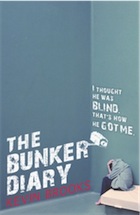
Here are the opening sentences of The Bunker Diary by Kevin Brooks, which controversially won the Carnegie Medal in 2014:
Much has been written about Brooks' book and whether it is suitable for children, so I'm not going to stray into that territory. You might consider that I have chosen a non-typical example, but many children's books deal with uncomfortable themes and issues.
Both of these openings are physical descriptions which imply a sense of claustrophobia. They perfectly set the scene for what is to follow, which only gets worse.
The two books have several more things in common:
You can see other parallels from these extracts: the language in both is direct, the sentences straightforward. These stylistic points are undoubtedly a requirement for writing for children. But one can equally find instances of quite 'literary' writing in books for children, for example in the earlier novels of, say, Philip Pullman, such as A Ruby in the Smoke.
The Bunker Diary deals with important psychological and philosophical themes, that are uncomfortable to contemplate. So does Matar's book.
One aspect which perhaps distinguishes In The Country of Men (and other novels for adults) from most novels written for children is the retrospective angle: the narrator is now about 25 years old, and the narrative eventually catches up with him. This is less common in writing for children.
Another aspect that might signify a difference is non-linear storytelling, in which the narrative darts around in time. This is, again, less common in writing for children (however I did use this technique in my new novel Stormteller and, whilst I can't think of one at the moment, I'm sure I've read other children's books which do this).
The other observations to make about the difference between them are the setting (Gaddafi's Libya compared to contemporary London) and the degree of sophistication in the form of prior knowledge or experience that is assumed in the writing of Matar's book.
So to answer my original question, all other thngs being equal, the main aspect I am monitoring as I write for children rather than for adults is constantly gauging that level so it is pitched correctly.
I'd be very interested to know what you think about this topic?
David Thorpe is the author of Stormteller and Hybrids.
When I am writing for children or teenagers at the back of my mind is always this question of the difference between the two.
Here are the opening sentences of In The Country of Men by Hisham Matar, which was shortlisted for the Man-Booker Prize and the Guardian First Book Award. The narrator is recalling a time when he was nine years old:
"I recall now that last summer before I was sent away. It was 1979 and the sun was everywhere. Tripoli lay brilliant and still beneath it. Every person, animal and and went in desperate search for shade, those occasional grey patches of mercy carved into the white of everything."
The novel describes the gradual discovery by the child of his father's involvement in anti-revolutionary activity and what this means, and his desperate love for his mother.
Here are the opening sentences of The Bunker Diary by Kevin Brooks, which controversially won the Carnegie Medal in 2014:
"10.00 a.m."This is what I know. I'm in a low-ceilnged rectangular building made entirely of whitewashed concrete. It's about twelve metres wide and eighteen metres long. A corridor runs down the middle of the building, with a smaller corridor leading off to a lift shaft just over halfway down. There are six little rooms along the main corridor, three on either side."
Much has been written about Brooks' book and whether it is suitable for children, so I'm not going to stray into that territory. You might consider that I have chosen a non-typical example, but many children's books deal with uncomfortable themes and issues.
Both of these openings are physical descriptions which imply a sense of claustrophobia. They perfectly set the scene for what is to follow, which only gets worse.
The two books have several more things in common:
- there is no happy ending in either of them;
- very unpleasant things happen along the way;
- the main character is not conventionally likeable.
You can see other parallels from these extracts: the language in both is direct, the sentences straightforward. These stylistic points are undoubtedly a requirement for writing for children. But one can equally find instances of quite 'literary' writing in books for children, for example in the earlier novels of, say, Philip Pullman, such as A Ruby in the Smoke.
The Bunker Diary deals with important psychological and philosophical themes, that are uncomfortable to contemplate. So does Matar's book.
One aspect which perhaps distinguishes In The Country of Men (and other novels for adults) from most novels written for children is the retrospective angle: the narrator is now about 25 years old, and the narrative eventually catches up with him. This is less common in writing for children.
Another aspect that might signify a difference is non-linear storytelling, in which the narrative darts around in time. This is, again, less common in writing for children (however I did use this technique in my new novel Stormteller and, whilst I can't think of one at the moment, I'm sure I've read other children's books which do this).
The other observations to make about the difference between them are the setting (Gaddafi's Libya compared to contemporary London) and the degree of sophistication in the form of prior knowledge or experience that is assumed in the writing of Matar's book.
So to answer my original question, all other thngs being equal, the main aspect I am monitoring as I write for children rather than for adults is constantly gauging that level so it is pitched correctly.
I'd be very interested to know what you think about this topic?
David Thorpe is the author of Stormteller and Hybrids.
Wednesday, December 24, 2014
VIDEO: Watch the creation of a book cover
I thought you'd like to see the process of creation of the cover of my latest novel, Stormteller.
The cover illustrator is the awesome Elaine Franks and she happened to take photographs of every stage of the production of the artwork, in her Garden Studio. From a variety of thumbnail ideas to the finished digital artwork, the publisher has compiled the images into a video.
Part of the process of creating the cover involved showing drafts on Facebook and inviting people to choose the one they liked best. I enjoyed the process of crowdsourcing opinions, because I got an idea of what engages readers. Thank you to everyone who took part in that process.
I have made a Pinterest board of images connected to the novel. Amongst other things it contains some of the photographs I took while researching the location of the novel, as well as some of the cover images that Elaine sent.
Since the novel contains detailed descriptions of places, I found the process of taking photographs essential for understanding the landscape. I'm a very visual writer and want to 'see' the scenes I describe.
Besides the location, the research included investigating the legends that I used as a basis for part of the book, and the science of climate change – particularly as it applied to that location: Borth, Taliesin, Pumlumon and so on, which is also the same area that is used as the setting for the successful Welsh TV series Hinterland.
I've collected all this together on my website here. There's also a link on that page where you have until December 10 to enter a competition for a free copy!
The cover illustrator is the awesome Elaine Franks and she happened to take photographs of every stage of the production of the artwork, in her Garden Studio. From a variety of thumbnail ideas to the finished digital artwork, the publisher has compiled the images into a video.
Part of the process of creating the cover involved showing drafts on Facebook and inviting people to choose the one they liked best. I enjoyed the process of crowdsourcing opinions, because I got an idea of what engages readers. Thank you to everyone who took part in that process.
I have made a Pinterest board of images connected to the novel. Amongst other things it contains some of the photographs I took while researching the location of the novel, as well as some of the cover images that Elaine sent.
Since the novel contains detailed descriptions of places, I found the process of taking photographs essential for understanding the landscape. I'm a very visual writer and want to 'see' the scenes I describe.
Besides the location, the research included investigating the legends that I used as a basis for part of the book, and the science of climate change – particularly as it applied to that location: Borth, Taliesin, Pumlumon and so on, which is also the same area that is used as the setting for the successful Welsh TV series Hinterland.
I've collected all this together on my website here. There's also a link on that page where you have until December 10 to enter a competition for a free copy!
Tuesday, November 18, 2014
Using Comics To Communicate Sustainable Cities
Humour has the power to cut through conflict, and art has the power to bypass reason. Cartoons equal art plus humour. So all credit to the 4th Future of Cities Forum for using comics to log in real time what delegates were debating and concluding in their workshops last week.
Drawnalism is the name of the artist who was commissioned, who in reality is two people: the cartoonists Matt Buck and Alex Hughes. They were bought in by the organisers, Energy Cities, to lighten up what can be a too-serious process of tackling the world's problems, by tapping into people's creativity and encouraging lateral thinking as a form of problem-solving.
Coincidentally Matt and I have worked together before, on two series of cartoon strips, Public Servants and Managing Hell. It is really good to see him in action, both of us now working to promote sustainability in cities.
The first cartoon kind of sets the stage for the discussions, as delegates laid out the problems facing cities on the route to sustainability:
This little cartoon exemplifies in one brilliant image how one person can release so much energy in another when they become inspired:
Imagine is an ongoing project form Energy Cities which is about envisaging solutions to problems of energy and cross-border issues in Europe. Although there are an increasing number of cities working to minimise their energy use and generate energy themselves, they also come up against many obstacles, one of its is quantify the extent of the changes required and finding ways to overcome these problems.
This cartoon sets out the result of workshop on this subject:
Part of the problem facing cities leaders is getting others to buy into the sustainability agenda, and this cartoon summarises the results of a workshop on this subject:
As delegates prepare to leave the conference they need to take with them the energy generated by committing to do particular actions, and this cartoon is intended to energise them in this respect.
Cartoons are a great way to facilitate decision-making, and create memorable but enjoyable encodings of the messages that arise from that creative process. They reach the place other forms of communication cannot. #FutureOfCities is to be congratulated for having the imagination themselves to commission cartoonists to work with them.
Drawnalism is the name of the artist who was commissioned, who in reality is two people: the cartoonists Matt Buck and Alex Hughes. They were bought in by the organisers, Energy Cities, to lighten up what can be a too-serious process of tackling the world's problems, by tapping into people's creativity and encouraging lateral thinking as a form of problem-solving.
Coincidentally Matt and I have worked together before, on two series of cartoon strips, Public Servants and Managing Hell. It is really good to see him in action, both of us now working to promote sustainability in cities.
The first cartoon kind of sets the stage for the discussions, as delegates laid out the problems facing cities on the route to sustainability:
This little cartoon exemplifies in one brilliant image how one person can release so much energy in another when they become inspired:
Imagine is an ongoing project form Energy Cities which is about envisaging solutions to problems of energy and cross-border issues in Europe. Although there are an increasing number of cities working to minimise their energy use and generate energy themselves, they also come up against many obstacles, one of its is quantify the extent of the changes required and finding ways to overcome these problems.
This cartoon sets out the result of workshop on this subject:
Part of the problem facing cities leaders is getting others to buy into the sustainability agenda, and this cartoon summarises the results of a workshop on this subject:
As delegates prepare to leave the conference they need to take with them the energy generated by committing to do particular actions, and this cartoon is intended to energise them in this respect.
Cartoons are a great way to facilitate decision-making, and create memorable but enjoyable encodings of the messages that arise from that creative process. They reach the place other forms of communication cannot. #FutureOfCities is to be congratulated for having the imagination themselves to commission cartoonists to work with them.
Subscribe to:
Posts (Atom)