Are you e-experienced? Until a week ago I wasn't. But, in the last three weeks I have made and published my first e-book.
It feels a bit like giving birth to, I don't know, some kind of strange mutant mongrel beast, some hybrid child whose destiny is unknown, who may grow up to mock me, betray me, give me glory (but only by leave of the wayward capriciousness of viral flukeiness) or, even worse, disappear completely without trace in the infinitely absorptive sponginess that is the e-thernet.
Anyway, for what it's worth, I thought I would share my experience. Some of you may be teetering on the edge of this mysterious pool of brave new publishing opportunities, debating whether to take the plunge. I expect many of you already are e-experienced swimmers with Olympian credits. If so, you can poke fun at my ineptitude.
I kindled thoughts of these waters for a long while. Some of my books had been converted into ebooks by my publishers, but they were like the offspring of alcohol-obscured one night stands; unknown and unclaimed. The publishers didn't even tell me they had been born, I only found out by accident, and I don't have a clue about sales figures.
In a tentative way, I had previously offered PDF downloads of one or two stories or chapters for sale through my websites, but they had languished as forlorn and undownloaded as an unfertilised dandelion in a meadow of opium poppies.
I own no e-reader; nothing I cannot read in a bath without fear. Every work of fact or fiction in my library looks dissimilar from every other, and I like it like that.
What persuaded me to dip my sceptical toe in these waters was partly the persistent encouragement of a local publisher,
Cambria Books, whose manager, Chris Jones, is passionate about their new business model.
OK, I said. But I wasn't sure what content to offer first. Then, an old colleague and the series editor of some of my non-fiction, suggested that I republish an old novella of mine. (Thank you, Frank.) This seemed a perfect way of testing out the market, since I knew it would have an existing audience, and that there'd be a new one to which I wanted to introduce it. All I would have to do was find those readers. (The expected readership, by the way, is YA, most likely readers interested in humour, politics, science fiction, and comics/graphic novels.)
I still am sceptical, so I'm going to be watching sales with interest.
The whole process of preparing the content from start to finish took two weeks, which itself is very attractive: contrast this with the swimming-through-jelly tempo of traditional publishing - two years start to finish?
Here are the stages it went through:
 |
| One of the illustrations, by Rian Hughes |
- Scanning in the original book using OCR (optical character recognition) software. I used ABBYY. The software is remarkably accurate but does need a bit of an eagle eye for spotting 1s that should be Is and Os that should be 0s.
- Scanning in the 12 illustrations, which different comics artists from Dave McKean to Simon Bisley had contributed to the original edition. This was the fun bit.
- Designing the cover, which included colourising in Photoshop a black-and-white illustration that had been on the inside. That was fun too.
- Adding a short story on the same theme to give extra value, that had been published elsewhere in another collection but not widely seen.
- Writing a new afterword. This involved a nostalgic and enjoyable expedition into overgrown verges along the side of my personal memory lane. I took my butterfly net for effect (a butterfly effect) to catch those extra special chaotic moments.
- Completing the whole thing in Word. Word, the software, is not my friend, although Word, the archetypal personification of language, is. But sometimes you have to dance with the Devil, since the e-book conversion process requires a Word file. How did Microsoft sew that one up?
- Making sure all the prelims were hunky-dory and accurate. That included researching and writing up short biographies of all the artists, updating them from the previous edition, and making sure I thanked everyone.
- Then I thought I ought to add some adverts for some of my other books at the back that readers might be interested in. Why not? 70-90 years ago, most books had adverts in the back - and the front, sometimes, just like magazines. Perhaps this is the way to go to finance this new form of publishing? Interactive ads for acne-banishing face creams in the back of YA novels, anyone?
- Then I got carried away and added a real ad from the 1940s for a chemistry set for boys that included real uranium! Most people don't believe that I didn't make this up.
I sent the file to the publisher, who checked it over, made more corrections, added the ISBN and converted it into the .mobi format, which Amazon likes.
I chose to go with Cambria Books, but there are many other companies offering similar deals. It may be worth shopping around, but I didn't bother. Some of them offer print-on-demand as another option. This may be worth considering as well. If you want to get reviews you should have a few print copies to send to reviewers. Also, if you don't think you will sell more than 1000 print copies, print-on-demand is generally cheaper than a conventional print run. Over this number, you should go down the conventional printing route.
The publisher then sent the e-book file back to me to check. I was horrified. I had designed it in Gill Sans font, which I love, and it came back in a frankly disgusting, evil, serifed font. All my lovely formatting was strewn about like weatherboard in a hurricane, and my unique work was reduced to the same common denominator as everything else that you see on a Kindle.
I had to resign myself to the fact that there is little you can do about this, except to control where some page breaks go. It's a bit like designing for the web, except you have even less control. That's the nature of this homogenising beast.
Then, holding a stiff drink, I muttered: “Go!" The publisher uploaded the file to Amazon and it was
live - for sale - in less than 24 hours! Wow.
However, I didn't just want to sell it through Amazon and merely contribute to their increasing domination of the market. I wanted people to be able to read it on something other than a Kindle.
So the nice publisher also gave me a version in the .epub format, which works with other e-readers.
Cambria Books also made a
Facebook page and a
webpage on their company website for the title, to promote it alongside all of their other titles. For all of this Cambria charged £200, which includes £50 for the ISBN. The book is for sale at £1.84. So, I need to sell, bearing in mind the cut that Amazon takes, just 125 copies to get my money back.
I could also have chosen to do all of this myself, but I'm lazy, and I figured that it's worth it, especially since this was my first time.
But I wasn't finished yet.
I then chose to make the files available on my own website. I already sell books on my website through PayPal. Selling e-books is slightly different, because there isn't a physical product to ship, and you need to create a place where buyers can download the file, after PayPal has checked that they have paid for it successfully.
This place has to be completely inaccessible to search engines, otherwise people will just grab the files for nothing.
Here's what I did:
- “Do you want to let your customer change order quantities?" No, because they won't order one more than one e-book.
- "Can your customer at special instructions in a message to you?" No, there's no need for that.
- "Do you need your customer's shipping address?" No, because messages will go to their PayPal e-mail address.
- Check the box saying “take customer to a specific page after checkout cancellation" and type or paste in the full website address for your shop page.
- Check the box saying “Take customer to a specific page after successful checkout". Here is the really, really important bit: type or paste in the full website address for the page they go to download your e-book. Make sure this is right! This is the complete address for the page that you made earlier and uploaded, the one at the otherwise secret place.
- All you have to do now is click “create button" (don't worry, you can go back and change things if you made a mistake, as I did), and, when happy, copy the code and paste it on your page exactly where you want the button to be.
- Save your page and upload it to your website.
That's it!
The things writers have to do these days.
But I still hadn't quite finished. I had to write a news item publicising the e-book for the front page of my website, in which I included a link not just to the page where people can buy my books, but to the
exact part on the page where they can buy that e-book, to make it super-easy for them.
On that page, I include all the options for them to make the purchase: a link to the Amazon page, because most people will be comfortable doing that; and the two buttons for both formats that I made using PayPal.
You can see the news item on the front page of my website
here.
I then wrote a post on my blog promoting the book, which you can read
here.
Of course, I also had to promote it on Facebook, on both
my own page and
the page made for the book itself, and on my
Twitter account.
And, I launched the e-book at what was billed as the UK's first festival for e-books, in Kidwelly last weekend. My publisher had a stand there.
Unfortunately, this event was poorly promoted and badly attended (having it in a more accessible place would have helped), but there were many
excellent speakers, not to mention, for children, our own Anne Rooney, plus Simon Rees and Mary Hooper, Clive Pearce and Nicholas Allan.
Several speakers told their own experiences of publishing e-books. Notable for me was Polly Courtney, who confessed her lamentable experiences with HarperCollins that made her realise that self-publishing was a far better route than being with one of the big five, and Dougie Brimson, who has sold over one million self-published e-books, because he knows his audience really well.
Listening to the speakers gave me confidence that it really is okay to do it yourself and publish ebooks. It doesn't mean you have to give up working with mainstream publishers. You can do both. But given that we all nowadays have to spend at least 25% of our time marketing ourselves and our books, in practice it is not that much more work.
As one of the speakers said, most readers don't care who the publisher is, as long as the book is good.
Did I leave anything out? Is there a better way of doing this? Perhaps some of you will share your experience. After all, I'm just a beginner, but at least I'm no longer an e-book virgin.


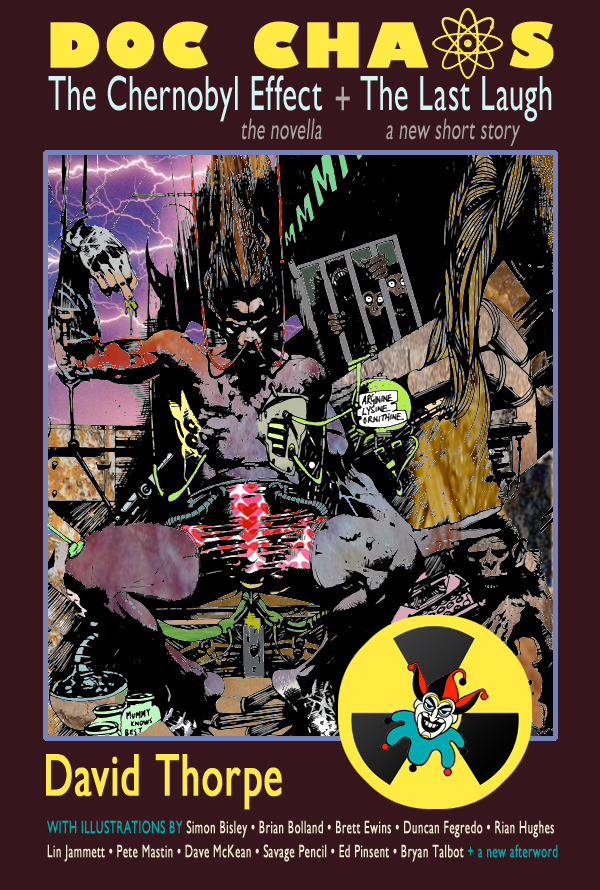


 This new edition, (available