Showing posts with label George Orwell. Show all posts

Thursday, May 29, 2014

Comics, anarchy, chaos magick and George Orwell

The founding fathers would turn in their graves. The British Library is hosting an exhibition of publications in a medium once accused of undermining literacy, decency and the very establishment itself: comics.

I haven’t yet visited Comics Unmasked: Art and Anarchy in the UK, which has been curated by Paul Gravett, author of Comic Art, which I reviewed last month, but I have a shrewd idea of much of its contents because of my own involvement in the industry from the 1980s and ‘90s.
A frame from the original artwork of a page of ABC Warriors
from 2000AD comic that hangs in my studio.
Story by Pat Mills, art by Simon Bisley.

Deadline 3 - which published Jamie Hewlett's Tank Girl
Previously I’ve been at pains to emphasise that comics are about much more than men in lycra, but we can’t ignore the lycra or the science fiction and fantasy, which is in strong evidence here. What deserves wide recognition, however, is the role of attitude in providing the energy of iconoclastic creativity that has seen so many writers and artists whose target audience was originally children become internationally hugely influential.

British comics and their creators have an anarchic spirit. In the late nineteenth century the 'Penny Dreadfuls' were sometimes considered so subversive and dangerous to the Establishment (in fomenting an industrial dispute) that at one point printing presses used for printing them were destroyed by the authorities, as documented in Martin Barker’s book Comics: Ideology, Power and the Critics.

There is a direct line from these through Fleetway’s Action comic to 2000AD, which in the late ‘70s and ‘80s saw the work of Pat Mills and John Wagner produce strips such as Nemesis the Warlock, which satirised corrupt organised religion, and Judge Dredd, which satirised just about everything including a corrupt totalitarian state (although sometimes Dredd seemed as though it was applauding the very summary dispensation of justice which it avowedly condemned).

Action was created in 1975 by Pat Mills for publishing house IPC. Soon banned for its violent content it nevertheless spawned 2000AD, the home of Judge Dredd.

Jamie's Tank Girl - whom he called a female Judge Dredd with bigger guns on speed.  
2000AD could have been deliberately designed to be the kind of left-wing comic imagined by George Orwell in this fascinating article he wrote about the heavily middle and upper class boys’ comics like Gem, Magnet, Hotspur, Wizard and so on.

These class-ridden, patriotic comics were produced by the ultra-conservative family-owned Scottish DC Thompson publishers, for much of the twentieth century - up until the days of punk rock - as staple fare for boys, a deliberate antidote to the previous, anarchic Penny Dreadfuls. Orwell describes them in depth in the article and observes their propaganda value as follows:
“the stuff is read somewhere between the ages of twelve and eighteen by a very large proportion, perhaps an actual majority, of English boys, including many who will never read anything else except newspapers; and along with it they are absorbing a set of beliefs which would be regarded as hopelessly out of date in the Central Office of the Conservative Party.”
The cover of Revolver 1, which serialised Grant
Morrison's deconstruction of Dan Dare
That aside, there is another ideological gradation that has Leo Baxendale’s Bash Street Kids (also published by DC Thompson in the Beano) and 2000AD at one end - produced by angry, anti-authoritarian working class writers and artists - and the middle class Frank Hampton’s neo-Imperialistic Dan Dare at the other.

Common to both is the preoccupation with slapstick humour, fantasy and science fiction as a way of boggling minds and examining present-day trends taken to extremes.

Orwell himself notes the value of Sci-Fi (which he calls Scientifiction) in this fascinating sentence:
“Whereas the Gem and Magnet derive from Dickens and Kipling, the Wizard, Champion, Modern Boy, etc., owe a great deal to H. G. Wells, who, rather than Jules Verne, is the father of ‘Scientifiction’.”

You can even position later writers, influenced by these earlier names, on this spectrum, such as Alan Moore and Grant Morrison on the left, and Neil Gaiman more in centre-ground. Grant slyly subverted Dan Dare himself, imagining him as an older man morosely looking back on the glory days of space empire in the pages of Revolver in the late ‘80s.

The ‘80s was a key time, because it was then that the kids who had been brought up on the Beano and 2000AD hit adulthood and it became cool to continue reading comics. Inspired by Moore’s Watchmen and V for Vendetta, and the American Frank Miller’s Batman: Dark Knight Returns, younger artists and writers gave birth to an explosion of creativity.

The cover of Crisis issue 3 - probably the closest
ever to Orwell's dream of a left wing comic.
Pat Mills' and Carlos Ezquerra's Third World War deliberately made
very cool heroes out of disabled, black, gay or female characters. 
Eight years after my own story in Marvel's Captain Britain about the Northern Ireland Troubles was censored, Fleetway felt able to publish, in the overtly political Crisis comic, Garth Ennis' True Faith, (but even that graphic novel was scandalously withdrawn from sale, following complaints).

Crisis was, again, largely Pat Mills' brainchild. Overtly political and radical it ran the amazing anti-American Imperialism strip Third World War, which attacked CIA involvement in central and south American countries, a topic already tackled in comics by Alan Moore's and Bill Sienkiewicz's documentary graphic novel, Brought to Light.

The cover of Doc Chaos 1 by me, Lawrence Gray and
Phil Elliott published by Escape


As opposition to Margaret Thatcher and the poll tax spilled over onto the streets and while Spitting Image was on tv, independent creator-owned comics sprang up all over the place, from my own satirical Doc Chaos, published by Gravett's Escape imprint, to Deadline, from Brett Ewins and Steve Dillon, which came directly from a collision between comics and the new House music club culture, the true star of which was to become Jamie Hewlett's Tank Girl.

And most of us know what happened when Hewlett met Blur's Damon Albarn: Gorillaz, the first band in history that was made up of comics characters.
Peter Stanbury's and Paul Gravett's Escape magazine
- beautifully designed, arty and hip. 


I must given a special mention to Don Melia and Lionel Gracey-Whitman for publishing Aargh!, Heartbreak Hotel magazine with the supplement BLAAM! Because the mere fact that this anti-homophobic publication could be a comic was testimony to how far the medium had come since the days of Wizard and Hotspur weekly comics in which homosexuality was a heavily suppressed element. Here is Orwell describing a  cover image: “a nearly naked man of terrific muscular development has just seized a lion by the tail and flung it thirty yards over the wall of an arena”.

Heartbreak Hotel issue 5 cover by Duncan Fegredo
The first comic explicitly for black people, Sphinx
Repossession Blues from the pages of Blaam!
A cover of chaos magick journal Chaos International 
which shows the use of comics iconography
- the exchange of ideas went both ways.
There was a huge amount of talent around in the ‘80s, much of which will be on evidence in the British Library show, but I find it fascinating that I, along with the far more successful Bryan Talbot, Grant Morrison, Alan Moore and Neil Gaiman, (particularly the first two) and probably Pat Mills (although I never met him) were also at the time heavily into chaos magick. We’d discuss this when we met occasionally at the bar that used to be at the foot of Centrepoint, near Titan Books’ offices where I worked, and Forbidden Planet bookshop, and at comics conventions.

Alan only went public on this more recently, but Grant overtly used his research in long-running strips such as the intensely surreal Doom Patrol and subsequently The Invisibles, both for DC.

It is not necessary to believe in any of the gods and forces invoked by magical ritual in chaos magick to utilise its effects. The point for all of us was that Nothing is Forbidden, Everything is Permitted, to use Aleister Crowley’s mantra. "Do what thou wilt shall be the whole of the law" - a phrase deliberately echoed by Mills in the story at the top of this post.

Chaos magick provided an almost limitless kit of tools to access the far reaches of the imagination. I learned my tricks from a group that met every week in Greenwich, above Bulldog’s café, from the legendary Charlie Brewster, aka Choronzon 666.

I used this massive wellspring of creativity when writing The Z-Men for Brendan McCarthy. Brendan was a maverick comics artist who started work in 2000AD, later becoming like many comics artists a film storyboarder, who was renowned for his psychedelic, mystical artwork.

All of us were also heavily influenced by Dada and Surrealism – this was the premier topic of my undergraduate degree.  It is very obvious in Grant’s Doom Patrol - just read my favourite story The Painting That Ate Paris; and how else could you come up with a superhero who is an entire street (named - of course - Danny)?

Pure anarcho-comics: Hooligan Press & Pete Mastin's
Faction File collected from the pages of
squatting magazine Crowbar -
back full circle to the aims of the Penny Dreadfuls.
Arguably, the most successful comics writers working for American publishers in the ‘80s and ‘90s were Neil, Alan and Grant – Brits all. Frank Miller, also a giant, is American of course, and, while anarchic, is sympathetic to the other end of anarchism – right wing libertarian, which approves the right to bear arms and use them against Commie radicals.

I attribute all of their success not just to their supreme storytelling abilities but to their political views and their involvement in anything occult, arcane and extreme, because in these genres of comics, what readers demand is out-there imagination – and it takes some serious head-space distorting tricks to cultivate a mind that can repeatedly and frequently, on demand, to a punishing production schedule, come up with the mind-boggling concepts, characters and storylines required.

These lessons were not lost on the more recent wave of massively successful British writers, such as Warren Ellis and Brian Hitch, the creators of The Authority, (just read Warren Ellis' Transmetropolitan for a taste of his brand of anarchy).

And I believe there are lessons here for all writers and artists who aim at children and teens, that most demanding of all audiences, to help them feed and stoke the furnaces of creativity and imagination.

I could even attempt to sum them up in the following seven guidelines. Bear in mind that these are methods I am suggesting, and in no way am I advocating tackling a particular kind of subject matter. These are ways of researching, preparing to write and draw, and of writing and drawing itself:
  • Feed your mind with stuff from the far reaches of experience; and apply that to the everyday.
  • You can’t be too extreme.
  • JG Ballard's maxim: follow your obsessions.
  • Never censor yourself – leave it to someone else.
  • Boggle minds.
  • Maximise drama.
  • Above all - don’t take it too seriously.

Monday, October 15, 2012

Top Ten Tips for Manuscript Revision (How to Deal with Rejection)

There is no writer alive who has never received a rejection slip. Or, probably, dead for that matter.

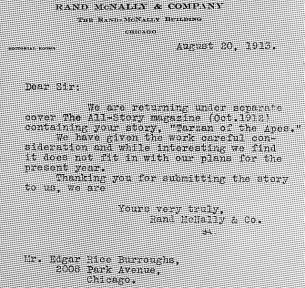
This is the test of fire; one you have to undergo time and time again. Because for every “Yes! We'd love to publish your book and give you a squillion pounds advance!" There are 100, or possibly 1,000 “Thank you for sending us your manuscript, but I am afraid it does not suit our requirements. We wish you the best of luck elsewhere".


There are several possible reactions to receiving a rejection letter:

Suicide:


Retiring to a monastery:

Falling into despair:

Taking the same manuscript around every agent and publisher in the world:


Looking again at the manuscript:


By the way, this is a page from the edited manuscript of George Orwell's 1984. Now there's a book I wish I had written.

Of the above options, my personal recommendation is for the fifth. I have tried two of the other four, but I'm not telling you which ones.

This is because, as everyone knows, persistence is the handmaiden of luck, which is the catalyst for success.

But being able to appraise and revise your own work objectively is a skill, and probably the most difficult part of writing.

Even more difficult than appearing on chat shows.

So here are my top ten tips for revising a novel. (And by the way, I am talking mostly about novels for young adults.)

1. Go through it and look to see if your viewpoint is consistent. If we are not following the action through one particular character's point of view, there must be a very good reason why. If you dart into another character's head or perspective, or find that you are giving your own description of a scene, during the same scene, steer it back to the primary viewpoint.

2. Are we as close as possible to the feelings of the character? Are their feelings reported and described, or evoked and given? This is the difference between "She felt a jolt of shock" and her shouting: "How dare she?" Don't distance the reader from the action and emotion; maximise the effect you are after.

3. Put it through a cliché strainer. Hang the manuscript up in a net so that everything falls through the holes except the clichés. We all write clichés; they're a kind of shorthand put in at the first draft when you want to get on with the plot. Then, we don't always notice them later. Here's a list of some cliches I strained out of a recent novel:
‘makes a beeline for’ p8, ‘spot it a mile away’ p21, ‘stand out a mile’ p98, ‘head is reeling’ p22, ‘mouth falls open’ p22, ‘cold as ice’ p25, ‘knows it like the back of her hand’ p34, ‘coast is clear’ p109, ‘dead to the world’ p41.

What do you replace them with? Inspired images!

4. Apply a similar filter for speech words. Really, the modern reader doesn't want to be held up in their appreciation of the plot by a variety of inappropriate speech verbs. Here is another list of mine, that you won't find in the latest draft of a novel:
‘trilled’ p9, ‘croaks’ p24 & p42, ‘breathes’ p45, p52, p88, p90 & p114, ‘laughs’ p46 & p89, ‘gushes’ p50, ‘giggles’ p71, ‘grins’ p76, p79 & p151, ‘weeps’ p82, ‘growls’ p88, ‘muses’ p94, ‘wheedles’ p111, ‘blurts’ p169 and ‘starts’ on p173.

5. Check the pacing. If it feels like it's dragging, or you feel a bit bored at any point when you're reading it, cut it down. Be ruthless. Sometimes you find you have rushed where you should have taken your time to paint the scene a little. Throw in some nice imagery. Evoke that sense of place or person using all of the senses.

6. Check the transitions. These are how a chapter ends and the next chapter begins. Each chapter should end with a cliffhanger of some sort to keep your reader up until four in the morning because they can't bear to put it down. In some way there should be a link with the beginning of the next chapter, but vary what kind of link it is. This could be a word echoed, or an image subverted. It could be similar in mood or theme, or violently contrasting. After a period of high tension, you probably want a light moment of humour, or take the opportunity to insert some vital information.

7. Add emotion. Scare me. Shock me. Make me fall on the floor laughing. If there is any dramatic moment, make sure you have made the most of it. If there is any interesting concept, make sure you have explored it. But always do it from the point of view of your characters.

7. When you've done everything you can yourself, pay an editorial critique service to do a professional job. It may cost £300 or so, but the business that does not invest in itself will lose out to one that does. And you are a business. You are serious about your success. Think you want to spend the money on a nice weekend at a writers' retreat? Or a glitzy conference where you rub shoulders with the famous? Fine, but do this first. You will learn far more from the detailed, specific, personal attention that you will get. Even if you disagree with it. And, you probably won't.  Choose the service based on recommendation from other writers.

8. Rewrite the beginning, then the end, then the beginning again, then the end again. Make sure that you match up the themes that you establish at the beginning at the end. Use similar imagery, for example. Make sure the opening is as arresting, direct, and suspenseful as possible.

I have learnt a lot by reading the opening three pages of bestsellers, and analysing how they achieve their effects.

9. Print it out. Read it out loud. Reading it out loud will show up things you won't notice otherwise. Apply the spelling filter and the grammar filter at the same time. Don't rely on spell checks, do it properly yourself.

10. Give it to someone else again to read. One more eye never hurts.

This is just my top 10. This list is by no means exhaustive although it might be exhausting. The perfect manuscript is an elusive creature that requires much patient nurturing to tame and train.

Of course, you will always think you did all of these things before you sent it away in the first place. The fact that you found loads of things to change means, quite simply, that you were wrong. And the reason is: you needed some time to get a fresh perspective.

Conspicuous in its absence on my list is:

11. Take seriously any hints or advice contained in the rejection letter (if you were lucky enough not to get a standard letter).

This kind of goes without saying. But then again, I find that these letters are often written in haste, or perhaps not by someone who is particularly qualified, or contain only a general impression, not anything that is necessarily useful. Sometimes the reason given for the rejection is just an excuse thrown in and the real reason is totally different. In other words, it's not a technical response.

If, after all the above, your next draft is still rejected, then at least you will know that it's simply because the agent or editor concerned does not go for this particular type of work, or their list is already full for this category. It's not that it's not perfect!

Here is an extract from one rejection letter I had recently which illustrates just this approach:

“Should you write a comedy or another piece that has a little more light in the darkness, we'd be happy to consider it. You can clearly write."

Good luck. And by the way, if you want to compare the edited with the original version of 1984 have a look here.

May Big Brother always ignore you and your manuscript avoid Room 101.


www.davidthorpe.info

Friday, July 04, 2008

Genre and Literature

I have written this in response to an interesting post by Juliet Marillier on her blog Writer Unblocked. She is discussing whether genre fiction is 'literature' or not. One comment on her blog argues that 'literature' is a genre as well, and I would agree. But my discussion below, argues that all of this is irrelevant.

As I've written earlier, I begin with JG Ballard's assertion that science fiction is the only literature (yes, I'm calling science fiction literature) which has accurately reflected what has happened in the 20th century. Of course he is talking about a particular kind of science fiction, the kind that Star Trek fans would not recognize. His work was often marketed as science fiction and still is, even though everybody knows that it is JG Ballard, basically, and not "proper" science-fiction. In the end, he has succeeded in defining his own genre, kind of in the way that William Burroughs did, an author also originally marketed by Pan as science fiction.

My novel Hybrids was promoted as science fiction by HarperCollins, but for me it was not. Just because it had people merging with bits of electronic commodities didn't make it science fiction for me, although you might call me naive as a result. It was the themes that counted.

I've gone down this road even more with my latest work, and the touchstone which I am using is Kazuo's Ishiguro's Never Let Me Go. There has been much written about whether this is science fiction or literature, and everybody generally agrees that although the subject matter -- cloning and breeding people for operations and spare parts -- is in the ballpark of science fiction, the treatment of it is not. And the reason is -- and this contradicts what Juliet says -- that it does not present a consistent storyworld.

A science fiction writer would normally create a whole self consistent world and describe its features. Kazuo doesn't do this because he is interested in the emotional lives of the characters, not explaining the wider world in which they find themselves. We already know what our 'real world' is like, we don't need to be told. We accept the 'real world' whether it is self consistent or not (and some would argue that is you not)! So you wouldn't stop the narrative of a 'work of literature' to explain how a mobile phone works when a character starts using one. And yet science fiction writers do sometimes stop the narrative to explain something about their story world for readers.

Whatever label you put on a book defines its readership to an extent until the writer is sufficiently well known that people will follow his/her work. S/he will break out of the genre. Terry Pratchett is Terry Pratchett. Interestingly, the Raw Shark Text, by Steven Hall, although arguably fantasy, was marketed as non-genre by Canongate Books, presumably in order to maximise its potential readership.

Then again there is the old chestnut of whether someone like Franz Kafka or George Orwell would be marketed as science fiction nowadays.

It doesn't really matter -- they are unique, and perhaps what we should all be doing as writers is concentrating on finding our unique voice and not worrying about genre.