Showing posts with label storytelling. Show all posts

Tuesday, April 26, 2016

Is the end in sight for the Very Hungry Caterpillar?

Once upon a time, about 4,000,000,000 years ago, the world began, in the era called the Hadean. A very long time later came the human race, just 200,000 years ago, altering the planet forever as it spread.

From the beginning it's likely mums and dads told stories to their children, to preserve social memory and teach them what they needed to know to survive. These stories always changed over time according to need and circumstance.


It's suggested that we are now in a new geological epoch, the Anthropocene, that's to say an epoch overwhelmingly defined by the influence of one species over all other factors: ours. What influence, if any, is this having on the stories we give our children today?

Some of the writers on this website grew up reading stories published around or before the mid-20th century. This period is now being suggested as a likely candidate for the beginning of the Anthropocene, and this will be confirmed in a few months when the body set up to evaluate this (a working group of the Subcommission on Quaternary Stratigraphy, sitting within the International Union of Geological Sciences (IUGS), whose job is to set international standards for global geological time-scales), has finished sifting through the geological evidence for the start of the Anthropocene.

Since this epoch began, we have seen a vast increase in human population, from 2.5 to over 7 billion; an increase in mass extinctions; the deposition of nuclear isotopes around the world; and of plastic waste; climate change; massive destruction of natural habitats; mass resource extraction; and mass exodus from the countryside to cities.

This last represents the biggest change for children, since most children growing up now will not be near where the wild things are, but will be ringed by concrete, tarmac and cars.

This changes the way young readers will respond to the stories told just seventy years ago – even twenty years ago. When Rudyard Kipling wrote his Just So allegories, the rhinoceros, the leopard and the elephant weren't endangered.

Just So stories by Rudyard Kipling cover


When most meat for the table is battery-reared, a commodity in an industrial process, doesn't this turn picture books of farm animals in the farmyard into modern fairy stories?

Illustration for a Google farmyard app for children
Peddling nonsense to kids: an illustration for a Google farmyard app for children. What on earth has this to do with reality?

What are most children to make of forests featured in traditional fairy tales such as Red Riding Hood and Hansel and Gretel, when they've never seen a real one? Perhaps they will never have the opportunity to even read these tales because publishers will no longer see them as relevant. Has this already happened? I don't know.

Hansel and Gretel peer out of the forest at the house of danger
Hansel and Gretel peer out of the forest at the house of danger.

Children in recent decades were treated to cautionary tales warning them of the impending danger of the extinction of big mammals and the destruction of rainforests. The guilt of adults was laid onto them with the vain hope that, when grown up, they might work to prevent the inevitable. Yet today, most of the trends that trace biodiversity remain travelling in the wrong direction.

RainForest by Helen Cowcher

For children, tales of anthropomorphic animals offer the chance to objectivise human emotions and traits – but say little about the animals themselves. Tales of dark forests present opportunities to confront subconscious fears. Stories set in wild nature nurture a fantastic imagination.

But all three types of story at least place humans within the planetary context, a biosphere, an ecology within which we play just one part among millions.

The Anthropocene, if it is a useful concept at all, reminds us that we have tended to see the rest of the world as just a reflection of ourselves, there if not for us to plunder, then to entertain us, that we regard ourselves as the most important and dominant species on the planet. What hubris! What a change from the stories our distant ancestors and tribal people told their children, which nurtured respect for the wild world around them.

But if we are to save nature, and therefore ourselves, then we must first empathise with nature, on its own terms, not on ours. I've written before about some of the great books that do this.

But this post is asking a different question: are modern published books for young readers whose experience of the world is largely urban interiors, vehicles and digital entertainment now being set primarily in this world, because that is what they recognise? Or is a fake nostalgia for a way of life now gone (if ever there) being peddled by editors and publishers?

I wrote in my novel Hybrids about how we are becoming enmeshed with technology. Modern children, from the day of their conception, grow within a lacework of electronic connectivity, becoming quickly familiar with the means to extend their sensory and social reach to the far side of a world that they do not yet appreciate.


The system that they perceive to be supporting them is as much virtual as tangible, vibrating with the power of circuitry, translucent filaments of data threatening to fuse with their nerves and dendrils, seeming more immediate and visceral than the mesh of life itself – our perfect atmosphere, the churning soil, the miracle of life that is distant from the street, seen as just a thin strip of blue above and between the buildings, ragged pigeons squabbling on the windowsill, a windowbox.

Storybooks for young readers: should they then reflect this reality? Are they doing already? I don't know.

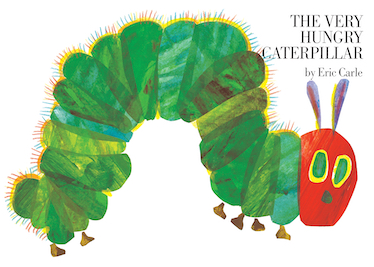
But if so, one can imagine a scene a few decades hence, in a warmer and more impoverished world: a child picking up an ancient, well-thumbed copy of The Very Hungry Caterpillar, found in a dusty box in attic belonging to a grandparent, and asking: "Mummy, what's a caterpillar?"

David Thorpe is the writer of the Sci-Fi YA novel Hybrids and the cli-fi YA novel Stormteller.

Monday, July 14, 2014

Is the structure of a story archetypal?

This is weird. For years I went by the standard Hollywood scriptwriting rule which says that the three act structure is god. As it was taught to me in my scriptwriting class and as I taught it to hundreds of students, in a standard drama act one finishes one quarter of the way in and act three begins one quarter before the end. There's also a midpoint where there's another not quite so pronounced change of direction or momentum.
3-act-structure

I tested it out many times with my watch while watching movies and even when writing scripts, counting the number of pages in, to confirm that at these magical points the main plotline undergoes a major shift of direction or gear. Of course you all know this.

Plenty of stories do not quite conform to this rule (usually short or very long or episodic ones) and post-modern writers mess about with it. If there are many subplots or intertwining storylines there will also be distortion, but you can often pick apart these individual storylines and apply the same rule to them.

It's not as if this is deliberate. It seemed to be an intrinsic quality of the way the human mind appreciates the telling of a story and, correspondingly, the writing of one.

Now the novel I am principally engaged on right now has an unusual storyline: it is circular, so in principle has no beginning, middle or end. It's a story (and I don't want to give too much away) that I had been wrestling with how to tell since I first thought of the idea almost half a lifetime ago.

Many times I came to it, tried to write the opening pages and got nowhere. I put it down but it kept bothering me. I knew there was a really good idea in there somewhere. But because it was circular I couldn't get a handle on it, from a dramatic point of view. There were other issues: I needed to do research and at the time wasn't fully capable of it. Some stories have very long gestation period.

Sometimes when you are struggling with a problem like this you read another novel that is quite different and it can give you a sudden insight into your own story, and for me in this particular case it was reading The Raw Shark Texts by Steven Hall which is a very curious book indeed. In case you haven't read it, it is about creatures which exist beneath the surface of a page when you are reading a book which have a life of their own and if you're not very careful they can devour you.

That's quite a powerful idea. It gave me another idea, also, I like to think, powerful. I put it into my mix.

The second new ingredient came from reading a non-fiction book, The End Of Time by Julian Barbour, which argues that time does not exist – except in our consciousnesses. It's quite possible to describe the universe mathematically without recourse to time, he argues.

But if there is no time, how can a story have beginning, middle or end? In fact, how can there be stories at all? Logically, outside of our consciousnesses, stories are impossible. They do not exist 'out there'. We invent them to entertain each other and help ourselves remember stuff.

The third and final necessary ingredient for me to get a handle on my story was to determine the point of view. Up to then I did not have one, other than that of an omniscient narrator. It all fell into place when I realised that I needed a new character from whose perspective everything else was told. Once this had dawned on me, and I'd decided upon who that character was and his relationship to the other protagonists, the story could be written.

First I wrote the synopsis, then a long treatment. I needed to have it all plotted out because it was very complicated. Two years later I found the time to write the first draft and completed it by summer 2013. I left it for nearly a year and then completed the second draft last month.

I then thought I would try an experiment, and I looked at what happened precisely one quarter, one half, and three quarters of the way through the draft. Lo and behold, there were the plot points – in exactly the places where the theory said they should be.

How did this happen? I have a hypothesis, but that's all. Even though the story is circular I had to start it somewhere. Given that my narrator is deliberately telling the story for the benefit of another character in the novel, then the story begins at the most significant entry point for him. He then recounts the story until he reaches the point at which there is a suitable ending for him. This is just his perspective on the events.

Another character might have begun to describe the events at a different temporal point. Nevertheless I chose the character of the narrator, and therefore I am ultimately responsible for choosing where the novel starts to describe the circle of events, and it made total sense to start it there once I had made that choice.

I am incapable, however, of working out whether the final emergent structure is subconsciously imprinted into the novel because it is so deeply engrained in my own mind – as a kind of self-fulfilling prophecy – or whether it would have been there anyway. I know that I needed to establish the characters and the situation before the story could really take off, and I know that the pacing and dramatic intensity needed to increase as the narrative progresses. So I surmise that I had probably adopted the structure and these principles without deliberate intention.

3-act-structure and dramatic tension

It's vaguely satisfying to know that this happens automatically but also slightly disturbing. I have felt, at times, like dividing the chapters or episodes up and randomly shuffling them to see if anything interesting emerged from the new ordering, but intuitively I suspect that might be a waste of time. An interesting experiment nonetheless. Perhaps I still ought to do it.

I think Barbour is right, and time – therefore stories – do only exist in our minds. Story structure is a necessary consequence of consciousness because we cannot appreciate what comes later without knowing what has come before – whether the story is true, historical, or fiction. We also need to be made to care for the characters before we are motivated to turn the page.

We are prisoners of time and so bound to the logic of narrative. We seek beginnings, middles and ends even where there are none.

I wonder if any of you have similar experiences your own writing processes?

Monday, January 19, 2009

Rags-to-riches: the resonance of the Obama narrative

It does seem almost miraculous that a man of African descent should become President of the United States of America, the son of a Kenyan immigrant and the grandson of a man who was tortured by the British for his part in the Mau-Mau rebellion.

There are many explanations as to why the American people elected him; undoubtedly much credit is due to his highly impressive moral character.

But as a storyteller, I believe some value arises from the archetypal narrative type which the Obama story represents, one that is at the heart of the American dream: the rags to riches story. This story form is dear to Americans because many of them still believe that it is possible for anyone to become their president, no matter how humble their background. The Obama story epitomises the democratic ideal perfectly.

In its classic form, the rags to riches story has five stages:

The first stage is the 'call', where the hero is in a low state, perhaps unhappy, usually in an impoverished home. For Obama, this might be as a child in Hawaii, or it might be in New York, 1982, when he lived in an apartment in a sixth-floor walkup on East 94th Street, "a drug-ridden neighborhood filled with gunshots". At this stage something happens which calls the hero to the wider world that could lift him out of his miserable state. In the Cinderella story, it's when she gets her invitation to the ball. It's debatable if there was a specific moment when Barack Obama felt the call to serve - his was more a gradual evolution. It might have begun in his second year at Occidental College, Los Angeles, when he began to heed his mother's warning that he shouldn't be partying too much; prompting him to leave for New York. It might have been during his time there, from 1982-1985, where he studied and thought a great deal. Or it might have been in Chicago where he threw himself into the task of helping disadvantaged black people get what was theirs by right at the Calumet Community Religious Conference. His boss, Gerald Kellman, later said: "He wanted to make it from the grass roots and he wanted to learn". It was while there that he became convinced that the most serious problems he confronted couldn't be solved on the local level. So perhaps the real call was here, when he changed course again, for Harvard to study law, a path which many an aspiring politician was supposed to follow.

The second stage is when, out in the world, there is initial success. Cinderella gets to dance with the Prince. Aladdin finds his magic lamp. Our hero becomes a Senator in Illinois.

But in the third stage there is always a setback. Cinderella has to return home when her chariot becomes a pumpkin again at midnight. Dick Whittington is forced to leave London. David Copperfield's child-wife dies. The Sorceror tricks Aladdin's Princess out of his magic lamp. And in The Gold Rush, Charlie Chaplin loses his girl and fails to find gold. In Obama's case it was in the year 2000, when he lost a Democratic primary run for the US House of Representatives. As setbacks go, it wasn't a big one, but it taught him a necessary lesson. He still had more to learn, and remained at that level for a further four years.

The fourth stage of the rags to riches is when the hero has victory in his sights but must face his final ordeal. Undoubtedly, this point in the Obama story comes when, after becoming only the fifth African-American Senator in U.S. history, and the third to have been popularly elected, he decided to run for president. This campaign set numerous fundraising records, but before he could win the ultimate prize he had to defeat his most fearsome and implacable enemy. In a sense, this was not a Republican, John McCain, but two Democrats - the Clintons. Boy, would she not give up. But the reason why ultimately Hilary and McCain lacked the spontaneous popular support expressed by ordinary people for Obama, is because the Obama story is so much more appealing and inspiring than the story arc represented by either of them, which have, let's be honest, more in common with tragedies (after all, there are very few victims of Obama's pursuit of power, but one can think of more than a few metaphorical corpses littering the McCain and Clinton wakes).

The Obama story is inspiring precisely because of its resonance as an archetypal narrative, because it is the story we want to believe. It's one that we all remember from the tales told to us at bedtime in our younger years. Not just Cinderella, but Dick Whittington, Puss in Boots, Aladdin, Moses, and Joseph. Then as we grew older in the forms of adult stories such as Moll Flanders, David Copperfield, Great Expectations and in modern times Rocky, Citizen Kane, Scarface, JK Rowling's personal story, The Pursuit of Happiness, Charlie Chaplin in The Gold Rush, and this year, Slumdog Millionaire. Rags-to-riches is even the basis of many hugely popular reality television shows such as Big Brother, The Apprentice, American Idol and Joe Millionaire (in the States).

The Democrat demagogues knew of its power. It's why, in the 2008 Convention, they requested all speakers to deliver a rags-to-riches story.

Obama's enemy fought till the bitter end. She would not let up until way beyond anyone else would have conceded. It was, like all good stories, nail biting till the final moment. But of course he was victorious -- his followers and fans would say that virtue won out, for once in politics, against absolute lust for power.

In classic rags to riches stories, the fifth and final phase is purely and simply success. The hero gets his princess, or vice versa, and wins the kingdom. Everyone lives happily ever after. The hero's inner virtue has been recognized by everyone at large. The slipper fits Cinderella because she deserves it - being humble and pure, unlike the ugly sisters, McCain and Hilary Clinton. In some versions of the story, the hero himself has to undergo an inner transformation for his virtue to manifest. In other versions, her previously hidden virtue is finally acknowledged by everyone.

Because of this, the reign of the heroine or hero over their kingdom, or city in Dick Whittington's case, is fair and benign. And here is where this narrative form achieves its greatest resonance and attractiveness to people at large, especially the underclasses. So much hope is invested by people all over the world, not just in America, that Obama will make their problems go away, or at least lighten their burdens.

It is almost scary. From Pashtuns to Pakistanis, and Afghans to Africans, we want him to dissolve the war on terror, save us from climate change, enervate the economy and propel us from poverty. He is, sadly, not from a fairy story, wreathed in magic. Remember how we felt when Tony Blair was elected. Remember how it fell apart. We want it to be different this time because that's what the story tells us it's going to be like.

We can only wait and hope that this time, in some way, history really has delivered us the best possible leader for these, the worst of times. We hope that Obama's success will enrich us all.