Showing posts with label hybrids. Show all posts

Thursday, January 26, 2017

The Hybrids tv series is now available for agents / producers to pick up.

Hybrids - we are human too


The pilot script and tv series bible for Hybrids are now incredible thanks to enthusiastic and discerning feedback from Adam Stern, Director of Development at the Gotham Group, one of the top ten Hollywood production and management companies, who called it 'unique' and 'original'. He feels it's best suited for the millennial sf market, cable, and the theme is a 'hot topic'.

This revolutionary SF thriller set five minutes into the future dramatises for the millennial viewer the popular anxiety that we are being taken over by technology.  

Johnny – half computer – and Kestrella – her hand is her smartphone – are hybrids. Together they battle a conspiracy that will lead them to the top of a country in chaos. 

Hybrids is X-Men meets Mr Robot.

A pandemic is terrorising the country by merging victims with their most frequently-used technology. It mutates their cells so the device regrows beneath their skin. They become 'hybrids' – feared, crippled, sometimes enhanced, sometimes dead. 

Are you wedded to your device?

Hybrids is now available for agents and producers to pick up. Contact: info@cyberium.co.uk

Tuesday, April 26, 2016

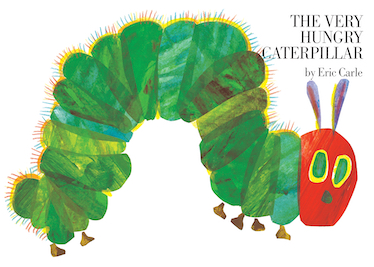
Is the end in sight for the Very Hungry Caterpillar?

Once upon a time, about 4,000,000,000 years ago, the world began, in the era called the Hadean. A very long time later came the human race, just 200,000 years ago, altering the planet forever as it spread.

From the beginning it's likely mums and dads told stories to their children, to preserve social memory and teach them what they needed to know to survive. These stories always changed over time according to need and circumstance.


It's suggested that we are now in a new geological epoch, the Anthropocene, that's to say an epoch overwhelmingly defined by the influence of one species over all other factors: ours. What influence, if any, is this having on the stories we give our children today?

Some of the writers on this website grew up reading stories published around or before the mid-20th century. This period is now being suggested as a likely candidate for the beginning of the Anthropocene, and this will be confirmed in a few months when the body set up to evaluate this (a working group of the Subcommission on Quaternary Stratigraphy, sitting within the International Union of Geological Sciences (IUGS), whose job is to set international standards for global geological time-scales), has finished sifting through the geological evidence for the start of the Anthropocene.

Since this epoch began, we have seen a vast increase in human population, from 2.5 to over 7 billion; an increase in mass extinctions; the deposition of nuclear isotopes around the world; and of plastic waste; climate change; massive destruction of natural habitats; mass resource extraction; and mass exodus from the countryside to cities.

This last represents the biggest change for children, since most children growing up now will not be near where the wild things are, but will be ringed by concrete, tarmac and cars.

This changes the way young readers will respond to the stories told just seventy years ago – even twenty years ago. When Rudyard Kipling wrote his Just So allegories, the rhinoceros, the leopard and the elephant weren't endangered.

Just So stories by Rudyard Kipling cover


When most meat for the table is battery-reared, a commodity in an industrial process, doesn't this turn picture books of farm animals in the farmyard into modern fairy stories?

Illustration for a Google farmyard app for children
Peddling nonsense to kids: an illustration for a Google farmyard app for children. What on earth has this to do with reality?

What are most children to make of forests featured in traditional fairy tales such as Red Riding Hood and Hansel and Gretel, when they've never seen a real one? Perhaps they will never have the opportunity to even read these tales because publishers will no longer see them as relevant. Has this already happened? I don't know.

Hansel and Gretel peer out of the forest at the house of danger
Hansel and Gretel peer out of the forest at the house of danger.

Children in recent decades were treated to cautionary tales warning them of the impending danger of the extinction of big mammals and the destruction of rainforests. The guilt of adults was laid onto them with the vain hope that, when grown up, they might work to prevent the inevitable. Yet today, most of the trends that trace biodiversity remain travelling in the wrong direction.

RainForest by Helen Cowcher

For children, tales of anthropomorphic animals offer the chance to objectivise human emotions and traits – but say little about the animals themselves. Tales of dark forests present opportunities to confront subconscious fears. Stories set in wild nature nurture a fantastic imagination.

But all three types of story at least place humans within the planetary context, a biosphere, an ecology within which we play just one part among millions.

The Anthropocene, if it is a useful concept at all, reminds us that we have tended to see the rest of the world as just a reflection of ourselves, there if not for us to plunder, then to entertain us, that we regard ourselves as the most important and dominant species on the planet. What hubris! What a change from the stories our distant ancestors and tribal people told their children, which nurtured respect for the wild world around them.

But if we are to save nature, and therefore ourselves, then we must first empathise with nature, on its own terms, not on ours. I've written before about some of the great books that do this.

But this post is asking a different question: are modern published books for young readers whose experience of the world is largely urban interiors, vehicles and digital entertainment now being set primarily in this world, because that is what they recognise? Or is a fake nostalgia for a way of life now gone (if ever there) being peddled by editors and publishers?

I wrote in my novel Hybrids about how we are becoming enmeshed with technology. Modern children, from the day of their conception, grow within a lacework of electronic connectivity, becoming quickly familiar with the means to extend their sensory and social reach to the far side of a world that they do not yet appreciate.


The system that they perceive to be supporting them is as much virtual as tangible, vibrating with the power of circuitry, translucent filaments of data threatening to fuse with their nerves and dendrils, seeming more immediate and visceral than the mesh of life itself – our perfect atmosphere, the churning soil, the miracle of life that is distant from the street, seen as just a thin strip of blue above and between the buildings, ragged pigeons squabbling on the windowsill, a windowbox.

Storybooks for young readers: should they then reflect this reality? Are they doing already? I don't know.

But if so, one can imagine a scene a few decades hence, in a warmer and more impoverished world: a child picking up an ancient, well-thumbed copy of The Very Hungry Caterpillar, found in a dusty box in attic belonging to a grandparent, and asking: "Mummy, what's a caterpillar?"


David Thorpe is the writer of the Sci-Fi YA novel Hybrids and the cli-fi YA novel Stormteller.

Friday, September 11, 2015

Writing for TV: The Market for SF/Fantasy is Stronger Than Ever

This blog is usually addressed at writers of children's books but there are other markets for children's writers, such as comics, graphic novels, television and film which are worth considering.

This month I did a short survey of the state of the market for science fiction and fantasy television series for the producer optioning my own SF book, Hybrids for tv. I looked at series that were not necessarily just for children, but many of which may be watched by young people, that are on our screens this year or in development up to 2017. (Of course just because something is in development does not mean it will be produced or reach the screens, but even so writers may be paid to produce scripts or plots.)

I was astonished to find over 60 series in this SF&F category alone. The market has expanded hugely as television has become more international and companies like Netflix and Amazon enter the market, and I feel very encouraged by this.

Of these 60+, around half are adapted from books: 12 from the UK and 21 from the USA. Six are adapted from comics, continuing the trend of taking Marvel and DC characters to small screens. They include X-Men, Daredevil, Supergirl and Luke Cage.

Many of you might have seen Tatau, an eight-part paranormal series for a younger audience for BBC3 set in the Cook Islands and New Zealand, written by Richard Zajdiic, who got his tv break writing for EastEnders, then moved onto This Life and Attachments, an interesting series about an Internet start-up that was developed by the brilliant veteran scriptwriter Tony Garnett and was probably ahead of its time.

Richard gives his own advice for writers who want to break into the market:
"It's not just about talent. Luck is a huge factor too - being in the right place at the right time - so perseverance and tenacity are equally important. Remember, it's a marathon not a sprint. Hang on in there and hopefully you'll win one eventually.
"There are so many factors in getting a show made, let alone recommissioned, most of which are totally outside your control. I've had several development scripts praised by all parties involved, even one where the director (Peter Kosminsky, no less) was scouting locations and sending me pictures of where he was going to shoot my scenes but then, crushingly, the coveted green-light somehow failed to materalise. I also wrote on the prison drama Buried which won a BAFTA for best drama series and gained widespread critical acclaim. Channel 4 cancelled it. Go figure."
Anyone who is in this business needs perseverance. Life On Mars was rejected for years by all the channels before finally being resurrected. There are plenty of resources out there, the principal one in the UK being the London Screenwriters Workshop (which I helped to get going a long time ago) and the London Screenwriters Festival.


Tatau: Kyle (Joe Layton), Aumea Vaipiti (Shusila Takao) BBC/Touchpaper, Photographer: Kirsty Griffin

Historical fantasy is popular in the wake of Game of Thrones and the BBC’s adaptation of Susanna Clarke’s Jonathan Strange & Mr Norrell. It is being further capitalised upon big time by the BBC with three series:

  1. a historical eight-part series The Last Kingdom, from the creator of Sharpe, Bernard Cornwell; 
  2. The Living And The Dead, an original period horror set in 1888. Both of these have been developed in partnership with BBC America for the American market;
  3. and World's End, in which a group of children from diverse backgrounds are taken to a mysterious remote Scottish castle which houses a secret army research centre for an unknown purpose. This is written by Danny Spring and Diane Whitley.

ITV is not being left out with The Frankenstein Chronicles, a six-part series being made for ITV Encore following in the wake of Penny Dreadful.

Children's writer Charlie Higson (best known for the young James Bond) continues the classic horror theme with a 10 part version of Jekyll & Hyde to be set in the 1930s. Robert Jekyll is the grandson of the original doctor. It will begin screening on ITV in October.

[While we're on the subject, did you know that Anthony Horowitz was offered the chance to write that Young Bond series and turned it down? Never mind, he's since been picked to update another classic character, Sherlock Holmes and to write The House of Silk and Moriarty, and a new Bond novel Trigger Mortis, to be published later this year.]

Mary Shelley's richly resonant and prescient novel Frankenstein also inspires another series called The Frankenstein Code, that's being developed by Michael Cuesta for 20th Century Fox television and written by Rand Ravich and Howard Gordon, set to air next year. However it actually has little to do with Frankenstein apart from the fact that a corrupt sheriff is brought back to life in the body of a younger man.

The BBC has a kind of Humans for children, a gentle comedy about a family who have to share the house with the world's first fully sentient artificial person, called, with a stroke of originality, Eve. It's written by David Chikwe amd Emma Reeves.

There are quite a few comedy SF dramas. The one I'm looking forward to most is Tripped, a four-part comedy drama for E4 from the writers of BBC crime series The Missing, Harry and Jack Williams, adapted from an E4 pilot titled Alt, written by Doctor Who's Jamie Mathieson. It features a lad called Danny and his stoner friend Milo, who trip through alternate worlds, meeting different versions of themselves.

Dystopian drama tends to be crossover: both adults and older children like it. The theme is expressed by another series of Charlie Brooker's Black Mirror, Legends of Tomorrow, a kind of retro futuristic story about a ragtag group of heroes and villains trying to prevent the Apocalypse, Programmed about aliens taking over the human race, one actually called Dystopia about a virus that has rendered mankind infertile, plus several more, but apart from Black Mirror it feels like scraping the barrel.

Two dramas address the 'what if' idea of Nazi terror still being around today: Timeline Alpha and the probably much more interesting adaptation of another novel by the infinitely exploitable Philip K Dick, The Man In The High Castle.  I can't wait to see this 10 episode alternate history, having watched the pilot shown in January, that is being released on 20 November from Amazon Prime Instant Video, and is executive produced by Ridley Scott.

There are so many more, but I can't sign off without telling you about something you will no doubt have missed, so bad was it: a Christian science fiction series recently aired on the The CW Television Network that was apparently deliberately contrived to influence children. In The Messengers the devil (in the form of The Man) turns five normal people into angels with supernatural gifts that might be the only hope for preventing the impending Rapture. The storytelling was so convoluted and confusing it has, I'm very sorry to say, because it was so much fun to watch for all the wrong reasons, not been recommended for a second series.

At any rate, what's for sure is that the hunger for science fiction and fantasy is stronger than it has ever been. Good news for the prospects of Hybrids at any rate.


David Thorpe is the writer of the Sci-Fi YA novel Hybrids and the cli-fi YA novel Stormteller.

Monday, May 11, 2015

I'm at Hay-on-Wye Literature Festival this Month - Come See Me

I'm very excited because this month I am to achieve a long-time ambition of being on stage at a literary festival. Not just any literary festival, but Hay, and not just once but twice! I'm not at all nervous, no.

Both events are part of the festival's 'green' strand.

The first will be about my new non-fiction book The One Planet Life where I will be in conversation with Jane Davidson, director of INSPIRE and a fellow patron of the One Planet Council.

The second will be to do with children's writing and climate fiction, where I will be joined by Saci Lloyd, Jane, and climate change campaigner George Marshall. I hope other members of the Facebook group of cli-fi authors will be there, too.

Saci, plus other cli-fi authors, took part in a week of activity on the Guardian's children's books website last month about writing about ecological and environmental matters for children, culminating in a Twitter chat [#GdnEcoChat] on the evening of World Book Night with Frank Cottrell-Boyce, Kate Kelly, Sarah Holding, Tony Bradman and others.  The Guardian's record of it is here.

One of the questions that was asked was: is cli-fi just a passing fad? My answer, which was favourited a few times, was: 'NO! We've only just begun! One day all books will contain an element of cli-fi. They'll have to.'

It's now recognised by almost everybody that climate change is real and happening and caused by human beings burning fossil fuels. Any story that is set in the future which paints a picture of a world that hasn't been affected by climate change in one way or another will just look daft, especially if read in a few years' time.

It doesn't have to have disasters in it, it doesn't have to be a dystopia and it doesn't have to be science fiction. The lives of any characters, whether living 10, 50 or 200 years in the future, will have been affected in one way or another, whether it is how they get about, what the technology is like, what their home is like, or where they live.

I usually write about the near future. Stormteller and Hybrids both take current trends and extrapolate them, but the former is almost exclusively cli-fi and the latter only contains one tiny nod to it: a description of a swollen River Thames in London.

The novel I'm writing now is set in 2089-2104 and, while it is not about climate change at all, I still have to describe the ways that people get about (in their self-driving electric cars, rapid transit buses, or high-speed trains), the buildings that people live and work in (where attempts have been made, successfully or not, to retrofit them to save and/or generate electricity and to bring nature back into cities), the food they eat and where it comes from, the energy they use (all kinds of renewables), where the coastline happens to be (usually not where it is now) and what has happened to former seafronts.

This is a radical reimagining of life. It's neither dystopic nor utopian, just looking at how life and society might have to adapt in one way or another.

In this election there has been little talk of climate change, but all of the main parties (even UKIP, but with the striking exception of the DUP) recognise the huge contribution the low carbon or clean technology sector already makes to the UK economy, employing as it does close to one million people. Inevitably this contribution will continue to rise. Some parties (LibDems, Greens) attach more importance to the way that green jobs can make life better and improve the economy generally. It's a win-win-win scenario.

Yes, predicting the future is notoriously difficult, but the predictions about climate change have, ever since 1993, been consistent in saying that a certain list of impacts is likely to happen; exactly when is less certain.

We also know that human nature tends to leave everything to the last minute, only responding to disasters when they are imminent or actually happening.

Put the two together and you begin to get an idea of the way things might go; except that climate change is not one disaster but a whole succession of transformations with all sorts of ramifications that will continue for the next few centuries.

In the past, quite a few writers who have tried to predict the future have found life imitating art, such as Ray Bradbury's description of “little seashells… thimble radios” that brought an “electronic ocean of sound, of music and talk and music and talk” in Farenheit 451; John Brunner’s description of electric cars powered by fuel cells and Detroit as an abandoned wasteland in Stand on Zanzibar; tablet computers in Arthur C Clarke's 2001: A Space Oddysey; Google Glass type goggles in Willliam Gibson's Neuromancer; not to mention ubiquitous people watching (CCTV) in Orwell's 1984.

Not written for kids? Actually, almost all of these books I read as a teenager.

I will leave you with two thoughts: encouragement to contemporary writers not to ignore developments that are consistent with a world predicted by climate science, and the infographic below that I discovered, which records many predictions made by writers that have come to pass.


David Thorpe is the author of cli-fi YA fantasy Stormteller and the YA SF Hybrids.

Wednesday, August 07, 2013

The threat of Hybrids increases as people use more gadgets

In my 2008 novel, Hybrids, I envisaged a virus called Creep, that causes teenagers to merge with frequently used technology like mobile phones, computers and game machines.

The threat of this occurring in reality is increasing as more and more homes are filling with gadgets and households become dependent on technology.

The average household has filled up with consumer gadgetry such as flat screen televisions, tablets, iPods and smartphones in the last decade, as new and cheaper technology plus high-speed internet access has made affordable many items that were once seen as luxuries.

I'm just as guilty as anyone else of using gadgets; I even used software, called Grammarly, to check this post for spelling and punctuation.

However, the rise of technology has changed habits, meaning many families spend less time together, something else warned about near the beginning of Hybrids.

According to a leading UK auction website, a family household could easily have over a dozen electronic devices, including multiple versions of the same item for each family member, which would have been unaffordable just a few years back.

According to figures from various UK authorities, the proportion of British households with the following technologies is:

• Mobile phone: 94%

• Flat screen TV: 65%

• Digital TV recorder: 49%

• Broadband router: 76%

• Laptop computer: 66%

• Tablet computer: 22%

• Digital radio: 42%.

Statistics from Emarketer show that whereas 2.8% of British households had tablet devices in 2010, the number is now 22%, and expected to reach a third of homes within two years.

The rise of new technology has changed family habits.

While over a third of televisions sold in the UK in 2012 were super-large sized flat screens according to Ofcom, the emergence of digital recorders and catch-up services mean that households now spend less time watching TV together.

According to figures by TV Licensing, British households will soon have an average of three rooms with televisions, meaning that teenagers are now more likely to watch TV in their bedrooms than with the rest of their families.

Technology is changing the family unit. There are fewer face-to-face conversations now as families converse via text message, and there is a new social ‘crime’ of using a mobile phone at the dinner table.

TV viewing is discussed over social media as viewers 'second screen' while watching, instead of talking to those people who are in the same room as them.

We have sacrificed family life to keep up with technology. The big question is: how will families adapt to it?

Friday, July 05, 2013

BookViewTV interview about Hybrids

I recently had the pleasure of being interviewed by the charming and generous host of the new literary YouTube channel BookView TV, Denis Campbell.

The interview took place on Skype, with me in my studio, and Denis in his, making it very easy.

I talk about the genesis of my HarperCollins YA novel and planned series Hybrids; the characters, like Johnny Online, Kestrella Chu and their parents, Malcolm Winter and the Gene Police; what the novel means to me; the process of writing; and my hopes for the future of the series and a television/film project.

It's in three parts:

 Part One


 Part Two


 Part Three


Wednesday, June 26, 2013

Regaining confidence

Writers find it easy to lose confidence. I know I do.

Maybe because of a bad review, rejection of work by editors or agents, writer's block... there are 1000 reasons why this can happen.

How do you get it back?

It's been inspiring recently to witness the openness with which Matt Haig has talked about his crises of confidence and depression on his Facebook profile.

Matt was someone who had his first children's book published more or less at the same time as mine.

The Humans by Matt Haig book cover
Whereas I have subsequently not had a single other children's book published, despite having brilliant reviews for Hybrids, he has had a succession of books published and the latest one, The Humans, has been sold in numerous territories abroad, and he is to write the screenplay for a film adaptation.

He ought to feel on top of the world, but he doesn't always. I alternate between feeling on top of the world, and feeling, probably, well, average I guess. I occasionally have bad days. But not as bad as I used to.

As Matt says about The Humans: "It is personal. I put absolutely everything I had into it so if people don’t like it then they don’t like me".

I did the same with Hybrids. Perhaps that's why the first volume was such a success, but my subsequent two novels have not yet sold.

I didn't put so much of my vulnerability into them. Or maybe it's just because they aren't such earthshaking ideas. Maybe they will sell one day. Who knows? I think they're alright.

Hybrids by David Thorpe book cover
Anyway, people think Hybrids is a science fiction novel and I suppose it is. It's about teenagers merging with frequently used technology like computers and mobile phones.

But SF wasn't how I saw it while I was writing it. For me, it was about disability and feeling different from everyone else. It was a metaphor.

Because I have cerebral palsy. Okay, not a severe kind, but it still affects me and I was bullied when younger.

Since a few years ago, it has caused me to walk with a limp and drag my right foot.

I tell my leg to move and it doesn't obey me. Every step I have to concentrate on. I hate the fact that I wear out my right shoe every couple of months and have to buy a new pair. I hate the fact that I probably look stupid. People stare. I hate the fact that there's something that, no matter how much I concentrate and practice, I cannot improve about myself.

But most of the time I laugh at it. I compare myself to the Ministry of Silly Walks. It's just me and I'm okay.

There's a crucial scene in Hybrids, where Bruce Lee, who lives on in main character Johnny Online's head, encourages him to look at himself naked in front of the mirror in order to come to terms with his own body self-image.

After he's done that, he gets the confidence to carry on.

That passage, together with a dream sequence about a rhinoceros, are crucial parts of the book for me.

Writing the book was partly about trying to give other kids confidence about themselves, no matter how they feel about the way they look or how they behave.

There are two other books in the Hybrids trilogy all plotted out, waiting to be published. I want them to be published more than anything else. So do the many readers who have written to me.

But so far, nobody has published them.

Myself and colleagues are actively trying to get Hybrids turned into a TV series or film.

I believe in it, because I believe in talking about these emotions.

If you can't face up to it, if you can't be honest about your feelings, you can't be a writer and expect to succeed. Your characters will be hollow and uninteresting.

I want to thank Matt for sharing his vulnerabilities with us.

You know, you find that if you open up to people, they open up to you. Similarly, if you open up to emotions, writing comes.

That's how I regain confidence. I'm not saying it's easy, because it isn't. But who said it had to be?

Friday, December 09, 2011

An e-book, Hybrids update and more...

Boulder TV logo Here's a round up of recent news! Besides moving into my own custom built eco-studio, which I designed, and where I can now work surrounded by all my books at the bottom of the garden and be lovely and toasty warm with the superinsulation, triple glazed windows and underfloorheating, I've been a bit busy on other stuff:

• Boulder Media has now started work on visualisations of Hybrids in preparation for the proposed TV series. We're very excited and can't wait to see them!

• I've been commissioned to write an e-book on solar photovoltaics by a new publisher, Sedition. This will be a pilot for a whole series of e-books on sustainability topics. It only has to be finished by the 1st week in January!

• I'mNew Welsh Review December issue cover in discussions with Earthscan/Taylor & Francis for a new non-fiction book to be written next year on solar architecture.

• I've written an article on graphic novels, called What Pencils Were Made to Create. It's in the current issue of the New Welsh Review.

• I've finally finished the latest draft of his novel Stormteller (this is a link to a special website I made about it) which, along with my other recently completed novel, We Can Improve On You, is currently being read by the excellent David Fickling books. Fingers crossed!

• I gave a talk on solar PV at last month's Solar Flair '11 conference.

Solar Technology, The Earthscan Expert Guide to Using Solar Energy for Heating, Cooling and Electricity by David Thorpe
• My new book Solar Technology, The Earthscan Expert Guide to Using Solar Energy for Heating, Cooling and Electricity is doing well, as the seminal introduction to all solar technologies and practices, and solar energy itself. It covers solar space heating, architecture, water heating, solar cooling, solar power stations and photovoltaic electricity. It's full of pictures, and easy to read!

• You can now buy copies of this and my other books direct from me on my website's bookshop page!

• Of course, I am still producing daily news and weekly opinion pieces for the Energy and Environmental Management website.

Thursday, February 10, 2011

Hybrids is optioned for film/tv!

Boulder TV
The film & tv rights to my novel 'Hybrids' have been optioned by Dublin-based production company Boulder Media's rights holding sister company, Beholder. Am I happy? You bet!

It seems ages ago when I was so lucky that the novel won a competition to find a new children's author. First published in 2007 it is currently being reprinted with some very nice review quotes on the cover.

'Hybrids' takes place in the near future, when the nation is in the grip of a virus that causes its victims to become fused with technology, creating 'hybrids' - people neither wholly human nor machine.

Johnny (half-computer) and Kestrella (her hand is a mobile phone) unite to find Kestrella's missing mother as the Government's Gene Police hunts down hybrids, sending them to the sinister Centre for Genetic Rehabilitation. Their quest takes them to the heart of a conspiracy.
Foster's Home for Imaginary Friends
Boulder is well known as the service studio behind shows such as the witty and wacky (and multi-award-winning) 'Foster's Home for Imaginary Friends' and has recently completed work on Cartoon Network Europe's upcoming "live-action/animation 2D and 3D hybrid" 'The Amazing World of Gumball', which is pushing the boundaries of what is technically possible. How come young children get the most surreal telly?

The Amazing World of Gumball

Beholder says 'Hybrids' is "a compelling, thought-provoking sci-fi thriller" which it sees becoming "slick, gripping, older children's 'event' television".

[Incidentally I recently had an invitation to go and run workshops in a girls' technology school in Birmingham where the teachers, librarian and their kids had all read Hybrids. They said "We will be using Hybrids as a perfect example of a modern science fiction book". Wow.]

Anyway, Boulder's producers are Peter Lewis & Anne Tweedy and the Emmy-nominated Robert Cullen is to be the director.

I'd like to thank HarperCollins' Head of Licensing and Content Development, Melanie Beer for her great patience and help in negotiating the deal.

Look, I am trying not to get too excited about this - I have been here more than once before with a previous tv series, Doc Chaos, which was optioned and was nearly produced three times, twice for Channel Four and once for Warner Bros TV. But the vagaries of funders and producers meant the dice didn't land 'yes'-side up on those occasions.

I know that nowadays it is harder than ever to secure development finance. However I believe Anne and Pete are very serious and they have a proven track record of making the utmost effort to secure the backing required - which includes getting the toy people on board.

Just imagine model Johnnies and Kestrellas!

And, er, the computer game. Which surely undermines the watch-out-for-technology message of the book?

Let's not go there.

Pete and Annie are also open to team working, and I really hope we can keep whatever emerges true to the spirit of the book.

The tv series would hopefully encompass the whole story arc that continues from book one through the as-yet-unpublished other two books in the series. HarperCollins have indicated they will publish these when/if the series is to be broadcast.


We've discussed whether the treatment should be live action or animation. I said that although I love animation, especially Japanese anime such as Stand Alone Complex (the video above is a live-action-CGI composite from Animax TV), I have always seen Hybrids as live-action with CGI. Luckily, Pete and Anne agreed.

So now is the long wait - which could take years - to find out if Creep, the hybrid virus, will ever infect a screen near you!

Wednesday, November 11, 2009

Meeting Diego

Tonight I met one of my Brazilian fans, Diego Remus, at the place where he works, The Hub, which coincidentally is right near the restaurant where we were the previous night during the power cut.

When we met he first took me to a bookshop on Avenida Paulista and surprised me by finding on the shelves a copy of my book Hybrids in English as well as Portuguese and made me stand there while he took a photograph.

I'm getting kind of used to this while I'm here. in

Diego is a specialist in social networking and electronic media, a consultant to start-ups and interested in applying sustainability theory as well as communication theory to new models of business enterprise. He set up a Portuguese language fan club for Hybrids.

He works also for Startupi, which is a pun, because the Tupi is an old indigenous culture.

We especially talked about industrial symbiosis, resource efficiency and the potential of the sustainable economy new business model to benefit Brazilian businesses. He's going to arrange for me to give a talk at The Hub on the subject at the end of next week when I'm back in town from Porto Alegri and Curitiba.

See also Blackout in Brazil

Oh yes, I did finally get my laundry back last night, and find that there is tea to drink at St Paul's British School, but really, I think the UK must get the best pick of the tea leaf crop. This grey concoction is a pale shadow of what my constitution is used to!

Friday, September 05, 2008

An interview in Brazil

The Brazilian version of Hybrid Nation has just published an interview with me. For those of you who can't speak Portuguese, here it is in English:

1- How Hybrids was born? Does your work as an environmental journalist influenced your writing in this book?
Hybrids was born alive and kicking in a nest made from all my obsessions! Some of its roots lie in an earlier work, Doc Chaos, some in a postcard I picked up on holiday in Barcelona in 1984, while others are to do with my disability -- I have mild cerebral palsy -- and my interest in comics and the work of Philip Pullman. I try to keep out most of my environmental knowledge, except in my description of the landscape around the Centre for Genetic Rehabilitation, and the swollen snake of the River Thames which has flooded part of London due to global warming. Hybrids is about our obsession with technology and the human, emotional and political repercussions of fear of plague. Some of this comes from a work by Susan Sontag called Illness as Metaphor. In an earlier version of the story set in the Hybrids story world, it was a comics script called the Gene Police, and Major Winter was the main character if you can believe that! I sold options to Marvel comics and to Eclipse comics but neither actually published it. That was in the 1990s. There is much more in some 2007 posts on my Sympathy For The Moon blog. I talk about the difference between a hybrid, a mutant, an android and so on.

2- Some people say that great novel transports the reader and it's like watching a movie. Hybrids can evoke that same experience and maybe one of the reasons is the book's structure that seems wrote to be easily adapted to the silver screen. Do you agree with this and if so, was it something intentional?

Yes this is completely intentional. The turning point for me as a writer was when I did a course in scriptwriting for film and television. I have written TV and film scripts, and plenty of comics which I have also edited. I see things in my mind's eye and write them down. I try to keep the suspense going. However I am not too specific -- it's best to let the reader make their own images in their minds.

3- I'm curious in how exactly Creep works. In Hybrids we have people with guns and musical instruments attached to their bodies. How low the technology can be to "merge" in a human body?

Creep can only work in connection with a gadget that works on electricity. Some guns have electronic parts, at least they do in my future, and this is what Thom Gunn has. The musical instruments are electric guitar and electric bass. Later on in the projected Hybrids series, as scientists discover more about how Creep works, this is related in the narrative. We already know from volume 1 that it is to do with nanotechnology.

4- What was your reaction when you knew that Hybrids would have a Portuguese translation and be published in Brazil?

Absolutely delighted! I have just received a package with the book in and all the publicity material and it looks fantastic. I can use my English and Portuguese editions side by side now to try and learn Portuguese! I think Brazil is a fantastic country of many contrasts and a vibrant culture, and I love much of the films and television that I've seen from your country.

5- Do you have plans to visit Brazil someday?

I can't wait to visit you. It's also an amazing coincidence that the artist I have been working with on adapting Hybrids to comics, Felipe Cunha, lives near Sao Paulo and I will take the opportunity to meet him for the first time as well. I would also like to go and see some rainforest and visit Curitiba.

6- What can you tell us about the sequel?

Books two and three are plotted out. The climax is amazing. Something happens to Johnny and Kestrella that as far as I know has never been put in a book for teenagers before! The journey is full of surprises. The plot thickens and gets much darker with much more at stake. I can't give any details away however.

Friday, August 08, 2008

Now Brazil has a Hybrid Nation!

Now, Johnny Online fans have started a Portuguese version of his blog, Hybrid Nation: nacaohibrida.com. and, if you use the social networking tool of choice in South America, Orkut, you can be his friend! He has his own profile here.

Thursday, July 03, 2008

Tuesday, May 13, 2008

Ribbon cutting and techno-addictions

I felt very honoured to be asked to open a new school library at St Matthew Academy, London, last week. This is another brand new Academy building, a bit weird in the contrast between its corporate grey steel-and-glass scale and some of the kids who are as young as 3!

David Thorpe opening a new school library at St Matthew Academy, London, May 2008

So I had to cut a ribbon and then had a very interesting discussion with a lot of Year 7 and 8 kids on young peoples' attitudes to computers, mobile phones and their technology use, some of the themes of Hybrids.

Nearly all said they themselves thought they used technology (PCs, mobiles) too much. This contrasted with just one third of the group (140 kids) I'd asked the same question of in Sefton borough, Merseyside, where Hybrids is shortlisted for another regional award.
David Thorpe with schoolkids in Sefton borough, Merseyside, May 2008
I'd been there the previous day and met 140 kids from ten schools, signing in two days about 150 books. The event was in the Crosby Civic Centre, which is near the beach where Anthony Gormley's Another Place sculptures stare out blankly at a new windfarm out to sea. People were sunbathing.

I put the difference in response between the two groups down to the perceived danger of being on the streets in south London - where a teenager was killed just a mile away two days later. They said they didn't know what else to do with their time.

When I modestly suggested "read" this was a weird idea for some! They thought this was probably due to the addictive nature of technology use and - as pointed out by one girl who'd recently arrived in the UK - because the technology is so cheap, that everyone owns it and uses it to communicate with everyone else.
David Thorpe opening a new school library at St Matthew Academy, London, May 2008
I have been invited back to Lewisham to formally receive the Lewisham Schools Book Award and host a quiz for the kids on June 5 at Forest Hill School, Dacres Road, London, SE23, at 1.30pm. I'm so looking forward to this, as i love meeting the kids and hearing their viewpoints!

The Sefton SuperReads award is announced on June 21.

Thursday, May 01, 2008

On the road - in Merseyside and London next week

Next week I'm coming out of my hermit's cave in deep mid-Wales and hitting the road.

On Wednesday 7th May I'll be making two appearances at the Civic Hall in Sefton, Merseyside, answering questions from kids from the local schools and anyone else who cares to drop in (at 11.15am and 2.15pm) and signing copies of Hybrids.

Then it's off to London where that evening I'll be at a Children’s Book Circle event 'Are Series Books Ruling The Shelves?' at Penguin Books on the Strand.

The following day, 8th May, I'm opening a new library at the brand new St Matthew Academy, St Joseph's Vale, Blackheath (11am) (I must sharpen my scissors for the ribbon-cutting!), and again there's a signing.

If you're in the neighbourhood, consider dropping in!

Tuesday, April 15, 2008

A novel for barcode readers

Barcode version of Hybrids

In the future, novels will be written for machines to read.

When they have merged with machines, some hybrids will have barcode scanners.

For their benefit here are the first few pages of Hybrids in barcode language.


This means Hybrids is the first novel to be published in barcodes. Awesome, eh?


(Now, presumably, novels will begin to be written by machines... Maybe some already are!)


Thursday, April 03, 2008

Hybrids wins the Lewisham Schools Book Award

When I blogged last month that the winner of the presentations competition of the Lewisham Book Award was a team from Prendergast and Knight’s Academy, what I didn’t say was that they were presenting my book Hybrids.

I have just found out that also Hybrids has won the Lewisham Book Award, which is a joint event between Lewisham Secondary Schools and Lewisham Public Libraries celebrating the National Year of Reading 2008. This is wonderful news, and my thanks to them.

Below are slides from the wnning team’s presentation, as presented by: Kate Deedman & Rukshana Uddin Yr8 - Prendergast School and Alexandra Truong & Nicole Akano Yr8 - Knight’s Academy.

Hybrids, by David Thorpe - why you should buy the book, by students from Prendergast and Knight’s Academy
Kestrella - favourite character from Hybrids, by David Thorpe - by students from Prendergast and Knight’s Academy

Each team was told that they represented a publisher who wanted a bookseller, represented by guest author, Sam Enthoven, to buy their book. They had to persuade him to buy whatever title they were allocated, from the six shortlisted books, even if it was not their favourite. They were given approximately an hour and a half to make notes and to transfer these to a five slide Powerpoint presentation.

The other books on the shortlist were:
The Boy in the Striped Pyjamas by John Boyne
The Black Tattoo - by Sam Enthoven
The Wave Runners - by Kai Meyer
The Book of Everything - by Guus Kuijer
The Outlaw Varjak Paw - by S.F. Said

My thanks also to Natalie & Michael Powell Davies Yr9 & Yr7 & Judy Burnett Yr8 – Sedgehill School who also presented Hybrids very well, and to the organisers of the event and competition Chris Sivajnanam, Sedgehill School Librarian and Joanne Moulton – Children’s and Young People’s advisor - (Public Libraries), and to the judge Sam Enthoven, plus all the other school librarians.

It’s great to see so much enthusiasm into getting kids reading.

Fingers crossed now for the Sefton Super Reads award (Liverpool) where Hybrids is also shortlisted.

Now, come on HarperCollins, commission books two and three!

Friday, January 18, 2008

Hybrids - the comic: sneak preview


The first inked page of a comics version of Hybrids - by Brazilian artist Felipe Cunha. Currently seeking a publisher.

Sunday, January 13, 2008

Hybrids shortlisted for regional award

Hybrids has been shortlisted for theSefton Super Reads award – secondary schools in the Sefton borough of Merseyside.

School librarians have chosen books, and groups of pupils will read them all, and meet regularly to discuss and review them.

At the end of May each group votes for their 1st, 2nd and 3rd favourites (from 6 titles) and from this vote an overall winner is chosen.