Showing posts with label Saci Lloyd. Show all posts

Sunday, February 25, 2018

Come on a weekend retreat to experiment with writing about climate change

Incredible as it may seem it's still possible for children to go through school and come out the other end and hardly be aware of the existence of climate change, because it is barely touched upon in the curriculum.

It seems like a pretty vital topic, then, for writers to choose to include in their stories – to bring the reality of this topic into a children's imaginations!

That's why, this March, I'm running a weekend retreat for writers at the Welsh writing centre Ty Newydd, set in the stunningly beautiful Lleyn Peninsula.

Helping me to do this will be the poet, dramatist, climate change campaigner and performer Emily Hinshelwood.

We will be challenging writers to think about ways to expose and write about the often hidden connection between our profligate use of fossil fuels and the loss of habitat, life and lifestyle – that many in the world are already experiencing.

In our everyday lives we often don't have the opportunity or space to consider the emotions that arise in us as a response to such a nebulous and all encompassing threat as catastrophic climate change.

This threat seems both remote and near, far away in time, and yet touching the every day weather and the behaviour of plants and wildlife around us even now – as if they are early warning sensors.

We don't know how to interpret these portents and the very uncertainty around climate change and the sheer size of the fact makes us feel powerless and afraid.

Some of us go into denial, some of us are paralysed with shock and some of us are galvanised into action.

In writing for children, they mustn't be made to feel frightened or scared into shock and powerlessness, they must be helped to feel that the future does contain hope and that it is possible to do something. But there is so much to know. Where can writers start?

There is already no shortage of novels for children with the theme of climate change. Three years ago I took part in a session at the Hay-on-Wye Literature Festival where, with the author of the Carbon Diaries, Saci Lloyd, we touched on some of them.

For our pains we were accused of poisoning children's minds by the right-wing press and online trolls!

I've written something about the history of writing and climate change here.

In another project I've been involved with, Weatherfronts, an anthology of writing about climate change, some writers have addressed the question with a story set at a domestic scale rather than apocalyptic science-fiction.

Darragh Martin wrote a hilarious story for young children about fighting off a nasty polluter called 'Thumbelina Jellyfizz and the Elephant in the Bathroom'.
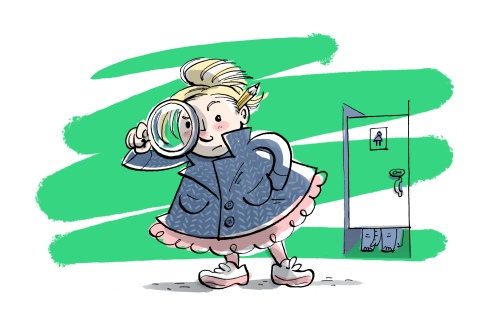


And what about picturing a bright future where we have solved the problems of climate change but maybe we have other problems instead?

To build a bright future we first have to envision it. Children, with their unfettered imaginations, unconstrained by preconceptions, are well able to contribute their own ideas. Writers can stimulate them to do this.

So our weekend course will discuss the many facets of climate change and the ways in which its impact is felt both by participants on the course and people throughout the world.

We will experiment with a variety of different approaches and investigate ways of tapping our emotional reactions, of using research, imagining possible scenarios, and generating meaningful stories.

We will also be using the cycle of recovery from shock and grief because we think it is directly relevant here.

We have seen people move through these psychological stages:

  1. shock & denial when they first hear about climate change; 
  2. pain & guilt about the suffering that humanity has caused and is causing by the use of fossil fuels; 
  3. anger and blame-laying
  4. depression, powerlessness, reflection
  5. an upward turn as one realises that life could still continue; 
  6. reconstruction of one's life in a new way that is more sustainable, perhaps making connections with like-minded people; 
  7. and finally acceptance and hope as they learn to deal with the new situation.

This almost sounds like a 'voyage and return' scenario or perhaps a 'conquering the monster' type of story, doesn't it?

It's going to be exciting to see what people come up with. Emily and I can't wait to see you there!

Find out more here: http://www.tynewydd.wales/course/writing-climate-change/

[I am the writer of Marvel's Captain Britain, the sci-fi YA novels Hybrids, Doc Chaos: The Chernobyl Effect and the cli-fi fantasy Stormteller. I also run a regular writing course, called 'Making Readers Care' that can be taken online. Contact me if interested.]

Friday, July 24, 2015

When YA Books Tackle Heavy Stuff


This month I was lucky enough to take part in the first panel discussion session to be held on climate fiction at the Hay Festival (or perhaps at any litfest?). Also on the panel were YA writer Saci Lloyd (third from left), and an expert in communication on climate change, George Marshall (right). The panel was convened by Jane Davidson (second from left), who's responsible for sustainability at one of the main Welsh universities, Trinity St. David's.

Saci is the author of The Carbon Diaries 2015 (written in 2007) and 2017 (written the following year). She discussed how she felt about writing about the year she is now living through... Which although not exactly as described in her book, is prescient in some ways.

In front of an audience of about a hundred, she related how she's been talking in schools and to other gaggles of teens for 10 years about climate change. "Compared to superheroes or music it looks to them at first as a pretty dull subject, but I've learned that the best way to get my message across is to be passionate, completely committed. Gradually they move from being apathetic to – 'What? Why didn't we know any of this!'"

We discussed why we feel the need to write about climate change in fiction for teens – basically, because it's hardly taught in schools. "If you do geography or science, then you might touch on it," said Saci. "But it's not a core subject, so it's quite possible to go through school and come out the other end not knowing anything about climate change."

There's nothing wrong with using fiction to talk about heavy subjects. Children's writers have been doing this since Charles Kingsley wrote The Water Babies about child chimney sweeps in 1862 (which I was given to read as a children's book when I was about six!). Yet when I said as much to the audience, my words got picked up by a young Daily Telegraph journalist sitting on the front row and turned into a headline in the following day's printed version of the paper: "Climate activists: 'We must infect children's minds'".

That headline was deliberately a come-on. To start with that first noun should have been singular! But the article itself is ok, although obviously a lot more was said. They quote me as saying that I like writing for teens because:

"They are asking all sorts of questions about how the world is working. Their minds haven't been tainted by ideological bias, they are still open minded about it.
"You can try to be seriously subversive and try to infect their minds with these viral ideas that they can explore on their own to make it exciting. When I was that age I loved having my mind boggled."

I stand by what I said, although I was speaking playfully – tongue-in-cheek – but naturally I also said a lot more (and so did the other three), and when talking about ideological bias I was referring to what George Marshall had said previously about the research he had done showing that adults generally only give credence to arguments put forward by others with whom they share the same ideological bias.  Usually children's minds are a lot more open and enquiring.

Perhaps the Telegraph is not used to the fact that writers for young adults often deal with heavy subjects, and we do so for a number of reasons, and not just because they are not covered adequately at school. We also write about them because children need to read about things that are bothering them, especially when nobody else is talking about it with them, because they're asking all kinds of questions about what they see around them, and because we want them to continue to enquire, to take nothing for granted, and to seek out answers of their own. At the same time hopefully we're telling a good yarn ("boggling their minds" as I put it).

With the predictable inevitability of the Internet, the deliberately sensationalistic bias of the headline was soon picked up by the nutters and climate sceptics who lurk as trolls on the 'net. The next thing I knew I was being accused on Twitter and certain websites of corruption of minors, child molestation and even, in one tweet from fundamentalist Jewish organisation, of being Hitler. All over the course of three days, which just goes to show the truth of Godwin's Law, written as long ago as 1990, which says that any Internet argument will inevitably lead to somebody being accused of being a Nazi.
It was up to the Telegraph's environment editor, Geoffrey Lean, to put things right three days later with a more balanced article, suggesting that in fact there is a lot of common ground between those who believe in climate change and think something ought to be done about it, and those who don't. This, however, does not justify the paper itself deliberately stirring things up and giving plenty of space to a certain climate sceptic well known for his deliberate misrepresentation of science. No wonder people are confused.

And no wonder we need to write stories which attempt to tackle this heavy stuff from a different angle.

David Thorpe is the author of cli-fi YA fantasy Stormteller and the YA SF Hybrids.

Monday, May 11, 2015

I'm at Hay-on-Wye Literature Festival this Month - Come See Me

I'm very excited because this month I am to achieve a long-time ambition of being on stage at a literary festival. Not just any literary festival, but Hay, and not just once but twice! I'm not at all nervous, no.

Both events are part of the festival's 'green' strand.

The first will be about my new non-fiction book The One Planet Life where I will be in conversation with Jane Davidson, director of INSPIRE and a fellow patron of the One Planet Council.

The second will be to do with children's writing and climate fiction, where I will be joined by Saci Lloyd, Jane, and climate change campaigner George Marshall. I hope other members of the Facebook group of cli-fi authors will be there, too.

Saci, plus other cli-fi authors, took part in a week of activity on the Guardian's children's books website last month about writing about ecological and environmental matters for children, culminating in a Twitter chat [#GdnEcoChat] on the evening of World Book Night with Frank Cottrell-Boyce, Kate Kelly, Sarah Holding, Tony Bradman and others.  The Guardian's record of it is here.

One of the questions that was asked was: is cli-fi just a passing fad? My answer, which was favourited a few times, was: 'NO! We've only just begun! One day all books will contain an element of cli-fi. They'll have to.'

It's now recognised by almost everybody that climate change is real and happening and caused by human beings burning fossil fuels. Any story that is set in the future which paints a picture of a world that hasn't been affected by climate change in one way or another will just look daft, especially if read in a few years' time.

It doesn't have to have disasters in it, it doesn't have to be a dystopia and it doesn't have to be science fiction. The lives of any characters, whether living 10, 50 or 200 years in the future, will have been affected in one way or another, whether it is how they get about, what the technology is like, what their home is like, or where they live.

I usually write about the near future. Stormteller and Hybrids both take current trends and extrapolate them, but the former is almost exclusively cli-fi and the latter only contains one tiny nod to it: a description of a swollen River Thames in London.

The novel I'm writing now is set in 2089-2104 and, while it is not about climate change at all, I still have to describe the ways that people get about (in their self-driving electric cars, rapid transit buses, or high-speed trains), the buildings that people live and work in (where attempts have been made, successfully or not, to retrofit them to save and/or generate electricity and to bring nature back into cities), the food they eat and where it comes from, the energy they use (all kinds of renewables), where the coastline happens to be (usually not where it is now) and what has happened to former seafronts.

This is a radical reimagining of life. It's neither dystopic nor utopian, just looking at how life and society might have to adapt in one way or another.

In this election there has been little talk of climate change, but all of the main parties (even UKIP, but with the striking exception of the DUP) recognise the huge contribution the low carbon or clean technology sector already makes to the UK economy, employing as it does close to one million people. Inevitably this contribution will continue to rise. Some parties (LibDems, Greens) attach more importance to the way that green jobs can make life better and improve the economy generally. It's a win-win-win scenario.

Yes, predicting the future is notoriously difficult, but the predictions about climate change have, ever since 1993, been consistent in saying that a certain list of impacts is likely to happen; exactly when is less certain.

We also know that human nature tends to leave everything to the last minute, only responding to disasters when they are imminent or actually happening.

Put the two together and you begin to get an idea of the way things might go; except that climate change is not one disaster but a whole succession of transformations with all sorts of ramifications that will continue for the next few centuries.

In the past, quite a few writers who have tried to predict the future have found life imitating art, such as Ray Bradbury's description of “little seashells… thimble radios” that brought an “electronic ocean of sound, of music and talk and music and talk” in Farenheit 451; John Brunner’s description of electric cars powered by fuel cells and Detroit as an abandoned wasteland in Stand on Zanzibar; tablet computers in Arthur C Clarke's 2001: A Space Oddysey; Google Glass type goggles in Willliam Gibson's Neuromancer; not to mention ubiquitous people watching (CCTV) in Orwell's 1984.

Not written for kids? Actually, almost all of these books I read as a teenager.

I will leave you with two thoughts: encouragement to contemporary writers not to ignore developments that are consistent with a world predicted by climate science, and the infographic below that I discovered, which records many predictions made by writers that have come to pass.


David Thorpe is the author of cli-fi YA fantasy Stormteller and the YA SF Hybrids.

Sunday, March 08, 2015

Birds of a Feather are Gathering

Since my post last month on cli-fi (climate fiction) there have been a couple of very nice developments involving authors crawling out of their garretts to coalesce around shared interests.

Climate Fiction Facebook group

This last post caused a flutter on Twitter which resulted in several climate fiction authors deciding to get together. There's safety in numbers.

The best platform we could find was to set up a Facebook group. Not ideal since not everyone is on Facebook: apologies to Nick Green!

Nevertheless anyone who either considers themselves be writing fiction connected with climate change, or who even touches upon it in some of their work, is welcome to join.

The aim of the group is to share experience, marketing, information, etc. the members so far include, besides yours truly:


One of our first achievements has been to be offered an event at next May's Hay Festival debating Cli-Fi. The discussion will be chaired by Jane Davidson, former Welsh Environment Minister, and will include two other panellists besides myself:
  1. Saci Lloyd author of The Carbon Diaries
  2. George Marshall, author of Don't Even Think About It: Why Our Brains Are Brains Are Wired to Ignore Climate Change.
This is very exciting because I have always wanted to be on a panel at the Hay Festival! The discussion will take place on May 22 at 5.30 p.m. We hope to see you there.

Welsh Branch of SCBWI

The second exciting development is a new incarnation of the Welsh branch of the Society for Children's Book Writers and Illustrators. 

As many of you will know this fantastic organisation has been going for about a decade in the UK and has some very dynamic regional groups. I was a member of about 6 to 8 years ago at which time I tried to start a Welsh branch, but it fell apart because members were too far apart.

(As an aside, it gave rise to the Dragontongue blog, which eventually merged with this one).

With the advent of some new Welsh writers joining SCBWI there has recently been a new impetus to start a group. At the moment it is only seeming to reach a saturation point (this is the point of geographical density at which writers will deign to venture out of their studios and coalesce together in a mutually agreed venue) in the south of Wales. Writers and illustrators up north in gog-land will have to wait.

Those joining up so far and signed up to the Facebook page include:

the regional coordinator


Our first South Wales meeting will be this Saturday at 11 AM in Calon Cafe and Interiors, 2 Mansel Street, SA31 1QX Carmarthen. Anyone is welcome to attend. I'm looking forward to it.

We will also be meeting at 2pm on Sunday 29 March at the Cardiff Children's Literature Festival, which any of you might also like to attend, and where we will be joining up with Malachy Doyle who has a session at 5 PM.

As they say here, Croeso i Bawb!

David Thorpe is the author of clifi YA fantasy Stormteller and the SF dystopia Hybrids.