Showing posts with label weatherfronts. Show all posts

Sunday, February 25, 2018

Come on a weekend retreat to experiment with writing about climate change

Incredible as it may seem it's still possible for children to go through school and come out the other end and hardly be aware of the existence of climate change, because it is barely touched upon in the curriculum.

It seems like a pretty vital topic, then, for writers to choose to include in their stories – to bring the reality of this topic into a children's imaginations!

That's why, this March, I'm running a weekend retreat for writers at the Welsh writing centre Ty Newydd, set in the stunningly beautiful Lleyn Peninsula.

Helping me to do this will be the poet, dramatist, climate change campaigner and performer Emily Hinshelwood.

We will be challenging writers to think about ways to expose and write about the often hidden connection between our profligate use of fossil fuels and the loss of habitat, life and lifestyle – that many in the world are already experiencing.

In our everyday lives we often don't have the opportunity or space to consider the emotions that arise in us as a response to such a nebulous and all encompassing threat as catastrophic climate change.

This threat seems both remote and near, far away in time, and yet touching the every day weather and the behaviour of plants and wildlife around us even now – as if they are early warning sensors.

We don't know how to interpret these portents and the very uncertainty around climate change and the sheer size of the fact makes us feel powerless and afraid.

Some of us go into denial, some of us are paralysed with shock and some of us are galvanised into action.

In writing for children, they mustn't be made to feel frightened or scared into shock and powerlessness, they must be helped to feel that the future does contain hope and that it is possible to do something. But there is so much to know. Where can writers start?

There is already no shortage of novels for children with the theme of climate change. Three years ago I took part in a session at the Hay-on-Wye Literature Festival where, with the author of the Carbon Diaries, Saci Lloyd, we touched on some of them.

For our pains we were accused of poisoning children's minds by the right-wing press and online trolls!

I've written something about the history of writing and climate change here.

In another project I've been involved with, Weatherfronts, an anthology of writing about climate change, some writers have addressed the question with a story set at a domestic scale rather than apocalyptic science-fiction.

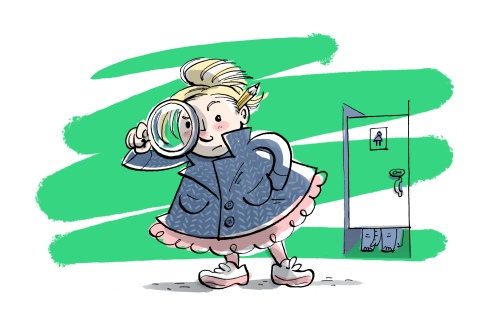
Darragh Martin wrote a hilarious story for young children about fighting off a nasty polluter called 'Thumbelina Jellyfizz and the Elephant in the Bathroom'.


And what about picturing a bright future where we have solved the problems of climate change but maybe we have other problems instead?

To build a bright future we first have to envision it. Children, with their unfettered imaginations, unconstrained by preconceptions, are well able to contribute their own ideas. Writers can stimulate them to do this.

So our weekend course will discuss the many facets of climate change and the ways in which its impact is felt both by participants on the course and people throughout the world.

We will experiment with a variety of different approaches and investigate ways of tapping our emotional reactions, of using research, imagining possible scenarios, and generating meaningful stories.

We will also be using the cycle of recovery from shock and grief because we think it is directly relevant here.

We have seen people move through these psychological stages:

  1. shock & denial when they first hear about climate change; 
  2. pain & guilt about the suffering that humanity has caused and is causing by the use of fossil fuels; 
  3. anger and blame-laying
  4. depression, powerlessness, reflection
  5. an upward turn as one realises that life could still continue; 
  6. reconstruction of one's life in a new way that is more sustainable, perhaps making connections with like-minded people; 
  7. and finally acceptance and hope as they learn to deal with the new situation.

This almost sounds like a 'voyage and return' scenario or perhaps a 'conquering the monster' type of story, doesn't it?

It's going to be exciting to see what people come up with. Emily and I can't wait to see you there!

Find out more here: http://www.tynewydd.wales/course/writing-climate-change/

[I am the writer of Marvel's Captain Britain, the sci-fi YA novels Hybrids, Doc Chaos: The Chernobyl Effect and the cli-fi fantasy Stormteller. I also run a regular writing course, called 'Making Readers Care' that can be taken online. Contact me if interested.]

Tuesday, January 24, 2017

Climate change fiction is coming of age

Literature that touches on the topic of climate change is reaching maturity. This is evidenced by the latest collection of work just launched by the Weatherfronts project, called Realistic Utopias, in which I have an 8,000 word story, For The Greater Good.

Whether you call is climate fiction, cli-fi, stories for change or have your own pet name, it really doesn't matter. It is now such a broad church that this collection includes poetry, a very funny children's story (with illustrations), speculative fiction, human interest and domestic drama.


The book is a free download:

There was a previous collection last year:

The Weatherfronts project, run by TippingPoint and the Free Word Centre (where the launch happened) in London, is about using the arts to broaden the conversation about climate change, away from the scientific, polemical or political. Five stories were commissioned for this collection.

It grew out of an event that brought together fifty scientists and thinkers and fifty writers in a series of workshops. (Listen to it here.)

"One thing we have seen very clearly is that over the 12 years of TippingPoint’s life, writers' responses to the subject have grown far more sophisticated and increased in their range and scope," observed the director of the Free Word Centre, Peter Gingold, as he introduced the writers to this sold out event.


The audience arrives for the Weatherfronts climate fiction book launch.
The audience arrives for the launch event.


Peter Gingold introduces the Weatherfronts climate fiction book launch.
Peter Gingold introduces the authors.
Each of the authors then read some of their work:


Sarah Thomas reading from her story Rainfell, Fell.
Sarah Thomas read from her story based on her friendship with the widow of the one man who died in the Cumbrian floods of the winter of 2014-15, Rainfell, Fell.


Emma Howell reading from Thrift: A Love Story
Emma Howell read from Thrift: A Love Story about her father's attempts to go green in the 1970s.


Justina Hart reading from her poem sequence Doggerland Rising.
Justina Hart read from her poem sequence Doggerland Rising, in which she imagines (based on archaeological research) the inhabitants of islands that used to exist in the North Sea having to leave their homes when the sea level rose around 9,000 years ago.
Then I read from my story For the Greater Good, set in 2084, in which I imagine the possible side-effects of Britain achieving a goal of feeding its population and satisfying all of its energy from renewables.

But as I'm taking the photos there isn't one of me! Anyway, a number of people said afterwards how affecting the story is. Which was satisfying, so thank you.


Darragh Martin reading from Thumbelina Jellyfizz and the Elephant in the Bathroom.
Then Darragh Martin read from his hilarious kids' tale Thumbelina Jellyfizz and the Elephant in the Bathroom, with vibrant illustrations from Euan Cook:
illustration by Euan Cook


illustration by Euan Cook


There was the inevitable panel discussion, with Durham University's Harriet Bulkley introducing Jane Riddiford, the visionary founder of the amazing Global Generation, a club for teenagers and kids in King's Cross, central London. She explained how she got the children interested in nature.


L2R: Harriet Bulkley, Emma Howell, Darragh Martin and Jane Riddiford,

This led to the following amazing film about their work:


She guides them through periods of silent contemplation and then asks them to write about nature. Three of them came to read their work:

Samika of Global Generation reading her poem on nature
Samika of Global Generation reading her poem on nature.


Aisha of Global Generation reading her poem on nature
Aisha of Global Generation


Rania of Global Generation reading her poem on nature
Rania of Global Generation
Then the audience had to do some work – write their own feelings about what nature meant for them, which was a cathartic experience:


That's me in the middle at the front!
It does feel like writing stories about climate change is no longer weird or unusual. Climate change is here, and all stories now react to it or are situated within a climate changed world.

The stories in this collection are all domestic. They show lives, families, affected by the changing climate and our reactions to it. They help us think about what this means and come to terms with the enormity of it. They let us develop and consider our own emotional responses.

Find out more here: https://www.freewordcentre.com/explore/realistic-utopias-writing!


[David Thorpe is the writer of Marvel's Captain Britain, the sci-fi YA novels HybridsDoc Chaos: The Chernobyl Effect and the climate change fantasy Stormteller.]