Showing posts with label writing. Show all posts

Monday, March 11, 2019

A step-by-step guide to successful novel and script writing

Making readers care is now available exclusively on Amazon as a print and e-book.

Some of you may recall the presentation I gave in Cardiff last year on making compelling characters, or been on one of courses or other workshops.


Well, you can now read the book!

At the Society of Authors' Jo McCrum's clever suggestion I've now published the book of my writing course.

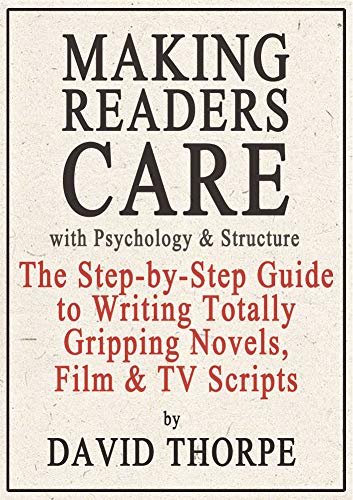
Making Readers Care with Psychology and Structure: The Step-by-Step Guide to Writing Totally Gripping Novels, Film and TV Scripts is about how to write a 'page-turner' – a compelling narrative with in-depth characters that ‘jump off the page’.

I came to it by considering deeply how to think about the reader and what they want, and how to make them care about what you're writing so that they ‘can’t put it down’. I guess that's its unique selling point.

Packed with practical exercises, I hope this book will help you get the best from your story, whatever genre, novel or script it is, to uncover inside it the seed of the perfect narrative that's waiting to be found.

I evolved the method using techniques from teaching hundreds of hours of creative and script-writing workshops, working with my students as they went through drafts.

It includes the 10 Steps To A First Draft system. This is the quickest way to arrive at a first draft, from the initial idea to thinking of every scene as a series of dramatic beats. It saves time and frees authors to write fewer drafts while concentrating on style – the exact words used.

Topics include:

  • using psychology to create flawed characters
  • the four story types
  • the four endings
  • the 'but' equation
  • the storyline
  • the hero's journey
  • character development
  • on dialogue
  • honesty and writing
  • planning a scene
  • beats and how to use them
  • suspense
  • pacing
  • humour
  • editing
  • openings
  • submitting your work
  • ...and much more.


You can get it here: https://www.amazon.co.uk/dp/B07PJTN9BK

If it’s useful, please consider leaving a review - you know how Amazon works! Thank you.

Thursday, January 24, 2019

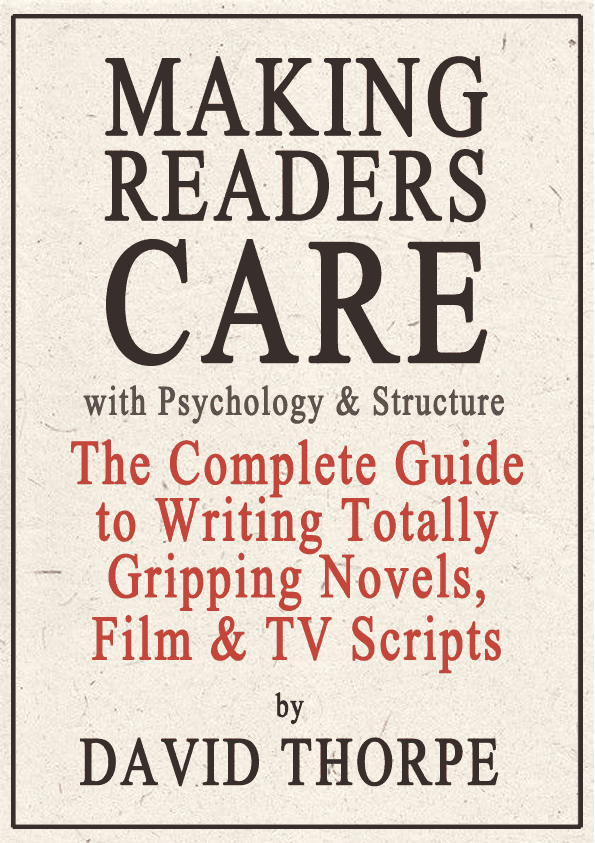
Making Readers Care with Psychology and Structure: The Complete Guide To Writing Totally Gripping Novels, Film & TV Scripts

My new book will be published towards the end of February as an e-book, price £4.50. Watch this space!
Cover of Making Readers Care with Psychology and Structure: The Complete Guide To  Writing Totally Gripping Novels, Film & TV Scripts  by David Thorpe
It is for anyone who wants to write a ‘page-turner’ – a compelling narrative that readers ‘can’t put down’ with characters that ‘jump off the page’. These phrases in inverted commas are frequently used by editors, producers and agents to describe what they are looking for.

The way to achieve this result is by making readers care what happens to your characters, regardless of whether they are likeable or not.
My aim is simply to help you get the best from your own story, whatever it is; to uncover inside it the seed of the perfect narrative just waiting to be discovered and guide you in making it as gripping as possible.

I have taught many hundreds of hours of scriptwriting and creative writing classes, during which its content has been developed and refined from feedback with students.

It concentrates especially on two things: human psychology and structure. It provides a methodology.

Many readers, and many beginner writers, think writing is just about inspiration. Of course inspiration plays a part. But discipline and method, ruthlessness and determination contribute the rest.

Film, TV, publishing: they are highly competitive industries. Millions of dollars are at stake. To succeed you need to be working at a top professional standard.

This book contains the secrets of success for writers in these industries. The only other things you will need are your time and hard work.

Contents:
Introduction 13
The nature of storytelling 13
How to use this book ... 14
10 steps to a first draft! ... 14
 
SECTION A: PREPARATION
1. Choosing the right idea ... 17
Research the market 17
Exercise 1: Finalise the idea 17
2. The four basic plot types ... 19
How to decide your story’s plot type 19
1. Conquering the Monster ... 19
2. Rags to Riches ... 19
3. Voyage and Return ... 19
4. Rebirth ... 20
Exercise 2.1: What's the plot type? ... 20
So are there really only four plots? ... 20
Exercise 2.2: Practice the plot type ... 21
Exercise 2.3: Your plot type ... 21
3. The challenge of creating compelling characters ... 22
Be honest 22
Exercise 3.2: Know your characters ... 23
Exercise 3.3: Practising honesty 23
Issue-based characters ... 23
4. How to create characters that jump off the page 24
Exercise 4.1: Make a basic character sheet ... 24
Hear their voices ... 24
Complexity ... 24
Exercise 4.2: Creating complexity ... 24
Inner conflict 25
Ways of creating inner conflict 25
Exercise 4.3: Life scripts and inner conflicts 27
5. The ‘but’ equation ... 28
Upping the stakes ... 28
Exercise 5.1: Write a 'but' equation ... 28
What’s at stake? ... 28
Exercise 5.2: What's at stake? ... 29
How do conflicted characters behave? 29
Exercise 5.3: Plot goals ... 29
Make mistakes ... 29
6. The really interesting thing about superheroes ... 31
7. The story writing map ... 32
8. The four story endings ... 33
Exercise 8.1: How does it end? ... 33
Story arcs ... 33
Exercise 8.2: Check the ends ... 33
9. The three act structure and the sentence summary 34
The three act structure ... 34
The three sentence summary ... 35
Exercise 9.1: Analyse a story ... 36
Exercise 9.2: Write your three sentence summary ... 36
10. Loglines ... 37
How to write a logline ... 37
Exercise 10.1: Write a logline for another story ... 38
Exercise 10.2: Write a logline for your story ... 38
11. Research 39
How to do research ... 39
How to use the research ... 39
12. Themes and subplots ... 40
The use of subplots ... 40
More than one theme ... 41
Exercises 12: ... 41
13. The Hero’s Journey ... 42
Too formulaic? ... 43
Exercise 13.1: Look out for the plot points ... 44
Exercise 13.2: Map your hero's journey 45
14. Fleshing out the story ... 46
15. Character development ... 47
You are what other people think of you ... 47
Making an attitude table ... 47
Exercise 15.1: Make an attitude table ... 48
Stakes ... 48
Exercise 15.2: Sharpen the stakes 49
16. More on psychology and dramatic storytelling ... 50
The shadow self ... 50
Exercises 16.1: What is the shadow self? 50
Life scripts ... 50
Exercises 16.2: What are the life scripts? 51
People have ‘parts’ ... 51
Triggers 52
Exercises 16.3: What are the triggers? ... 53
17. The Storyline ... 54
Weaving yarns ... 54
The Storyline ... 54
Exercise 17.1: Make a storyline 55
Things to look for: ... 55
Exercise 17.2: Plant the plants ... 56
Exercise 17.3: Plant the props ... 56
Exercise 17.4: Perfect the storyline ... 56
18. The scene cards system ... 57
The scene cards ... 57
Exercise 18: Make your scene cards ... 59
19. The synopsis ... 60
Exercise 19: Check for plot holes ... 61
20. What is suspense? ... 62
Three ingredients of suspense 62
Levels of suspense ... 62
Ways to increase and vary suspense: ... 62
The payoff ... 62
Timescales ... 63
Layer your anticipations ... 63
Be aware of pacing ... 63
Relation to story structure: ... 63
Exercise 20: Monitor the suspense ... 63
21. Flashbacks and framing devices ... 65
Framing devices ... 65
22. Interlude: Imagination, inspiration and in-betweens ... 66
Empathy and imagination 66
Courting the unexpected ... 66
Breathing space ... 67
Exercise 22: Tap your subconscious ... 67
 
SECTION B: WRITING THE FIRST DRAFT
23. Writing the first draft ... 69
A suggested work pattern 69
How many drafts should you write? ... 69
How long should your novel be? ... 69
Assemble your tools 69
24. Honesty and writing ... 71
25. Choosing the point of view ... 72
Exercise 25: ... 72
26. Present or past tense? ... 73
Exercise 26: Play with tense ... 73
27. On Dialogue 74
Exercise 27.1: Plan a scene ... 74
Exercise 27.2: Dialogue vs. silence ... 75
28. More on dialogue ... 76
1. Intention ... 76
2. Pauses and attributions ... 76
3. Multiple topics in a conversation 77
4. Long speeches ... 77
5. Grammar ... 77
6. Phonetic spellings 77
7. Don’t use characters’ names too often 78
8. Don’t have long stretches of dialogue only ... 78
9. Reported speech ... 78
Exercise 28.3: Showing not telling ... 78
29. How to plan a scene (1) ... 79
The definition of a scene ... 79
Exercise 29: Prepare to write a scene ... 79
30. Transactional analysis of a relationship ... 80
31. How to plan a scene (2) ... 82
Exercise 31: Make the scene grip the reader ... 82
32. Suspense and structure ... 84
Exercise 32: ... 84
33. 20 tips on scene writing ... 85
34. Beats and how they work ... 86
Exercise 34.1: List the beats ... 86
Exercise 34.2: Check the beats ... 86
The relationship with adjacent scenes ... 87
Exercise 34.3: Check the scene ... 87
35. How to keep it simple and fast-paced ... 88
Tense and sentence structure ... 88
Exercise 35.1: Active-passive ... 88
Word choice ... 88
Use short chapters or segments ... 88
Cliffhangers ... 88
Jump cuts ... 89
The secret of good storytelling 89
Exercise 35.2: Cliffhangers 89
36. Pacing ... 90
What is pacing? ... 90
When to slow down ... 90
When to speed up ... 90
Exercise 36.1: Speed check ... 90
Exercise 36.2: Overwriting check ... 90
Action scenes ... 90
Cliffhangers and pacing ... 91
Summaries ... 91
Extending the dramatic scenes 91
Jump cuts ... 91
Short chapters ... 91
Word choice and sentence structure ... 91
Exercise 36.3: Read it out ... 92
37. Set-pieces ... 93
Exercises 37: ... 93
38. Show, don’t tell ... 94
Exercise 38.1: Noticing 'telling' ... 94
Exercise 38.2: Read and critique ... 94
39. Scene setting and the reliability of the narrator ... 96
Exercise 39: ... 96
40. Everything is particular: the art of writing descriptive prose ... 97
Exercise 40: ... 98
41. The extended metaphor ... 99
Cold Comfort Farm ... 99
Exercise 41: ... 100
42. Using humour ... 101
Types of humour ... 101
Types of humour in relation to character type or to genre ... 101
Narrative forms and humour ... 102
Types of verbal humour ... 103
Sample list of humorous books with types of humour ... 104
Other notes ... 104
Exercises 42: 104
 
SECTION C: EDITING
43. Editing your work ... 106
Seeing it afresh ... 106
Exercise 43.1: Overview ... 106
Exercise 43.2: Settings check ... 106
Exercise 43.3: Style check 107
Exercise 43.4: Chapter or scene level checks ... 107
This is about making the reader care 108
Show don’t tell ... 108
Transitions ... 108
Making it flow ... 108
Exercise 43.5: Copy-editing ... 109
Exercise 43.6: Proofreading ... 109
44. Openings ... 110
Things that a beginning needs to do ... 110
How to do this ... 110
Exercise 44: ... 111
45. Notes on formatting ... 112
For the manuscript ... 112
46. Jokes for editors and writers 113
Explanations for the jokes ... 113
 
SECTION D: SUBMITTING
47. Agents and editors ... 118
48. What to send ... 119
Cover letters when submitting to agents/editors ... 119
Synopses ... 119
49. How to grab the attention of an editor or agent ... 120
50. How to deal with rejection and feedback 121
How to respond to feedback ... 121
51. To self publish or not? ... 122
Self-publishing and publishers’ services ... 122
Acknowledgements ... 123
Sunday, July 15, 2018

Mentoring writers and the Society of Authors

Some of you will know that I teach creative writing and mentor writers.

Last week I was privileged to give a keynote one hour workshop at the first Society of Authors event to be held in Wales for many years.

It was held in Cornerstones, Cardiff on a too-hot day. I gave a presentation on using psychology to create convincing characters that captivate readers and leap off the page – this approach also helps to overcome writers' block.

Thanks to Society of Authors coordinator Jo McCrum for giving me the chance to do this! And all the writers who gave me such great feedback afterwards.

Jo suggested I turn my notes into an e-book. When I've finished my current non-fiction book on creating sustainable 'one planet' cities, I will definitely do this will all my material for my writing course.

The next Welsh SoA event will be held in Swansea in September and be a simple get-together run with the help of children's writer Helen Docherty who's based in the town.

Right now I have an interesting job working with six PhD students of sustainable placemaking. They want to turn their ideas about living well into short stories for children.

Being academics writing fiction does not come easily for many of them but they're doing really well! They're now well into their first drafts and we hope to have an e-book out in the autumn! More later.

 If anyone here wants to know more, do get in touch and look at the page on my website about the writing course.

Friday, September 01, 2017

New creative writing courses starting on Wed. 13 Sept.

I'm looking forward to the new classes starting soon!

  • Last years' evening course will continue at 7pm for advanced writers and those wishing to continue from last year. New members are welcome to join that too, but will have to catch up a bit faster with the modules!
  • Less confident writers thinking of beginning a new work might prefer the afternoon session, from 2-4pm. Both are held in the YMCA on Market Square, Llandovery, SA20 0AB, on the first floor in the youth club room.


What to expect:
The course is designed to create a safe space for writers to learn about aspects of story-telling, the creation of believable characters, of a good plot and realistic dialogue, and, above all, how to make readers care and want to read on and on... Students are encouraged to offer kind, constructive criticism to each other.
 
Which course should you come on?

  • Afternoons: For people curious about writing and those wishing to start a piece of work. Each lesson studies a particular aspect of writing, with practical exercises. These are often aimed at helping students develop a short story, novel or script. You work on your own story idea, developing it, and apply the exercises to the development of your work, stage by stage. You bring in the result of your exercise each week, and these are discussed by everyone in a spirit of mutual support. We begin with character creation, moving on to plot & structure, & so on.
  • Evenings: For students from last year who are in the process of working on the novels they began before, plus anyone already well into working on a long piece. Students will set their own challenges, in consultation with the tutor and class, and bring in the resulting work for discussion. We will concentrate on advanced issues such as: how the story unfolds beat by beat; style; convincing dialogue; editing; pacing and suspense; advanced structural changes. The aim is to finish the work and market or publish it. All students will also learn about the publishing industry, agents and marketing their work. I've been amazed at how much fun and how popular it has been last year.

Online course:
If you can't make the lesson times, you can take the course online. The following link also tells you more about the course content and contains testimonials from previous students. You can do a combination of online and 'real world' modules if you can't make every week's session: http://davidthorpe.info/online-writing-course/ or call 07901 925671.

Cost:
  • First taster session (beginners) £3.00
  • All other sessions: £5. Concessions: £4.50
  • A block of ten sessions: £42 (save £8)
  • Each online module: £8 (includes individual feedback on your work)
Last year's students' work:
Life: Ten Slices from the Cutting Edge, is a highly readable collection of the work of ten of the many students who attended last year. Download it at no cost as a PDF here: http://davidthorpe.info/life.pdf.

David Thorpe, hello@davidthorpe.infohello@davidthorpe.info Tel. 07901 925671

Monday, July 17, 2017

Launch party for my writing class' collection!


We're launching a collection of ten highly varied pieces of fiction by local writers at a party in the YMCA, Broad Street, Llandovery this Wednesday at 7pm! 

The stories in Life: Ten Slices from the Cutting Edge are the work of ten out of many more students who have been attending my local Writing for Fun and Profit course since September 2016.

The collection will be freely available to download online, as a PDF. The stories illustrate a wide range of imagination and genre.

Several are aimed at children: Jacqui Hyde's Trials follows the path of a boy from a Welsh hill farm wanting to be a footballer. If you've ever wondered what diarist Samuel Pepys might have got up to in the Civil War as a child, then you might get a clue from Julian Dutton's amusing, eponymous novel extract. And Primrose by Stella Starnes gets inside the head of a young teenager growing up in a local village under the thumb of her mother.

Two are in the genre of speculative fiction: Mike Tomlin's Guardian is from an ongoing published ebook series about the discovery of a hidden alien presence in our midst, while Pete Barker's Share & Enjoy tracks a small band of rebels in a dystopian future and is the opening of a completed novel. If you enjoy a sardonic take on life, there is nothing better in this collection than Mari Mitchell's A Dish Best Eaten Cold, another novel opening.

Four short stories are of the classic type where an unexpected twist at the end throws the whole story into a lovely new perspective: Ciaran O'Connell's The Rose Blossom, about a misunderstanding on holiday, Henry's Story by Mary Thurgate, in which a chance, trivial event has life-changing consequences, and Assistance by Kathy Biggs, on the theme of 'what goes around, comes around'. In The Cunning Man's Last Day by historian Sara Fox, a fortune teller from the upper Tywi valley in the last century seeks to escape the fate he has seen for himself.  

The writing course
The writing course itself is designed to create a safe space for writers to learn about aspects of story-telling, the creation of believable characters, of a good plot and realistic dialogue, and, above all, how to make readers care and want to read on and on... Students are encouraged to offer kind, constructive criticism to each other. Each lesson studies a particular aspect, with practical exercises, often aimed at helping students create a long work, be it a short story, novel, or script. They also learn about the publishing industry, agents and marketing their work. I've been amazed at how much fun and how popular it has been. There is certainly much talent in this area.


A new course starts for new students next September from Wednesday 13 September from 2-4pm in the afternoons in the YMCA on Market Square, Llandovery. The existing evening course will continue at 7pm on the same date and new members are welcome to join that too, but will have to catch up a bit faster with the modules! Or, you can take the course online and also find out more at this web page: http://davidthorpe.info/online-writing-course/ or call 07901 925671.

Friday, January 13, 2017

Writing for Fun and Profit online course

I'm now offering this new online writing course that is based on successful classes run in the real world.

Who is it for?

This course is for anyone interested in telling stories. The aim is to provide a safe, constructive, encouraging environment in which you can get the best from your story, whatever it is.  

How does it work?

It consists of modules with exercises. Students proceed at their own pace although the recommendation is to complete one module per week. If this is done, it should take about six months. Once the exercises are returned you receive feedback and the next module.

We spend a lot of time at the start on character and structure development because this helps to focus on what is really important in the story and the possibilities for how it will unfold.


The principles of the course are applicable to all kinds of storytelling, since they cover plot, character, suspense, dialogue, structure, imagery, pacing, and so on. These universal rules and guidelines work whether you are doing oral storytelling, writing screenplays, novels, graphic novels, short stories or stage and radio plays.

The course is delivered by email and Skype. 

Course content

The modules are:
  1. Developing characters – since all stories begin with characters – and how characters develop storylines.
  2. The four basic plots and the four possible endings.
  3. Ideas and how to evaluate them.
  4. Structure I: the three act structure, and writing your story summary and logline. 
  5. Character design and the inner conflict. Attitude and style.
  6. Mapping all of your characters.
  7. Theme, moral and imagery.
  8. Using the 'story map' to generate and fix the story's details.
  9. Writing the detailed plot synopsis.
  10. The use of suspense. Storytelling and spell-weaving.
  11. The meaning of 'show don't tell'.
  12. First or third person?
  13. Prose style and the art of writing descriptive prose
  14. Writing convincing dialogue.
  15. Structure II: the monomyth, the cosmogonic cycle and the 12 stage story structure. 
  16. Opening lines.
  17. Beyond plot: slice of life, mood, etc., mosaic structure, allegory.
  18. Subplots and minor characters.
  19. Comic writing and satire (optional).
  20. Pacing (mood, time, transitions, flashbacks, framing devices)
  21. Genres and 'literature'.
  22. Endings. 
  23. Editing your work.
  24. Writing for radio, tv, film.
  25. Writing for magazines and websites.
  26. Having completed your work:
    • Finding an agent or editor
    • Finding markets for your work
    • Publishing and self-publishing
  27. Marketing yourself and your work, including the use of social media, book signings, etc.

Cost

The cost of the course is £260, which is £10 per module. Don't forget, this includes individual feedback on your exercises. 

The fee is payable up front. If at any point you decide not to proceed, you will receive a refund for the modules not taken.

 Alternately you can set up a direct debit of £44/month.

Testimonials

Comments from 'real world' students:
  • "I thoroughly enjoyed last week's session. I know I'm a professional in the script-writing field, but to be honest I think any writer no matter how much they've done can benefit from a 'reboot' as it were." Julian Dutton, professional tv/film comedy scriptwriter
  • "I lack confidence and belief in myself, you have no idea how much your support and guidance is appreciated." Jacquie Hyde, writer of Young Adult fiction
  • "Thank you so much for all your teaching, most enjoyable and I've learnt a lot." Joy Daniels, playwright 
  • "Your classes have provoked some great ideas." Sara Fox, writer of historical romances.

Interested?

Send an email enquiry with some information about your writing interests.
You will hear back very shortly!

The tutor

David is a successful writer of fiction for adults, young adults and older children, who believes strongly that with imagination we can change the world.  He's the author of Hybrids, "a stunningly clever novel" – The Times – which won the UK HarperCollins-Saga Magazine 2006 Childrens Novelist competition.

He co-founded the London Screenwriters' Workshop and has written many short stories, TV scripts, comics and graphic novels, including for Marvel, HarperCollins, Titan Books and Macdonald-Futura.

He has also worked as a commissioning editor for various book publishers, plus as journalist and news editor, is the author of over ten non-fiction books and is a director of Cambria Publishing Co-operative.

He has a City and Guilds Further Education Teachers Certificate and has completed a City and Guilds course in Contracts and Rights.

He is a member of the Society of Authors and the Society of Childrens' Book Writers and Illustrators.

Tuesday, January 26, 2016

The Call of the Wild

An argument in eight parts:

1.

January is the time of year for soul-searching questions about one's life in the future, yet questions like these are asked constantly by teenagers all the year round: Why am I here? Why am I not more popular? Why am I not more beautiful/fit/clever/likeable? How will I pass these exams? How can I bear to go to school tomorrow knowing that those people detest me so much? What can I do about my enemies? Why does nobody understand me? Why am I so alone?


2.


Things get too straight
I can't bear it
I feel stuck, stuck on a pin
I'm trying to break in
But I know it's not for me
And the sight of it all
Makes me sad and ill
That's when I want - some weird sin
Just to relax with
Yeah, some dumb, weird sin
For a while anyway
With my head on the ledge
That's what you get out on the edge.

 Some Weird Sin – Lyrics by Iggy Pop


The song describes the feeling of alienation, when all the choices available to you are no good. The pressure's too much, you need an escape, a way out, otherwise you will explode.

What could it be?

3.


Self-harm, eating disorders, poor mental health, suicidal feelings, porn addiction, the huge obesity problem, alcohol and drug abuse, mobile phone/screen addiction. The list goes on. Pressures on children and teenagers are greater than they ever have been. The effect of this is seen in statistics on the increasing prevalence amongst children and teenagers of damaging behaviour.

In a UNICEF study released in 2007, the UK came bottom of a list ranking industrialised nations in terms of child wellbeing.

Yet despite all of this, many youngsters still courageously manage to achieve higher grades than ever before and are opting for healthy diets.

But whichever choice they make, the need for an escape is crucial when children and teenagers feel powerless and under pressure, as they too often do.

Where can they go?


4.


"How has childhood become so unnatural? Children are enclosed indoors, caged and shut out of the green and vivid world in ways unthinkable a generation ago.

"[Seeking the answer to] the riddle took me to the spirit of childhood... the importance of woodland for the psyche; the secret world of a child's soul where the stories of childhood are whistled with a deft and fragile panache of poetry."

– from Jay Griffith's introduction to her incredible book about childhood and the need for the wild, of which Philip Pullman said: "Kith could have been written by no one but Jay Griffiths. She has the same visionary understanding of childhood that we find in Blake and Wordsworth. Her work isn't just good - it's necessary." (It's also published as A Country Called Childhood.)


5.


"I used to love reading to my children at bedtime. The song about Mike TV's fate in Charlie and the Chocolate Factory was a favourite. In it, Dahl vents his wrath on the hated television: 'They sit and stare and stare and sit until the hypnotised by it.' ... What would Roald Dahl think now?

"The need to be close to nature is in our DNA... Wildlife Trusts work with many children to reverse the trend of young people not having access to the wild: in schools, in parks, in wild places. A wild childhood is good for health, well-being and nature. We want every child to be wild."

Stephanie Hilborne, Chief Executive of The Wildlife Trusts in her editorial in the latest issue of the publication Natural World. (Coming events for children are listed here.)


6.


If you are a teenager, what do you think about when you're lying in bed trying to sleep? What kinds of thoughts go round and round in your head when you are waiting in queues, walking, commuting? Would they be your worries, your troubles, the demons of self-doubt? How can you avoid their persistent nagging?

One way that is not self-damaging is to escape into stories you are reading. You imagine yourself as the protagonist of a great adventure, misunderstood, vilified, ignored or even obstructed by authorities, but determined to overcome every obstacle with your special powers to achieve success. So much more empowering, distracting and fun than to be dragged down into the dark, hopeless swamp of your own psyche.

Some of the children doing this may even make up their own stories and become the writers of tomorrow.

The Awakening of Childhood Heroes by Charlotte Soileh

7.


When I am lying in bed trying to sleep, or when I am waiting in queues, driving, cycling or commuting, I spend hours solving the problems that my writerly life has set me: problems of plot, research, character, tone and structure. If I did not do this I do not know what would occupy my mind except the interminable, grotesque treadmill of self-doubts.

And when that fails, too, you can find me in the woods at the end of my garden, in the hills, by the sea.

In the wild.

Me kayaking in the stunning Mawddach Estuary
This is why I wrote The One Planet Life and why my kids grew up in and love the Woodcraft Folk.

8.


“There is an ecstasy that marks the summit of life, and beyond which life cannot rise. And such is the paradox of living, this ecstasy comes when one is most alive, and it comes as a complete forgetfulness that one is alive.

"This ecstasy, this forgetfulness of living, comes to the artist, caught up and out of himself in a sheet of flame; it comes to the soldier, war-mad in a stricken field and refusing quarter; and it came to Buck, leading the pack, sounding the old wolf-cry, straining after the food that was alive and that fled swiftly before him through the moonlight.”
― Jack London, The Call of the Wild


David Thorpe is the writer of the Sci-Fi YA novel Hybrids and the cli-fi YA novel Stormteller.

Thursday, January 08, 2015

The difference between writing for adults and children when a child is the protagonist

What is it that distinguishes a book written for adults where children are the main characters and one written for children, where children are the main characters?

When I am writing for children or teenagers at the back of my mind is always this question of the difference between the two.

Here are the opening sentences of In The Country of Men by Hisham Matar, which was shortlisted for the Man-Booker Prize and the Guardian First Book Award. The narrator is recalling a time when he was nine years old:

"I recall now that last summer before I was sent away. It was 1979 and the sun was everywhere. Tripoli lay brilliant and still beneath it. Every person, animal and and went in desperate search for shade, those occasional grey patches of mercy carved into the white of everything."

The novel describes the gradual discovery by the child of his father's involvement in anti-revolutionary activity and what this means, and his desperate love for his mother.

Here are the opening sentences of The Bunker Diary by Kevin Brooks, which controversially won the Carnegie Medal in 2014:

"10.00 a.m."This is what I know. I'm in a low-ceilnged rectangular building made entirely of whitewashed concrete. It's about twelve metres wide and eighteen metres long. A corridor runs down the middle of the building, with a smaller corridor leading off to a lift shaft just over halfway down. There are six little rooms along the main corridor, three on either side."

Much has been written about Brooks' book and whether it is suitable for children, so I'm not going to stray into that territory. You might consider that I have chosen a non-typical example, but many children's books deal with uncomfortable themes and issues.

Both of these openings are physical descriptions which imply a sense of claustrophobia. They perfectly set the scene for what is to follow, which only gets worse.

The two books have several more things in common:

  • there is no happy ending in either of them; 
  • very unpleasant things happen along the way;
  • the main character is not conventionally likeable.

You can see other parallels from these extracts: the language in both is direct, the sentences straightforward. These stylistic points are undoubtedly a requirement for writing for children. But one can equally find instances of quite 'literary' writing in books for children, for example in the earlier novels of, say, Philip Pullman, such as A Ruby in the Smoke.

The Bunker Diary deals with important psychological and philosophical themes, that are uncomfortable to contemplate. So does Matar's book.

One aspect which perhaps distinguishes In The Country of Men (and other novels for adults) from most novels written for children is the retrospective angle: the narrator is now about 25 years old, and the narrative eventually catches up with him. This is less common in writing for children.

Another aspect that might signify a difference is non-linear storytelling, in which the narrative darts around in time. This is, again, less common in writing for children (however I did use this technique in my new novel Stormteller and, whilst I can't think of one at the moment, I'm sure I've read other children's books which do this).

The other observations to make about the difference between them are the setting (Gaddafi's Libya compared to contemporary London) and the degree of sophistication in the form of prior knowledge or experience that is assumed in the writing of Matar's book.

So to answer my original question, all other thngs being equal, the main aspect I am monitoring as I write for children rather than for adults is constantly gauging that level so it is pitched correctly.

I'd be very interested to know what you think about this topic?

David Thorpe is the author of Stormteller and Hybrids.

Friday, November 07, 2014

The inspiration for my new novel

Stormteller David Thorpe
My first novel in several years is out this week – Like Hybrids it's still YA, it's still set in the future, but it's very different in subject matter. I thought it might be interesting to talk about why I wanted to write it.

I lived in mid-Wales, where Stormteller is set, for nearly 20 years. After separating from my first wife I eventually landed up in Taliesin, partly because I was attracted to a place named after Wales' legendary bard.

I know the landscape almost as well as I know my back garden now, having walked over much of it. I always felt when I moved to this edge of the British Isles from London that here, unlike most places, the skin of the present is thin: you can feel the vibrations from the past still reverberating down the centuries like thunder beneath your feet.

Just inland from Taliesin village is a collapsed dolmen that is given the name 'Taliesin's grave' – though it is much older than that.


Between my house at that time and the sea, lies Borth bog: you may remember the images in the media last winter when flames were leaping across it from burning peat despite the snow: spooky.


And then Borth itself: a long sliver of a town that shouldn't be there, streamed onto a spur of land against the glint of the sea, on a section of coast that is the most vulnerable in the whole of Wales to storm surges. Again, it was in the media last winter when it was attacked by giant waves.


The spur continues to Ynys Las, a nature reserve of sand dunes opposite the Dyfi estuary from Aberdyfi – a colony of English retirees and yachting people largely immune to the influence of the past.

Above it, however, by the Bearded Lake, is allegedly a footprint left by King Arthur when he passed this way, and north of there the mountain Cader Idris, Welsh for Seat of Arthur.

But the real stories that come from this area are older than Arthur's: the birth of Taliesin and Cantr'er Gwaelod, which is the tale of how the land that now lies beneath Cardigan Bay was drowned by the sea.

It's these, and the beautiful, wild and dramatic landscape, that sparked my imagination to write this novel.

Let me tell you the beginning of the first story: a mother had two children – a beautiful girl and a hideous boy with a hunched back. The girl wasn't a problem, she's not even part of the story, probably got married off to a Prince.

But the boy... the mother felt sorry for him. Perhaps the gift of wit and wisdom might make him popular so she could get him off her hands. So she laboured a year and a day to make a magic potion for him, but on the last day she left the servant boy, Gwion, in charge while she popped out. "Just stir: don't taste," she told him.

You can probably guess what happened next. The long and the short of it is that Gwion got to sample the potion and he received all the gifts intended for the son. He was the one who became Taliesin.

Nowadays, Taliesin is revered in Wales and beyond for his poetic and shamanic genius. But his talents should have belonged to someone else – the son, whose name is Afagddu. No one remembers him now, but Taliesin has a village and even an arts centre named after him.

So I thought: how would Afagddu feel? What would he want?

And this is a starting point for Stormteller.

As a rebirthed baby, Gwion floated down the Dyfi river to Ynyslas where he was found by a local prince, who named him Taliesin. That leads into the second story....

...with a tragic ending – the flooding of the land – that it seemed to me has echoes of the threat that Borth and the whole coast of Britain faces now and in the future: rising sea levels, more storms and extreme weather caused by climate change.

We all feel threatened by climate change. We feel powerless to do anything about it. So I wanted the novel partly to be about giving some degree of optimism. It's trying to look at the question of rewriting the endings of stories: ours – about climate change – and these two old legends.

It's easy to give into a sense of fatalism. I believe that we can all rewrite our stories, we at least have the power to do that. And this is true for the teenagers in the novel. But, as in life, there are always sacrifices to be made...

You can find out more about the background to the novel here.

Wednesday, June 26, 2013

Regaining confidence

Writers find it easy to lose confidence. I know I do.

Maybe because of a bad review, rejection of work by editors or agents, writer's block... there are 1000 reasons why this can happen.

How do you get it back?

It's been inspiring recently to witness the openness with which Matt Haig has talked about his crises of confidence and depression on his Facebook profile.

Matt was someone who had his first children's book published more or less at the same time as mine.

The Humans by Matt Haig book cover
Whereas I have subsequently not had a single other children's book published, despite having brilliant reviews for Hybrids, he has had a succession of books published and the latest one, The Humans, has been sold in numerous territories abroad, and he is to write the screenplay for a film adaptation.

He ought to feel on top of the world, but he doesn't always. I alternate between feeling on top of the world, and feeling, probably, well, average I guess. I occasionally have bad days. But not as bad as I used to.

As Matt says about The Humans: "It is personal. I put absolutely everything I had into it so if people don’t like it then they don’t like me".

I did the same with Hybrids. Perhaps that's why the first volume was such a success, but my subsequent two novels have not yet sold.

I didn't put so much of my vulnerability into them. Or maybe it's just because they aren't such earthshaking ideas. Maybe they will sell one day. Who knows? I think they're alright.

Hybrids by David Thorpe book cover
Anyway, people think Hybrids is a science fiction novel and I suppose it is. It's about teenagers merging with frequently used technology like computers and mobile phones.

But SF wasn't how I saw it while I was writing it. For me, it was about disability and feeling different from everyone else. It was a metaphor.

Because I have cerebral palsy. Okay, not a severe kind, but it still affects me and I was bullied when younger.

Since a few years ago, it has caused me to walk with a limp and drag my right foot.

I tell my leg to move and it doesn't obey me. Every step I have to concentrate on. I hate the fact that I wear out my right shoe every couple of months and have to buy a new pair. I hate the fact that I probably look stupid. People stare. I hate the fact that there's something that, no matter how much I concentrate and practice, I cannot improve about myself.

But most of the time I laugh at it. I compare myself to the Ministry of Silly Walks. It's just me and I'm okay.

There's a crucial scene in Hybrids, where Bruce Lee, who lives on in main character Johnny Online's head, encourages him to look at himself naked in front of the mirror in order to come to terms with his own body self-image.

After he's done that, he gets the confidence to carry on.

That passage, together with a dream sequence about a rhinoceros, are crucial parts of the book for me.

Writing the book was partly about trying to give other kids confidence about themselves, no matter how they feel about the way they look or how they behave.

There are two other books in the Hybrids trilogy all plotted out, waiting to be published. I want them to be published more than anything else. So do the many readers who have written to me.

But so far, nobody has published them.

Myself and colleagues are actively trying to get Hybrids turned into a TV series or film.

I believe in it, because I believe in talking about these emotions.

If you can't face up to it, if you can't be honest about your feelings, you can't be a writer and expect to succeed. Your characters will be hollow and uninteresting.

I want to thank Matt for sharing his vulnerabilities with us.

You know, you find that if you open up to people, they open up to you. Similarly, if you open up to emotions, writing comes.

That's how I regain confidence. I'm not saying it's easy, because it isn't. But who said it had to be?

Friday, December 09, 2011

On discipline...

These days, writers are supposed to be a brazen brand - masters of mobile and internet wizardry; and magicians of marketing!

It's easy for the time required for the craft of writing to be squeezed, and this has led me to consider the nature of 'discipline'. (And I don't mean perverse sexual practices!)

"Discipline" is a frequent topic of questions in interviews, as in that awful one: "It must take a lot of self-discipline to write a novel/be a writer..?".

Well, no, we tend to answer patiently... self-discipline is not an issue. If you really want to be a writer, actually you can't help it. In fact, you go crazy if you DON'T get the time to write.

Like, when unable to write for prolonged periods, I get to feel that I will start scraping the wallpaper off with my fingernails or yelling something deeply regrettable if I can't get back to it very soon.

OK, others might call it a form of mental illness, but, as anyone will know who has read biographies of many top entrepreneurs (like Steve Jobs), scientists or artists, this kind of obsessive-compulsive behaviour goes with the job description in many fields.

This is not to be considered weird! 

Now, I'm one of the lucky people who make most of their living from writing. I have to do several different kinds of writing to survive rather than just write fiction (my favourite form), and I feel that I've worked hard to be in this place.

Discipline as craft
Another meaning of the word 'discipline' is craft or skill.

For the past year, my work pattern has changed, involving a new discipline, and this has had an interesting effect on my writing.

Every weekday morning, I have to write an article, as soon as possible and usually within two hours, of about 700-1000 words, and post it on a web site.

This is an enforced discipline, but one that pays off well in terms of developing the discipline of the craft.

Typically, I have no idea before I start what the subject will be, and have to research it as I write it.

This type of journalism, for a specialist, largely business, audience, demands many qualities apart from accuracy and readability.

In particular, there is an instinct for what people want to read that no one else is providing, which can only come from knowing the field intimately.

There is also the kind of fluency that comes from being able to trust oneself that the process of writing at speed will result in something that isn't completely unintelligible and is of great interest to my readers.

This is a very different process from writing a novel, partly because it operates on a totally different timescale. It is topical, and so consumed, like a meal, within hours of preparation, after which it is likely to be forgotten; although one hopes that it will have greater influence, just as a top chef's creation may be talked about for long after it has disappeared.

The self-editing process is therefore different. When writing a novel, one can leave a draft for a few weeks so that, when re-reading it, one may see it afresh and notice errors and omissions that were obscured by the afterglow of creation.

Since adopting this new work pattern, and because I cannot expect my editor to spot my errors, I have developed new techniques to force myself to both edit as I write and to see my work freshly as if I had left it for weeks, even though it was only minutes. These techniques have fed into the novel-writing process.

I continually edit as I write, checking that I've said what I meant to say. I write in a text editor, not a word processor, so I can concentrate on the words alone, not be distracted by how they look.

I re-read and correct it, then copy and paste it into OpenOffice. I do the same there. Then I copy and paste that into TextEdit (I use a Mac) and repeat the process. Both of these have spell-checks that notice different words (OpenOffice doesn't check American spellings).

Each time I paste it into different software, it looks different, and my eye is forced to notice different things.

So I'll have read and re-read, continually correcting, this blog copy several times this way before posting it. Even so, I won't be surprised if someone spots a mistake!

There we have it: two types of discipline. One, that is about finding the time to write; the other, that is about the development of the craft.

Thursday, December 11, 2008

Calling all childrens writers in Wales

All other regions of the UK have local branches of the Society of Childrens Book Writers and illustrators, who meet regularly fdor crit groups and socialising, except for Wales.

See the website britishscbwi.jimdo.com/networks/

I've taken on the job of being the Wales coordinator. Ideally we'll be mid-Wales, meeting in Aberystwyth, and I'd like to see people come forward to coordinate in NBorth and South Wales.

Academi is the Welsh agency supporting writers. I have posted an appeal for any writers - published or not - to join the Welsh branch of SCBWI at
academi.org/opportunities/i/133697/


They can also contact me directly.

The Academi website is also worth a browse for competitions etc.

Sunday, March 16, 2008

An interview with me

Neonebaam 4 coverThe literature 'zine 'Neonbeam' has published in its latest issue (4) a long interview with me. It's full of all kinds of highly revealing stuff.

I am quizzed about my approach to life, how I go about trying to find the truth and strive for simplicity at the same time, where I get inspiration, what I am working on now, and the conflict between wanting to change the world and being content with what I have. I am asked whether writing is an agency for change, or an end in itself, and what's the most important thing in the world: friendship or writing. I give an answer, but I'm still unsure.

You can download Neonbeam 4 here.

Thank you Sammi.

Sunday, March 02, 2008

What about a ’fair trade’ ’organic’ publishing imprint?

As a writer I feel the same way towards the retailer and publisher as a farmer feels towards the supermarkets - they call the tune, if the profit margin isn't right and the niche targetted it doesn't matter how quality your product is, you're out.

Editors expect agents to do their work for them. Agents expect you to have paid one of the legion of bottom-feeding 'consultants' to get your submission up to scratch so they'll even look at it.

It's a buyers' market and you have to be not just excellent, marketing driven, and very lucky, but prepared to be poor, especially if you're relying on the internet for your audience. Only a few can get to the top of the pyramid.

It's similar in the music industry. Music currently is going thru a big shakedown. My partner's got a band and her own label and finds it almost impossible to get paid gigs - how do you make being a musician pay when everyone expects music to be free?

She reckons in a couple of years musicians are going to have to come up with some radical new ways to get noticed and an income stream. The market's super-saturated.

Writing's the same.

So where can we go from here? In the end, the way things ar now, I think the reader is losing out.

Here's an idea: what about a 'fair trade' 'organic' label where you know the writer gets a good deal and the editor really cares? As with supermarkets, the industry might find the public will pay the premium.

Thursday, August 02, 2007

More Hybrids reviews

These have just come in:
  • "When our teenage reviewer took this into a school as part of a lesson showing what you read at home, the book drew an appreciative crowd and was the star of the show. Not a bad reaction for a first novel! David Thorpe has cleverly tapped into the teenage psyche with awesome precision. The main characters are totally reliant on the gadgets that teens now take for granted and this book takes that obsession to a different, almost believable level. Oh, this is clever stuff and you will just love it! Bring it on!" - From Bump to Grump

  • "Seriously spooky" - CY ezine, which made it Book of the Month, as did Collins Educational

  • "An inventive, dystopian world whicvh plays with the role of technology in our lives and as part of our humanness. The plot hurtles along ... a rattling adventure" - Books for Keeps

  • "The writing in Thorpe's debut is tight, and the dialogue convincing..... It would serve as a good jumping off point for debate about ethnic cleansing and human nature with young teenagers, as, like all good science-fiction, it's parallels can be clearly seen in the real world." Write Away (Featured title)

Full list on Del.ic.ious

Wednesday, July 25, 2007

Sold out again in less than 24 hours!

A few weeks ago Doodled Books sold out in one week of 20 copies of signed and drawn-in copies of Hybrids at £19.99 and ordered 15 more. They went on sale yesterday and sold out again in less than 24 hours! More are on order for me to draw in. I wonder who is buying them?

> See the galleries here
> Read their interview with me

I'm looking forward to Womad and a break.

Saturday, June 23, 2007

An immense number of ideas

Isn't it nice when a book reviewer gets exactly what you're up to?

So it is with Anthony Brown, reviewing Hybrids in Starburst 351. He says:

"Hybrids may have the length and style of a Young Adult book, and two teenage heroes to go with them, but Thorpe doesn't pull punches with the satirical ideas he packs in.

"From detention without trial and three-layer registering of Creep victims that smack of control orders, through a Centre for Genetic Rehabilitation that reflects Guantanamo, to HIV-echoing conspiracy theory accusations against pharmaceutical companies.

"Thorpe approaches distinctly adult ideas in an approachable hero-led way, as Johnny and rich-kid fellow Creep victim Kestrella become the gurus of the Hybrid Resistance Army whose existence allows the hardline Deputy Prime Minister to call for harsh measures for dangerous times.

"Over the mere 296 large print pages, Thorpe packs in an immense number of ideas, shaking up the situations in surprising ways time and time again."


"An immense number of ideas" in only 296 easy-to-read pages for only £5.99. Who says you can't get a bargain these days?!

Wednesday, June 20, 2007

Mundane SF

Perhaps you've already heard of Mundane SF? If not you may like to know that it's a "new" idea being touted by a guest editor of Interzone, the UK's foremost SF mag.

When my novel Hybrids was published I was bemused to learn that it was to be marketed as science fiction. Somewhat naively I didn't think I was writing SF.

It's obvious in retrospect, but the elements they think of as SF I thought were metaphorical. After all, is Kafka an SF writer?

My agent says that is what I must continue to write. This is fine by me. Except the thing is I don't read all the stuff people normally call SF - space opera etc.

Now I find there's Mundane SF, which Hybrids possibly fits into. This is because Hybrids, like MundaneSF, contains no faster than light travel, psi power, aliens, computer consciousness, teleportation or time travel.

The following usual suspects form some of my touchstones - Kafka, Orwell, Burroughs, Dick, Ballard. Perhaps they are 'Mundane SF'?

My reservation is that the term 'Mundane' seems a put-off - as if the subgenre isn't interesting.

HarperCollins thinks that SF will be the next big thing for kids - we've had enough fantasy.

I hope so. I plan to keep writing this kind of SF.

InterZone is now accepting submissions for their Mundane SF issue. I've submitted a short story. I'm not at all sure if it's SF, but really, why do we need labels at all?

> Want to read more?
> MundaneSF Blog

Thursday, June 07, 2007

We are becoming hybrids

Sherry Turkle is a clinical psychologist, author and professor of the sociology of science at the Massachusetts Institute of Technology. She worries that new technologies like instant messaging, Wi-Fi and cellphones are transforming human psychology.

In an article this week in the New Scientist she goes further to worry that this same technology is gradually turning us into cyborgs.

Naturally, I share this concern.

Sherry runs seminars at MIT on 'Technology and Self - how our sense of self is changing as a result of our interactions with technology'.

These have led to three edited collections, being published by the MIT Press, on the relationships between things and thinking. The first, Evocative Objects: Things We Think With, was published in April.

Eleven years ago she wrote: "When I landed at MIT in 1976, I was struck on day two by two things—that my students had what I considered eroticised relationships with their computers, which had an intensity, a holding power... it was compelling. It was not addiction, but it was something very powerful and it was completely new to me.

"And secondly, the way they use computer language where I would have used psychoanalytic language to talk about the self. I thought this was fascinating. For example, they say "Don't interrupt me, I have to clear my buffer", or "It's not a Freudian slip, it's an information processing error."

I have noticed the same response in myself.

The mind controls the body - mind over matter. As our thinking is changed by technology, and our bodies are distorted by using technology, so we recreate our bodies in the image of technology.

Sherry says this is not an addiction (or wasn't 30 years ago). I believe it is now. Anyone who has tried to get a child or teenager to come off a computer or watch less tv will agree.

She is right to say that it is also eroticised.

The first technology to be eroticised was the car. The most eroticised artefact now is the mobile phone, followed by the car and the MP3 player.

What does eroticised mean? That the technology's use triggers a state of arousal and anticipation, and produces attempts through whatever means to incite those feelings.

This is a response below conscious level. It becomes almost instinctive. Computer use, like driving, becomes an extension of our selves and incorporated in our dreams. It becomes desirable and necessary of and for itself.

SF stories of the past foretold that machines would take over. They never dreamt that this would not be by deliberate machine-led conspiracy but by an insidious process of designers producing desirable objects for profit-driven corporations, that use the tricks of marketeers to hook into our psychologies.

This drives an iterative process resulting in consumers becoming more and more wedded to successive generations of better-targeted products.

This process is akin to natural selection. Which depends partly on sex.

The erotic relationship demands consummation. At this point we have surrendered to the masters, the purveyors, the manufacturers, the corporations who are technologies' pimps.

We have surrendered our self-control and let go of the link to 200,000 years, or 99.9%, of our species history, when everything humans related to, and were part of, were biological (natural) ecosystems.

Now, at this moment in our species' development - as we are radically destroying or modifying these ecosystems, through mass extinctions, climate change, and the addition of 100,000 new chemicals - we are becoming intimate with technological ecosystems, without any idea of the consequences...

We are becoming hybrids.