Tonight I met one of my Brazilian fans, Diego Remus, at the place where he works, The Hub, which coincidentally is right near the restaurant where we were the previous night during the power cut.
When we met he first took me to a bookshop on Avenida Paulista and surprised me by finding on the shelves a copy of my book Hybrids in English as well as Portuguese and made me stand there while he took a photograph.
I'm getting kind of used to this while I'm here. in
Diego is a specialist in social networking and electronic media, a consultant to start-ups and interested in applying sustainability theory as well as communication theory to new models of business enterprise. He set up a Portuguese language fan club for Hybrids.
He works also for Startupi, which is a pun, because the Tupi is an old indigenous culture.
We especially talked about industrial symbiosis, resource efficiency and the potential of the sustainable economy new business model to benefit Brazilian businesses. He's going to arrange for me to give a talk at The Hub on the subject at the end of next week when I'm back in town from Porto Alegri and Curitiba.
See also Blackout in Brazil
Oh yes, I did finally get my laundry back last night, and find that there is tea to drink at St Paul's British School, but really, I think the UK must get the best pick of the tea leaf crop. This grey concoction is a pale shadow of what my constitution is used to!
Wednesday, November 11, 2009


Sunday, November 08, 2009
Hanging out in Sao Paulo
It rained last night and today is much cooler and overcast. A relief from the last week. People here in São Paulo work very hard and long hours and I have found that an arrangement to meet is liable to be cancelled at the last minute for one reason or another.
Mind you, it's not as hard as trying to get a cup of tea which is in fact impossible. And of course I'm dying for a cup of tea.
At a restaurant yesterday with my DCL editor Oticilia in the Museum of Modern Art I asked for tea. I was brought a cabinet containing perhaps 30 different kinds - but I searched through them in vain - they were all fruit teas. No cafe or restaurant will serve tea! Arghh!

Today in a supermarket I finally found a packet of English breakfast tea. Heaven! However the price - five pounds for a small packet - made me think well, perhaps the Brazilians are right to drink so much coffee after all. And they do drink a lot of it -- many small cups of super-concentrated espresso.
Another thing you can't get is an up-to-date English language newspaper - or the American and English ones when they finally arrived two or three days out of date. Why do they bother in the age of the Internet?
Otacilia had cancelled two possible appointments before we met yesterday. But we had a beautiful day going to the Botanical Gardens Parque Ibirapuera and drinking coconut milk from the green fruit through a straw. I encountered for the first time a lates tree, its huge dripping roots like Rasta dreadlocks. The gallery had an excellent exhibition of non-Brazilian artists influenced by Brazilian art, including a Welsh artist, Wyn Evans. I particularly liked Mateo Lopez' lace-like map cut-outs, Simon Evans, Marjetica Potrc and Franz Ackermann.


In the early evening yesterday I found myself at an opening party for a new venue for a school for comics artists, Impacto Quadrinhos (Quadrinhos is Portuguese for comics). Luke Ross, a local (he anglicised his name for the sake of his career) who is successful illustrating many marvel comics, was giving a workshop. He is an old friend of the artist I am working with, Felipe Cunha, who introduced me to him.
He seemed very happy with the way Marvel were treating him. Me, I'm still waiting for a copy of the compilation of Captain Britain stories, containing my work, which was published in the summer. This is the second compilation - I never got the first either. Nor have I been paid a penny.
The owner of Impacto Quadrinhos, Klebs Junior, used to work for Marvel himself and still does occasionally. He told me he lamented the fact that Brazil still doesn't have a market that can accept home-grown comics with a Brazilian theme and all of the artists that he represents as an agent have to sell their work in North America or possibly Japan.
It was somebody's birthday so we went to a bar off Avenida Paulista, the commercial centre of São Paulo. We stayed there for several hours drinking iced beer and eating polenta chips. Felipe had told me the other night that it might be possible to sell a 12 page story to Heavy Metal magazine. I had sent him on Friday a story set in the story world of Hybrids, but with Major Winter of the Jean Police as the central character. All of the characters from Hybrids appear in this story which could be the first of a series and is aimed at a more adult audience. At the bar we discussed this and Felipe really likes it. Now I have to add some dialogue.
It's great that I finally have time to write fiction and have started work on my next novel The Drowning, by starting to write out the scene cards. Quite frankly I'd rather sit in the hotel and do this then go out and exploring São Paulo, traffic filled street after street after street after street of charmless buildings. It feels more like a cosmopolitan European city rather than a developing country.
My laundry has got lost. Eleanor, from St Paul's School where I am teaching from tomorrow, said she would do my laundry for me as it would cost a fortune to let the hotel do it. I had to take it to the school yesterday but she wasn't there and Rita, the woman who met us at the airport, stashed it in an office. Eleanor came over today to the hotel to see Katy and I. Katy Moran is the other author from Britain who is teaching in the School's. She didn't know anything about the laundry being left there. I only hope I can get it back, clean, before tomorrow!
Mind you, it's not as hard as trying to get a cup of tea which is in fact impossible. And of course I'm dying for a cup of tea.
At a restaurant yesterday with my DCL editor Oticilia in the Museum of Modern Art I asked for tea. I was brought a cabinet containing perhaps 30 different kinds - but I searched through them in vain - they were all fruit teas. No cafe or restaurant will serve tea! Arghh!

Today in a supermarket I finally found a packet of English breakfast tea. Heaven! However the price - five pounds for a small packet - made me think well, perhaps the Brazilians are right to drink so much coffee after all. And they do drink a lot of it -- many small cups of super-concentrated espresso.
Another thing you can't get is an up-to-date English language newspaper - or the American and English ones when they finally arrived two or three days out of date. Why do they bother in the age of the Internet?
Otacilia had cancelled two possible appointments before we met yesterday. But we had a beautiful day going to the Botanical Gardens Parque Ibirapuera and drinking coconut milk from the green fruit through a straw. I encountered for the first time a lates tree, its huge dripping roots like Rasta dreadlocks. The gallery had an excellent exhibition of non-Brazilian artists influenced by Brazilian art, including a Welsh artist, Wyn Evans. I particularly liked Mateo Lopez' lace-like map cut-outs, Simon Evans, Marjetica Potrc and Franz Ackermann.


In the early evening yesterday I found myself at an opening party for a new venue for a school for comics artists, Impacto Quadrinhos (Quadrinhos is Portuguese for comics). Luke Ross, a local (he anglicised his name for the sake of his career) who is successful illustrating many marvel comics, was giving a workshop. He is an old friend of the artist I am working with, Felipe Cunha, who introduced me to him.
He seemed very happy with the way Marvel were treating him. Me, I'm still waiting for a copy of the compilation of Captain Britain stories, containing my work, which was published in the summer. This is the second compilation - I never got the first either. Nor have I been paid a penny.
The owner of Impacto Quadrinhos, Klebs Junior, used to work for Marvel himself and still does occasionally. He told me he lamented the fact that Brazil still doesn't have a market that can accept home-grown comics with a Brazilian theme and all of the artists that he represents as an agent have to sell their work in North America or possibly Japan.
It was somebody's birthday so we went to a bar off Avenida Paulista, the commercial centre of São Paulo. We stayed there for several hours drinking iced beer and eating polenta chips. Felipe had told me the other night that it might be possible to sell a 12 page story to Heavy Metal magazine. I had sent him on Friday a story set in the story world of Hybrids, but with Major Winter of the Jean Police as the central character. All of the characters from Hybrids appear in this story which could be the first of a series and is aimed at a more adult audience. At the bar we discussed this and Felipe really likes it. Now I have to add some dialogue.
It's great that I finally have time to write fiction and have started work on my next novel The Drowning, by starting to write out the scene cards. Quite frankly I'd rather sit in the hotel and do this then go out and exploring São Paulo, traffic filled street after street after street after street of charmless buildings. It feels more like a cosmopolitan European city rather than a developing country.
My laundry has got lost. Eleanor, from St Paul's School where I am teaching from tomorrow, said she would do my laundry for me as it would cost a fortune to let the hotel do it. I had to take it to the school yesterday but she wasn't there and Rita, the woman who met us at the airport, stashed it in an office. Eleanor came over today to the hotel to see Katy and I. Katy Moran is the other author from Britain who is teaching in the School's. She didn't know anything about the laundry being left there. I only hope I can get it back, clean, before tomorrow!
Wednesday, November 04, 2009
São Paulo - city with a future
The chocolate is melting and so am I. It is 34° and I am sitting beside a small pool on the roof of the 27th floor of my hotel. As far as I can see in almost every direction are buildings: a crenellation of 10s of thousands of high-rises. Their rooftops map an archipelago of suntrapping eyries, many of them inviting landing spots for helicopters.
São Paulo is a city with a future, confident of its ability to be the capitalist Mecca of the South American continent. Its infrastructure creaks under the strain of its 10s of millions of inhabitants, but its optimism propels it to meet and exceed expectations during the 2016 Olympics when the world's eyes will be on Brazil.
As we crawl along its sclerotic arteries driven by taxi drivers who can't read maps and rely on us, strangers, to give directions in their own city we witness a bank robbery, street urchins and rubbish recyclers pushing their carts alongside splendid temples to the banking system.
Brazil knows crises and thrives on them so, unaffected by the recession gripping the rest of the world, its burgeoning young population demanded the baubles that have satiated and bored the dwindling young population of the North.
At Frankfurt, my lovely Brazilian editor Otaclia - of the Brazilian edition of Hybrids - reports that she was was doing more deals than anyone from a northern publisher. The children of the huge middle class of Brazil need literature, and if publishers can't buy it from Europe or America they will buy it from India and China. The balance of power in the publishing houses of the world has shifted. American comics publishers seek Brazilian artists for their energy and hard work. Brought up on a diet of both Japanese manga and Marvel, they look both ways. There are more Japanese people in São Paulo than there are in the whole of Japan I was told. Can this be true? It's big enough.
The children are astonishing. St Nicholas British school in Sao Paolo has to be one of the best schools I have ever been to. English is a second language, but at all ages they are highly motivated and must be among the brightest kids on the planet for their age.
They ought to be - the school is well resourced and costs £1000 a month to attend. These sons and daughters of bankers and multinational executives are of many nationalities - Europeans, Japanese, Vietnamese, Thai, Jewish, South African, Brazilian, with a few Indian, Muslim and the odd descendant of African slaves. The small campus crawls with security guards and technical staff who in radio contact with each other, shepherding students across the public road and into buses and cars.
The threat of kidnap and ransoming is high.
Greater Sao Paolo is reputedly the third largest city in the world: 30,000 sq km of buildings, with about 10% of the 20 million population living in makeshift favelas. But this area is one of gated communities, choked by jams of the latest models of cars, stress-fueled horns blaring in rush-hour.
I am running workshops on story-telling, journalism, and my own work, and when I give them exercises the students all complete them perfectly in good time - show me this in a UK schools, apart from the odd academy school.
Looking at their work books I notice immediately that teachers correct their English - grammar and spelling - in every case; something considered discouraging in UK education, but which I consider vitally important. If children are not taught these things how can they be equipped to be fully articulate? Is the language not the blood of a culture? Infected by misuse can it flow smoothly?
Next week I am in another school - St Paul's. This will be larger, and I look forward to seeing how different it will be. Otacilia promises to take me to a 'normal' school for comparison. The wonderful Otaclia promises me many things: guided tours, a party, introductions to environmentalists trying to make the world a better place, art galleries, and a publishing deal. In a couple of weeks we go to a bookfair together in Porto Alegre, where I am to give a talk on science fiction and surrealism. This is very exciting.
Having collaborated by e-mail for 18 months, I meet penciller/inker Felipe Cunha and his colourist George at my hotel for the first time. It's as if we have known each other for years. Over iced beers we discuss the challenge of surviving and succeeding in a city so huge you are less than nothing. Felipe lives two hours outside the city -- he came by bus, Metro and bus. Where his parents moved to 20 years ago was then trees. Now a favela has sprung up just five minutes away -- the rural desperate pursuing their own dreams to find themselves trapped in the double net of poverty and prejudice.
Over an excellent Italian meal the three of us plan escapades and promise to meet again on Friday night at a party at the city's best comics store, thankful, as everyone is, for whoever invented air-conditioning.
São Paulo is a city with a future, confident of its ability to be the capitalist Mecca of the South American continent. Its infrastructure creaks under the strain of its 10s of millions of inhabitants, but its optimism propels it to meet and exceed expectations during the 2016 Olympics when the world's eyes will be on Brazil.
As we crawl along its sclerotic arteries driven by taxi drivers who can't read maps and rely on us, strangers, to give directions in their own city we witness a bank robbery, street urchins and rubbish recyclers pushing their carts alongside splendid temples to the banking system.
Brazil knows crises and thrives on them so, unaffected by the recession gripping the rest of the world, its burgeoning young population demanded the baubles that have satiated and bored the dwindling young population of the North.
At Frankfurt, my lovely Brazilian editor Otaclia - of the Brazilian edition of Hybrids - reports that she was was doing more deals than anyone from a northern publisher. The children of the huge middle class of Brazil need literature, and if publishers can't buy it from Europe or America they will buy it from India and China. The balance of power in the publishing houses of the world has shifted. American comics publishers seek Brazilian artists for their energy and hard work. Brought up on a diet of both Japanese manga and Marvel, they look both ways. There are more Japanese people in São Paulo than there are in the whole of Japan I was told. Can this be true? It's big enough.
The children are astonishing. St Nicholas British school in Sao Paolo has to be one of the best schools I have ever been to. English is a second language, but at all ages they are highly motivated and must be among the brightest kids on the planet for their age.
They ought to be - the school is well resourced and costs £1000 a month to attend. These sons and daughters of bankers and multinational executives are of many nationalities - Europeans, Japanese, Vietnamese, Thai, Jewish, South African, Brazilian, with a few Indian, Muslim and the odd descendant of African slaves. The small campus crawls with security guards and technical staff who in radio contact with each other, shepherding students across the public road and into buses and cars.
The threat of kidnap and ransoming is high.
Greater Sao Paolo is reputedly the third largest city in the world: 30,000 sq km of buildings, with about 10% of the 20 million population living in makeshift favelas. But this area is one of gated communities, choked by jams of the latest models of cars, stress-fueled horns blaring in rush-hour.
I am running workshops on story-telling, journalism, and my own work, and when I give them exercises the students all complete them perfectly in good time - show me this in a UK schools, apart from the odd academy school.
Looking at their work books I notice immediately that teachers correct their English - grammar and spelling - in every case; something considered discouraging in UK education, but which I consider vitally important. If children are not taught these things how can they be equipped to be fully articulate? Is the language not the blood of a culture? Infected by misuse can it flow smoothly?
Next week I am in another school - St Paul's. This will be larger, and I look forward to seeing how different it will be. Otacilia promises to take me to a 'normal' school for comparison. The wonderful Otaclia promises me many things: guided tours, a party, introductions to environmentalists trying to make the world a better place, art galleries, and a publishing deal. In a couple of weeks we go to a bookfair together in Porto Alegre, where I am to give a talk on science fiction and surrealism. This is very exciting.
Having collaborated by e-mail for 18 months, I meet penciller/inker Felipe Cunha and his colourist George at my hotel for the first time. It's as if we have known each other for years. Over iced beers we discuss the challenge of surviving and succeeding in a city so huge you are less than nothing. Felipe lives two hours outside the city -- he came by bus, Metro and bus. Where his parents moved to 20 years ago was then trees. Now a favela has sprung up just five minutes away -- the rural desperate pursuing their own dreams to find themselves trapped in the double net of poverty and prejudice.
Over an excellent Italian meal the three of us plan escapades and promise to meet again on Friday night at a party at the city's best comics store, thankful, as everyone is, for whoever invented air-conditioning.
Thursday, October 29, 2009
Environmental Homemaking - and Sao Paolo here I come!
I have just (Oct 29) sent off the manuscript to Environmental Home Refurbishment: The Earhscan Expert Guide to Retrofitting Homes for Efficiency, which will be published by Earthscan in June 2010. It will be published in hardback and is expected to cost £34.95. The draft cover design is right. Thanks to everyone who helped put it together!
I'm now preparing to go to Sao Paulo to deliver creative writing workshops in two schools, meet my Brazilian editor, Otacilia, for the first time, and Felipe, the comics artist I've been working with for over a year! Otacilia has promised parties, good food, fascinating peopple and a trip to talk and sign at the Porto Alegre bookfair on November 13. I feel very lucky!
I've also been working in October with Film 15 and animator Mikey Ford on the Animation Tank, with local primary school kids. They now know how important stories are - and have some great ones to turn into films in the next few months!
I'm now preparing to go to Sao Paulo to deliver creative writing workshops in two schools, meet my Brazilian editor, Otacilia, for the first time, and Felipe, the comics artist I've been working with for over a year! Otacilia has promised parties, good food, fascinating peopple and a trip to talk and sign at the Porto Alegre bookfair on November 13. I feel very lucky!
I've also been working in October with Film 15 and animator Mikey Ford on the Animation Tank, with local primary school kids. They now know how important stories are - and have some great ones to turn into films in the next few months!
Friday, October 02, 2009
Take the time
Take the time
How often are you able to take the time
Take
The time
Take
The time
How often are you able to notice
The blinking first star of the inking evening
The criss-crossery of branches cracking the sky
The blown sand twisting like long blond hair
Take the time
To be there
Intelligent witness
Unpressured I.
Take
The time
Take
Your time
Don't fill it
Let it fill itself
Take hold of moments
Mark them off
How often can you abscond
With minimum cost
And watch
The pink pregnancy of cumulus at dusk
The pheasant ducking under the bent hawthorn
The dug dykes draining the golfing green
It forces you to realise
Your tiredness
Why you need to
Take the time
Instead of it taking you.
How often are you able to take the time
Take
The time
Take
The time
How often are you able to notice
The blinking first star of the inking evening
The criss-crossery of branches cracking the sky
The blown sand twisting like long blond hair
Take the time
To be there
Intelligent witness
Unpressured I.
Take
The time
Take
Your time
Don't fill it
Let it fill itself
Take hold of moments
Mark them off
How often can you abscond
With minimum cost
And watch
The pink pregnancy of cumulus at dusk
The pheasant ducking under the bent hawthorn
The dug dykes draining the golfing green
It forces you to realise
Your tiredness
Why you need to
Take the time
Instead of it taking you.
Update
I've been so busy I haven't blogged in a long time.
I have spent the last few months writing a book on sustainable refurbishment of domestic properties for the publisher Earthscan. I am blowing away a few misconceptions about what works and what doesn't work - things like roof-mounted wind power and air source heat pumps.
I am desperate to involve myself again with creative work. I have to finish that book by mid October, then I am doing some teaching work with kids to do with scriptwriting.
In November I am so lucky to be invited to Brazil where for two weeks I am doing some writing workshops and appearing at a bookfair in Santo Alegre. Then off to Curitiba and back to São Paulo.
I still haven't started on the fiction book for kids, The Drowning, that I got the grant to do, and that's what I really itching to get down to, and hope to start work on while I'm away. It's becoming less and less worthily about global warming, although it does figure, and more about mystery, intrigue and Welsh mythology coming alive in the future.
When I come back however, Earthscan want me to start work on a book about solar technology, but I am currently holding out for a better contract and because I want to do the Drowning.
I am taking the - gulp - daring and risky leap of selling my web design company in order to concentrate full-time on writing. If anyone wants a job let me know!
This all sounds like I am raking it in. In reality this writing business barely pays the bills. But it sure beats working for the man.
I have spent the last few months writing a book on sustainable refurbishment of domestic properties for the publisher Earthscan. I am blowing away a few misconceptions about what works and what doesn't work - things like roof-mounted wind power and air source heat pumps.
I am desperate to involve myself again with creative work. I have to finish that book by mid October, then I am doing some teaching work with kids to do with scriptwriting.
In November I am so lucky to be invited to Brazil where for two weeks I am doing some writing workshops and appearing at a bookfair in Santo Alegre. Then off to Curitiba and back to São Paulo.
I still haven't started on the fiction book for kids, The Drowning, that I got the grant to do, and that's what I really itching to get down to, and hope to start work on while I'm away. It's becoming less and less worthily about global warming, although it does figure, and more about mystery, intrigue and Welsh mythology coming alive in the future.
When I come back however, Earthscan want me to start work on a book about solar technology, but I am currently holding out for a better contract and because I want to do the Drowning.
I am taking the - gulp - daring and risky leap of selling my web design company in order to concentrate full-time on writing. If anyone wants a job let me know!
This all sounds like I am raking it in. In reality this writing business barely pays the bills. But it sure beats working for the man.
Wednesday, June 24, 2009
Interviews published and grant for new novel
 Writing Magazine features an interview with me in its June 09 issue. Download a pdf of Anita Rowe's interview with David. Also, the current issue of Judge Dredd Megazine (286) carries a long article on the development of the Marvel character Captain Britain, including part of an interview with me on my stint on the comic.
I have also won grant to write a new novel. The Drowning will be a novel about two sworn enemies - young teen boys - thrust together to survive in the wild when climate change makes them homeless. I'll be blogging about the process of writing it, and the research results. The £6,326.90 grant is from 'cyfle i greu' - 'chance to create' a scheme run by Powys Arts Forum under the Wales Assembly Government.
First, though, I need to finish the book I'm writing for Earthscan called: 'Environmental Home Refurbishment:
The Earthscan Expert Guide to Retrofitting Homes for Efficiency'. This has to be done by October and is supposed to be a definitive book on the subject!
Saturday, April 25, 2009
Remembering JG Ballard
In a way it is appropriate that JG Ballard should die at the point of which so many of his dystopian forecasts seem to be coming true. Only this week I was listening to Radio 4 where some middle-class talksmiths were discussing a pronouncement that the credit crunch could generate middle-class riots. As one of them said, "bring it on!"
Ballard laid bare the violence that lurks beneath the thin veneer of so-called civilisation. Many times he has documented how he was witness to this when growing up in Shanghai during the war, but it took several decades for him to synthesise the various threads in his thinking, from his earlier accounts of the effects of extremes of nature on humankind, such as The Wind From Nowhere and The Drowned World, through his numerous short stories and his more experimental work that was serialised in the excellent New Worlds magazine, to Crash, and The Atrocity Exhibition, and then to High Rise and Cocaine Nights and following three novels. His mainstream work Empire of the Sun may have bought him a larger audience, but is untypical.
The contrast between his mild manner and the ability of his work to shock middle-class sensibilities was striking. As with William Burroughs, who always dressed like a banker, he seemed to be a man in disguise sent, like de Sade - who wouldn't shut up even when put in an asylum - to remind us of the dark currents beneath the surface of the social world. I can't help thinking that Crash and The Atrocity at Exhibition weren't written firmly with his tongue in his cheek. It is their ambiguity which unsettles. Just as Waiting for Godot or Endgame can be performed as deadpan comedies or as tragedies, it seems that this devoted family man took refuge in imagining the extreme in order to feel comfort in his conventional environment. Or perhaps it was the other way round.
I feel compelled to mention de Sade again, because what really shocked his contemporaries wasn't what he did, but that he wrote about it. Let's face it, all the aristocracy were screwing the hired help anyway they could. As far as we know, Ballard himself lived a clean life, but his reflections of the sides of our existence that we preferred not to reflect upon, bear comparison in that society likes to draw a line between the acceptable and the unacceptable, but often what is deemed "acceptable" actively encourages the "unacceptable", and it is this effect that fascinated Ballard.
It seems strange that much of his work is characterised as science fiction since it has very little in common with spaceships. A well-known fan of Surrealism and Salvador Dali, Ballard claimed that science fiction of the form he knew it, which imagined tendencies of the present, and psychological reality, as the future, was the dominant and most useful literary form of the 20th century. Both Surrealism and science fiction, though themselves not popular labels, have spawned a vast territory of our collective unconscious, thousands of dynamic icons and terms of reference through every conceivable media.
The sexual aspect of car crashes as a subject for writing seemed absurd and offensive, but its metaphorical resonance is felt in every single advertisement for automobiles. Man's fetishism of the car bears a large responsibility for global warming. We are human-automobile hybrids. Our clutches engage with metal and flesh. And it is no coincidence that the car industry is one of the major casualties of the banking crash, which we watch ourselves with horrified fascination.
My own work lies partly on the territory which Ballard and Burroughs laid out, and I remain eternally indebted as a writer to Ballard's advice: "follow your obsession". Bring on the middle-class riots. Thank you James Graham Ballard.
Ballard laid bare the violence that lurks beneath the thin veneer of so-called civilisation. Many times he has documented how he was witness to this when growing up in Shanghai during the war, but it took several decades for him to synthesise the various threads in his thinking, from his earlier accounts of the effects of extremes of nature on humankind, such as The Wind From Nowhere and The Drowned World, through his numerous short stories and his more experimental work that was serialised in the excellent New Worlds magazine, to Crash, and The Atrocity Exhibition, and then to High Rise and Cocaine Nights and following three novels. His mainstream work Empire of the Sun may have bought him a larger audience, but is untypical.
The contrast between his mild manner and the ability of his work to shock middle-class sensibilities was striking. As with William Burroughs, who always dressed like a banker, he seemed to be a man in disguise sent, like de Sade - who wouldn't shut up even when put in an asylum - to remind us of the dark currents beneath the surface of the social world. I can't help thinking that Crash and The Atrocity at Exhibition weren't written firmly with his tongue in his cheek. It is their ambiguity which unsettles. Just as Waiting for Godot or Endgame can be performed as deadpan comedies or as tragedies, it seems that this devoted family man took refuge in imagining the extreme in order to feel comfort in his conventional environment. Or perhaps it was the other way round.
I feel compelled to mention de Sade again, because what really shocked his contemporaries wasn't what he did, but that he wrote about it. Let's face it, all the aristocracy were screwing the hired help anyway they could. As far as we know, Ballard himself lived a clean life, but his reflections of the sides of our existence that we preferred not to reflect upon, bear comparison in that society likes to draw a line between the acceptable and the unacceptable, but often what is deemed "acceptable" actively encourages the "unacceptable", and it is this effect that fascinated Ballard.
It seems strange that much of his work is characterised as science fiction since it has very little in common with spaceships. A well-known fan of Surrealism and Salvador Dali, Ballard claimed that science fiction of the form he knew it, which imagined tendencies of the present, and psychological reality, as the future, was the dominant and most useful literary form of the 20th century. Both Surrealism and science fiction, though themselves not popular labels, have spawned a vast territory of our collective unconscious, thousands of dynamic icons and terms of reference through every conceivable media.
The sexual aspect of car crashes as a subject for writing seemed absurd and offensive, but its metaphorical resonance is felt in every single advertisement for automobiles. Man's fetishism of the car bears a large responsibility for global warming. We are human-automobile hybrids. Our clutches engage with metal and flesh. And it is no coincidence that the car industry is one of the major casualties of the banking crash, which we watch ourselves with horrified fascination.
My own work lies partly on the territory which Ballard and Burroughs laid out, and I remain eternally indebted as a writer to Ballard's advice: "follow your obsession". Bring on the middle-class riots. Thank you James Graham Ballard.
Friday, April 24, 2009
London Book Fair 2009
The Fair was quieter than previous ones. Not surprising really.
I went to a few seminars on: writing for teens, including one with Patrick Ness, who was very polished; Julia Donaldson, Graham Marks; and on the new websites for teen readers, Penguin's www.spinebreakers.co.uk, and one upcoming from the Reading Agency [this will be good].
What Teens Really Want featured real teens and they said they don't want to be patronised, they don't need genres, they want cheaper books and they decide to read them on peer recommendation and the cover, most of all.
Remixing reading for teenagers - intelligence from The Reading Agency was about their web based social network site for readers and HeadSpace, the initiative to make library facilities cool and accessible for teens and disadvantaged readers. They need authors to help out and connect with readers - contact claire.styles@readingagency.org.uk, or ruth.harrison@readingagency.org.uk.
I met the Publishing Director of HarperCollins and their Head of Content Licensing, and had a really positive response. I also reconnected with my old agent, Julian Friedmann, and had several meetings with the publisher of my non-fiction book on eco-refurbishment, Earthscan.
I went to a few seminars on: writing for teens, including one with Patrick Ness, who was very polished; Julia Donaldson, Graham Marks; and on the new websites for teen readers, Penguin's www.spinebreakers.co.uk, and one upcoming from the Reading Agency [this will be good].
What Teens Really Want featured real teens and they said they don't want to be patronised, they don't need genres, they want cheaper books and they decide to read them on peer recommendation and the cover, most of all.
Remixing reading for teenagers - intelligence from The Reading Agency was about their web based social network site for readers and HeadSpace, the initiative to make library facilities cool and accessible for teens and disadvantaged readers. They need authors to help out and connect with readers - contact claire.styles@readingagency.org.uk, or ruth.harrison@readingagency.org.uk.
I met the Publishing Director of HarperCollins and their Head of Content Licensing, and had a really positive response. I also reconnected with my old agent, Julian Friedmann, and had several meetings with the publisher of my non-fiction book on eco-refurbishment, Earthscan.
Tuesday, April 07, 2009
I've won a grant to write a new novel!
I've won grant to write a new novel. The Drowning will be a novel about two sworn enemies - young teen boys - thrust together to survive in the wild when climate change makes them homeless.
I'll be blogging about the process of writing it, and the research results, as I write it. The work will begin in the summer, after I've finished my current book (which I'm just starting), a non-fiction title for Earthscan about eco-refurbishment of existing homes.
The £6,326.90 grant is from 'cyfle i greu' - 'chance to create' a scheme run by Powys Arts Forum under the Wales Assembly Government.
I'll be blogging about the process of writing it, and the research results, as I write it. The work will begin in the summer, after I've finished my current book (which I'm just starting), a non-fiction title for Earthscan about eco-refurbishment of existing homes.
The £6,326.90 grant is from 'cyfle i greu' - 'chance to create' a scheme run by Powys Arts Forum under the Wales Assembly Government.
Sunday, April 05, 2009
SCBWI Wales second gathering
At yesterday's crit group gathering of the Welsh Society of Children's Writers and Illustrators were Bear Tyler, Derek Webb, Gordon Jones, Hedley England and Tomos Morgan - and myself. We discussed work by each of us, including in detail, Hedley's Sniffers, my Moebius Trip and Tomos' wonderful witch story written in Welsh and English. Tomos is an illustrator working for the publisher Y Llolfa. We met at the Orangerie, Aberystwyth.
Books for children written in Welsh are submitted to the Welsh Books Council for readers report. If this is favourable, a publisher receives a grant to publish the book.
This was SCBWI Wales' second gathering. Currently we are organising a programme of events for the future, to involve talks and presentations by Welsh publishers, illustrators, editors, Academi and the Welsh Books Council. Watch this space.
Books for children written in Welsh are submitted to the Welsh Books Council for readers report. If this is favourable, a publisher receives a grant to publish the book.
This was SCBWI Wales' second gathering. Currently we are organising a programme of events for the future, to involve talks and presentations by Welsh publishers, illustrators, editors, Academi and the Welsh Books Council. Watch this space.
Monty Python came to Machynlleth!
Last Monday was the day of the screening I organised of Life of Brian, which featured live on stage to answer the audience's questions: Terry Jones - Star & Director! and Sue Jones-Davies - Star & Aberystwyth Mayor!
It was a charity event at the Machynlleth Tabernacl in aid of Fadeco, a grassroots development agency in Tanzania, which I am on the organising committee of.

It went extremely well. Congratulations to the audience, many of whom dressed up as members of the Popular Front of Judea, or maybe it was the Judaean Popular Front! there were women with beards, people carrying sandals, and shepherds! Terry Jones was knocked out, as was Sue.
Sue is my former yoga teacher, and now the mayor of Aberystwyth, which, as was pointed out by Terry, just goes to show how appropriate was her casting as the political Judith Iscariot in the film!
I was privileged to be on stage interviewing the actors, and amongst the things they revealed were that Sue got the part because she had the same agent as John Cleese, and was told about the auditions. She went along and the Pythons were so knocked out by her passion and conviction they gave her the part.
Terry revealed many interesting aspects of the production, in Tunisia, including how Spike Milligan walked off set in the middle of shooting his scene because he got bored, and how he is still friends with most of the Pythons. Michael Palin and Terry Gilliam live not far from him in Hampstead above the heath, but he says finds John Cleese a little too critical and judgemental. John and Eric Idle now live on the west coast of America.
Terry also recounted how he is a local boy. He was brought up until the age of four in Colwyn Bay, then the family moved to a street off Camberwell Grove, Grove Park in South London. But he has a hideaway old stone cottage in Pennant, near Staylittle, which is about 8 miles up in the hills to the east of Machynlleth. This was in his wife's family and he used to come here from the mid-'60s onwards to write.
With Sue was her son, Sion, who with my son, Dion, were members of the INCA film/music project from 2005 to 2007. Sion is a lovely young man, and talked about his desire to study architecture.
Terry also talked about his new project, Adam and Eve, an animation, and the argument he is having with his producer, who changed the script he had written without consulting him (so, it doesn't matter how famous you are, this still happens). He marvelled at how self-contradictory the book of Genesis is, and how it is rich in humour. One of the animators working on the development has also worked on The Simpsons.
Discussing whether you could make a film like the Life of Brian today, he said that there was a lot of misunderstanding surrounding the film itself. He did not consider it antireligious, but about the credulity of people. "In many ways everything, Brian, Graham Chapman, says in the film is common sense: how we should get on with each other and think for ourselves. This," he said, "is pretty much what Jesus himself said." Jesus of course figures in the film so the film does not dispute the existence of Jesus. What he does complain about is how people subsequently twisted and misinterpreted what Jesus said. He also got the most animated when he attacked people like Malcolm Muggeridge and other critics at the time who attacked the film for being antireligious without even having seen it, or in one case missing the first half-hour. "How dare these people judge a film without having seen it!" he ranted.
In 1985 I interviewed Graham Chapman because he had just broadcast an Opinion piece on Channel 4 which voiced libertarian, anti-authoritarian views. These were not 1,000,000 miles from the views preached by Brian in the film, so I asked Terry if Graham had written his own dialogue. After all, he says "don't listen to me, think for yourself!" at which point the entire crowd shouts as one "yes, we will think for ourselves!". Terry responded that basically everything Brian said they all worked on together, and it's common sense. Well, that's a matter of opinion!
He also discussed another animation project based on an opera which he wrote the libretto for, and directed, Evil Machines, staged in Lisbon last year, which features singing washing machines, vacuum cleaners and parking meters, not 1,000,000 miles in concept form my own Hybrids. He is currently seeking funding for the project.
The event was a great success, both Terry and Sue agreed to be patrons of Friends of Fadeco, and we raised over £2000. Profuse thanks to both of them, and everyone who helped on the night.
It was a charity event at the Machynlleth Tabernacl in aid of Fadeco, a grassroots development agency in Tanzania, which I am on the organising committee of.
It went extremely well. Congratulations to the audience, many of whom dressed up as members of the Popular Front of Judea, or maybe it was the Judaean Popular Front! there were women with beards, people carrying sandals, and shepherds! Terry Jones was knocked out, as was Sue.
Sue is my former yoga teacher, and now the mayor of Aberystwyth, which, as was pointed out by Terry, just goes to show how appropriate was her casting as the political Judith Iscariot in the film!
I was privileged to be on stage interviewing the actors, and amongst the things they revealed were that Sue got the part because she had the same agent as John Cleese, and was told about the auditions. She went along and the Pythons were so knocked out by her passion and conviction they gave her the part.
Terry revealed many interesting aspects of the production, in Tunisia, including how Spike Milligan walked off set in the middle of shooting his scene because he got bored, and how he is still friends with most of the Pythons. Michael Palin and Terry Gilliam live not far from him in Hampstead above the heath, but he says finds John Cleese a little too critical and judgemental. John and Eric Idle now live on the west coast of America.
Terry also recounted how he is a local boy. He was brought up until the age of four in Colwyn Bay, then the family moved to a street off Camberwell Grove, Grove Park in South London. But he has a hideaway old stone cottage in Pennant, near Staylittle, which is about 8 miles up in the hills to the east of Machynlleth. This was in his wife's family and he used to come here from the mid-'60s onwards to write.
With Sue was her son, Sion, who with my son, Dion, were members of the INCA film/music project from 2005 to 2007. Sion is a lovely young man, and talked about his desire to study architecture.
Terry also talked about his new project, Adam and Eve, an animation, and the argument he is having with his producer, who changed the script he had written without consulting him (so, it doesn't matter how famous you are, this still happens). He marvelled at how self-contradictory the book of Genesis is, and how it is rich in humour. One of the animators working on the development has also worked on The Simpsons.
Discussing whether you could make a film like the Life of Brian today, he said that there was a lot of misunderstanding surrounding the film itself. He did not consider it antireligious, but about the credulity of people. "In many ways everything, Brian, Graham Chapman, says in the film is common sense: how we should get on with each other and think for ourselves. This," he said, "is pretty much what Jesus himself said." Jesus of course figures in the film so the film does not dispute the existence of Jesus. What he does complain about is how people subsequently twisted and misinterpreted what Jesus said. He also got the most animated when he attacked people like Malcolm Muggeridge and other critics at the time who attacked the film for being antireligious without even having seen it, or in one case missing the first half-hour. "How dare these people judge a film without having seen it!" he ranted.
In 1985 I interviewed Graham Chapman because he had just broadcast an Opinion piece on Channel 4 which voiced libertarian, anti-authoritarian views. These were not 1,000,000 miles from the views preached by Brian in the film, so I asked Terry if Graham had written his own dialogue. After all, he says "don't listen to me, think for yourself!" at which point the entire crowd shouts as one "yes, we will think for ourselves!". Terry responded that basically everything Brian said they all worked on together, and it's common sense. Well, that's a matter of opinion!
He also discussed another animation project based on an opera which he wrote the libretto for, and directed, Evil Machines, staged in Lisbon last year, which features singing washing machines, vacuum cleaners and parking meters, not 1,000,000 miles in concept form my own Hybrids. He is currently seeking funding for the project.
The event was a great success, both Terry and Sue agreed to be patrons of Friends of Fadeco, and we raised over £2000. Profuse thanks to both of them, and everyone who helped on the night.
Friday, February 27, 2009
Writers and illustrators of children's books gather in Wales!

I have started the Welsh branch of The Society of Children's Book Writers & Illustrators (SCBWI). British SCBWI's website is: http://britishscbwi.jimdo.com/.
The benefits of being a member are - a fantastic membership pack stuffed with contacts, advice and invaluable help; access to crit groups, seminars, training, the conferences, daily support, a profile on the website, access to the mailing list and much more. I joined a year ago and have received huge benefits, made good friends and not regretted a moment.
There were 12 attendees, shown in the picture, clockwise from bottom left:
• David Thorpe (writer - Hybrids)
• Wendy Artiss (illustrator - unpublished)
• Mr & Anita Rowe (writer - Green Fingers & Grit, Stepsisters, A Chance to Dream, regular monthly contributor on 'writing for children' to Writers' News and Writing Magazine)
• Sophie Lording (Hay Childrens' Literature Festival organiser)
• Bethan Gwanas (editor, and writer of 20 children's books in Welsh, inc. the Blodwen Jones trilogy, and Ramboy, an English adaptation of Pen Dafad)
• Gordon Jones (librarian, editor for various Welsh publishers)
• Bear Tyler (writer, unpublished)
• Hedley England (writer - unpublished, director)
• Graham Gardner (writer - Inventing Elliot)
• Brian Lux (writer - Court of Foxes)
• Jenny Fell (illustrator - Second Thoughts, I Can Move the Sea).
In addition, 22 other people expressed interest but were unable to attend. A list of these is below.
After the introductions and a sampling of the free wine supplied by the director of the Arts Centre - for which thank you very much, we discussed the benefits of joining SCBWI, because none of the attendees were members, and how it differed from other writers' organisations.
We learnt about the National Association of Writers in Education (www.nawe.co.uk), and the American Children's Writing Resource Centre (www.write4kids.com).
Sophie Lording and Bethan Gwanas reminded those of us who had forgotten, of the existence of the Writing Squads in Wales, which will pay writers £200 a day to tutor on Saturdays promising young writers whom their teachers put forward to come to these squads, although typically the writing is done in Welsh. These are organised by Academi - see www.academi.org/squads.
Gordon Jones explained how the editors working for Welsh publishers typically combine many of her the roles of a publisher -- which can include proofreading, copy editing, art direction and marketing as well as editing! A book is considered to do well in Welsh if it sells 1200 copies. The most successful book ever published in Welsh, not a children's book, sold 10,000 copies.
We discussed how membership of a national organisation with a strong networking component like SCBWI could benefit Welsh writers from wider exposure, since they are frequently unknown outside of the principality.
Sophie Lording explained that she is looking for ideas from writers to help her work with the Hay festival. This work includes going into schools, exhibition stands and so on. The programme for this May's festival is 90% booked, but there is room for anybody who wishes to propose an exhibition. Could SCWBI have a stand there?
Academi Is the Welsh organisation which supports writers, and we decided that we if we spoke together as a group we would have a stronger voice in Academi for children's writing.
We discussed the value of Readers Days, and how we should get involved. See for example: www.readingagency.org.uk.
in terms of what we want to do in the future, the following ideas were floated: inviting Welsh editors, English editors and agents to come in from London, librarians, and illustrators agents.
Gordon Jones offered to organise a panel involving Welsh editors. I offered to continue with fund raising and coordination.
The next gathering will be a critique discussion group, on Saturday, 4 April at 1.30pm, venue to be decided.
Apologies from: Sue Moules, Jenny Fell, Brian Lux, Graham Gardner, Jane Moran, Maria Hayes, Henni Tremlett, Nicola/Paul Burgess, Derek Webb, Femke van gent, Liz Whittaker, Katrina Michael, JIm Bowen, Phil Thomas, Herbert Williams, Frances Thomas, Wynford Ellis Owen, Alan H, Dahlian Kirby , Tomos Morgan, Eleanor Burnham, Penny, Jenny Sullivan, Mererid Hopwood
Wednesday, January 28, 2009
I like playing games - but not the Blame Game [poem]
Don't talk to me about climate change
It's coming out of my ears
I'm feeling uneasy that my low carbon diet
Is cooked on an oil-fired range.
I don't dare fly 'cos I'll be sent to Coventry
By the greener than thou eco-tocracy
I'll be sent by bike
Doesn't matter what I like.
My oil's peaked too soon - I need eco-Viagra.
I've got eco-phobia - A fear of greenies.
They're worse than an attack of the Blue Meanies.
When I see a wooly jumper coming down the street
I'll cross over so as not to meet.
Green meanies point and say
"You're not wearing hemp - which is Green Heaven sent
To solve all evils it has the ability."
My Lycra two-piece is a liability.
I want Tesco's - it's all about choice,
Everywhere else's got it so hear my voice.
"But choice is bad. We should do what we're told.
Burning carbon's like hoarding gold.
Learn to do without, don't live in the past."
But I want to enjoy it while it lasts.
In the Gospel according to George Monbiot
Satan's sat at the wheel of a Ford Mondeo
He has Jeremy Clarkson's hideous face
And Richard Branson's plan to conquer outer space.
The boot's full of tins of greenwash
And vocabularies of total tosh.
But just because I want to have my cake and eat it
Shouldn't mean I have to beat it
When the Green Police come calling
To check my electricity bill is falling,
Leaving their filthy carbon footprints
All over my pearly chintz.
'Cos we know they've got their ipods,
Their PCs, their digi-gods
Their mobile phones with low carbon ring-tones
Homes full of green bling from the Natural Collection
A selection of fair trade organic confections
An oil-guzzling jalopy to take them shopping
From their so-called self-sufficient hill-billy small-holding
Well to paraphrase David Byrne I wouldn't live there
If you paid me in shares in a holding company.
I want all my lights on
I want the tv always on
I work hard, I've a right
To throw away half my food if I'm in the mood.
I care about polar bears and receding glaciers
But my life's also precarious and I'm not nefarious.
I didn't make the mess we're in
I'm a victim of 21st century capitalism.
I didn't ask to be addicted to oil
Jail the pushers don't roil me.
Who made you judge and jury?
I'll resent you for making me feel ashamed
Take the plank from your own eye -
I've been framed.
It's coming out of my ears
I'm feeling uneasy that my low carbon diet
Is cooked on an oil-fired range.
I don't dare fly 'cos I'll be sent to Coventry
By the greener than thou eco-tocracy
I'll be sent by bike
Doesn't matter what I like.
My oil's peaked too soon - I need eco-Viagra.
I've got eco-phobia - A fear of greenies.
They're worse than an attack of the Blue Meanies.
When I see a wooly jumper coming down the street
I'll cross over so as not to meet.
Green meanies point and say
"You're not wearing hemp - which is Green Heaven sent
To solve all evils it has the ability."
My Lycra two-piece is a liability.
I want Tesco's - it's all about choice,
Everywhere else's got it so hear my voice.
"But choice is bad. We should do what we're told.
Burning carbon's like hoarding gold.
Learn to do without, don't live in the past."
But I want to enjoy it while it lasts.
In the Gospel according to George Monbiot
Satan's sat at the wheel of a Ford Mondeo
He has Jeremy Clarkson's hideous face
And Richard Branson's plan to conquer outer space.
The boot's full of tins of greenwash
And vocabularies of total tosh.
But just because I want to have my cake and eat it
Shouldn't mean I have to beat it
When the Green Police come calling
To check my electricity bill is falling,
Leaving their filthy carbon footprints
All over my pearly chintz.
'Cos we know they've got their ipods,
Their PCs, their digi-gods
Their mobile phones with low carbon ring-tones
Homes full of green bling from the Natural Collection
A selection of fair trade organic confections
An oil-guzzling jalopy to take them shopping
From their so-called self-sufficient hill-billy small-holding
Well to paraphrase David Byrne I wouldn't live there
If you paid me in shares in a holding company.
I want all my lights on
I want the tv always on
I work hard, I've a right
To throw away half my food if I'm in the mood.
I care about polar bears and receding glaciers
But my life's also precarious and I'm not nefarious.
I didn't make the mess we're in
I'm a victim of 21st century capitalism.
I didn't ask to be addicted to oil
Jail the pushers don't roil me.
Who made you judge and jury?
I'll resent you for making me feel ashamed
Take the plank from your own eye -
I've been framed.
Monday, January 19, 2009
Rags-to-riches: the resonance of the Obama narrative
It does seem almost miraculous that a man of African descent should become President of the United States of America, the son of a Kenyan immigrant and the grandson of a man who was tortured by the British for his part in the Mau-Mau rebellion.
There are many explanations as to why the American people elected him; undoubtedly much credit is due to his highly impressive moral character.
But as a storyteller, I believe some value arises from the archetypal narrative type which the Obama story represents, one that is at the heart of the American dream: the rags to riches story. This story form is dear to Americans because many of them still believe that it is possible for anyone to become their president, no matter how humble their background. The Obama story epitomises the democratic ideal perfectly.
In its classic form, the rags to riches story has five stages:
The first stage is the 'call', where the hero is in a low state, perhaps unhappy, usually in an impoverished home. For Obama, this might be as a child in Hawaii, or it might be in New York, 1982, when he lived in an apartment in a sixth-floor walkup on East 94th Street, "a drug-ridden neighborhood filled with gunshots". At this stage something happens which calls the hero to the wider world that could lift him out of his miserable state. In the Cinderella story, it's when she gets her invitation to the ball. It's debatable if there was a specific moment when Barack Obama felt the call to serve - his was more a gradual evolution. It might have begun in his second year at Occidental College, Los Angeles, when he began to heed his mother's warning that he shouldn't be partying too much; prompting him to leave for New York. It might have been during his time there, from 1982-1985, where he studied and thought a great deal. Or it might have been in Chicago where he threw himself into the task of helping disadvantaged black people get what was theirs by right at the Calumet Community Religious Conference. His boss, Gerald Kellman, later said: "He wanted to make it from the grass roots and he wanted to learn". It was while there that he became convinced that the most serious problems he confronted couldn't be solved on the local level. So perhaps the real call was here, when he changed course again, for Harvard to study law, a path which many an aspiring politician was supposed to follow.
The second stage is when, out in the world, there is initial success. Cinderella gets to dance with the Prince. Aladdin finds his magic lamp. Our hero becomes a Senator in Illinois.
But in the third stage there is always a setback. Cinderella has to return home when her chariot becomes a pumpkin again at midnight. Dick Whittington is forced to leave London. David Copperfield's child-wife dies. The Sorceror tricks Aladdin's Princess out of his magic lamp. And in The Gold Rush, Charlie Chaplin loses his girl and fails to find gold. In Obama's case it was in the year 2000, when he lost a Democratic primary run for the US House of Representatives. As setbacks go, it wasn't a big one, but it taught him a necessary lesson. He still had more to learn, and remained at that level for a further four years.
The fourth stage of the rags to riches is when the hero has victory in his sights but must face his final ordeal. Undoubtedly, this point in the Obama story comes when, after becoming only the fifth African-American Senator in U.S. history, and the third to have been popularly elected, he decided to run for president. This campaign set numerous fundraising records, but before he could win the ultimate prize he had to defeat his most fearsome and implacable enemy. In a sense, this was not a Republican, John McCain, but two Democrats - the Clintons. Boy, would she not give up. But the reason why ultimately Hilary and McCain lacked the spontaneous popular support expressed by ordinary people for Obama, is because the Obama story is so much more appealing and inspiring than the story arc represented by either of them, which have, let's be honest, more in common with tragedies (after all, there are very few victims of Obama's pursuit of power, but one can think of more than a few metaphorical corpses littering the McCain and Clinton wakes).
The Obama story is inspiring precisely because of its resonance as an archetypal narrative, because it is the story we want to believe. It's one that we all remember from the tales told to us at bedtime in our younger years. Not just Cinderella, but Dick Whittington, Puss in Boots, Aladdin, Moses, and Joseph. Then as we grew older in the forms of adult stories such as Moll Flanders, David Copperfield, Great Expectations and in modern times Rocky, Citizen Kane, Scarface, JK Rowling's personal story, The Pursuit of Happiness, Charlie Chaplin in The Gold Rush, and this year, Slumdog Millionaire. Rags-to-riches is even the basis of many hugely popular reality television shows such as Big Brother, The Apprentice, American Idol and Joe Millionaire (in the States).
The Democrat demagogues knew of its power. It's why, in the 2008 Convention, they requested all speakers to deliver a rags-to-riches story.
Obama's enemy fought till the bitter end. She would not let up until way beyond anyone else would have conceded. It was, like all good stories, nail biting till the final moment. But of course he was victorious -- his followers and fans would say that virtue won out, for once in politics, against absolute lust for power.
In classic rags to riches stories, the fifth and final phase is purely and simply success. The hero gets his princess, or vice versa, and wins the kingdom. Everyone lives happily ever after. The hero's inner virtue has been recognized by everyone at large. The slipper fits Cinderella because she deserves it - being humble and pure, unlike the ugly sisters, McCain and Hilary Clinton. In some versions of the story, the hero himself has to undergo an inner transformation for his virtue to manifest. In other versions, her previously hidden virtue is finally acknowledged by everyone.
Because of this, the reign of the heroine or hero over their kingdom, or city in Dick Whittington's case, is fair and benign. And here is where this narrative form achieves its greatest resonance and attractiveness to people at large, especially the underclasses. So much hope is invested by people all over the world, not just in America, that Obama will make their problems go away, or at least lighten their burdens.
It is almost scary. From Pashtuns to Pakistanis, and Afghans to Africans, we want him to dissolve the war on terror, save us from climate change, enervate the economy and propel us from poverty. He is, sadly, not from a fairy story, wreathed in magic. Remember how we felt when Tony Blair was elected. Remember how it fell apart. We want it to be different this time because that's what the story tells us it's going to be like.
We can only wait and hope that this time, in some way, history really has delivered us the best possible leader for these, the worst of times. We hope that Obama's success will enrich us all.
There are many explanations as to why the American people elected him; undoubtedly much credit is due to his highly impressive moral character.
But as a storyteller, I believe some value arises from the archetypal narrative type which the Obama story represents, one that is at the heart of the American dream: the rags to riches story. This story form is dear to Americans because many of them still believe that it is possible for anyone to become their president, no matter how humble their background. The Obama story epitomises the democratic ideal perfectly.
In its classic form, the rags to riches story has five stages:
The first stage is the 'call', where the hero is in a low state, perhaps unhappy, usually in an impoverished home. For Obama, this might be as a child in Hawaii, or it might be in New York, 1982, when he lived in an apartment in a sixth-floor walkup on East 94th Street, "a drug-ridden neighborhood filled with gunshots". At this stage something happens which calls the hero to the wider world that could lift him out of his miserable state. In the Cinderella story, it's when she gets her invitation to the ball. It's debatable if there was a specific moment when Barack Obama felt the call to serve - his was more a gradual evolution. It might have begun in his second year at Occidental College, Los Angeles, when he began to heed his mother's warning that he shouldn't be partying too much; prompting him to leave for New York. It might have been during his time there, from 1982-1985, where he studied and thought a great deal. Or it might have been in Chicago where he threw himself into the task of helping disadvantaged black people get what was theirs by right at the Calumet Community Religious Conference. His boss, Gerald Kellman, later said: "He wanted to make it from the grass roots and he wanted to learn". It was while there that he became convinced that the most serious problems he confronted couldn't be solved on the local level. So perhaps the real call was here, when he changed course again, for Harvard to study law, a path which many an aspiring politician was supposed to follow.
The second stage is when, out in the world, there is initial success. Cinderella gets to dance with the Prince. Aladdin finds his magic lamp. Our hero becomes a Senator in Illinois.
But in the third stage there is always a setback. Cinderella has to return home when her chariot becomes a pumpkin again at midnight. Dick Whittington is forced to leave London. David Copperfield's child-wife dies. The Sorceror tricks Aladdin's Princess out of his magic lamp. And in The Gold Rush, Charlie Chaplin loses his girl and fails to find gold. In Obama's case it was in the year 2000, when he lost a Democratic primary run for the US House of Representatives. As setbacks go, it wasn't a big one, but it taught him a necessary lesson. He still had more to learn, and remained at that level for a further four years.
The fourth stage of the rags to riches is when the hero has victory in his sights but must face his final ordeal. Undoubtedly, this point in the Obama story comes when, after becoming only the fifth African-American Senator in U.S. history, and the third to have been popularly elected, he decided to run for president. This campaign set numerous fundraising records, but before he could win the ultimate prize he had to defeat his most fearsome and implacable enemy. In a sense, this was not a Republican, John McCain, but two Democrats - the Clintons. Boy, would she not give up. But the reason why ultimately Hilary and McCain lacked the spontaneous popular support expressed by ordinary people for Obama, is because the Obama story is so much more appealing and inspiring than the story arc represented by either of them, which have, let's be honest, more in common with tragedies (after all, there are very few victims of Obama's pursuit of power, but one can think of more than a few metaphorical corpses littering the McCain and Clinton wakes).
The Obama story is inspiring precisely because of its resonance as an archetypal narrative, because it is the story we want to believe. It's one that we all remember from the tales told to us at bedtime in our younger years. Not just Cinderella, but Dick Whittington, Puss in Boots, Aladdin, Moses, and Joseph. Then as we grew older in the forms of adult stories such as Moll Flanders, David Copperfield, Great Expectations and in modern times Rocky, Citizen Kane, Scarface, JK Rowling's personal story, The Pursuit of Happiness, Charlie Chaplin in The Gold Rush, and this year, Slumdog Millionaire. Rags-to-riches is even the basis of many hugely popular reality television shows such as Big Brother, The Apprentice, American Idol and Joe Millionaire (in the States).
The Democrat demagogues knew of its power. It's why, in the 2008 Convention, they requested all speakers to deliver a rags-to-riches story.
Obama's enemy fought till the bitter end. She would not let up until way beyond anyone else would have conceded. It was, like all good stories, nail biting till the final moment. But of course he was victorious -- his followers and fans would say that virtue won out, for once in politics, against absolute lust for power.
In classic rags to riches stories, the fifth and final phase is purely and simply success. The hero gets his princess, or vice versa, and wins the kingdom. Everyone lives happily ever after. The hero's inner virtue has been recognized by everyone at large. The slipper fits Cinderella because she deserves it - being humble and pure, unlike the ugly sisters, McCain and Hilary Clinton. In some versions of the story, the hero himself has to undergo an inner transformation for his virtue to manifest. In other versions, her previously hidden virtue is finally acknowledged by everyone.
Because of this, the reign of the heroine or hero over their kingdom, or city in Dick Whittington's case, is fair and benign. And here is where this narrative form achieves its greatest resonance and attractiveness to people at large, especially the underclasses. So much hope is invested by people all over the world, not just in America, that Obama will make their problems go away, or at least lighten their burdens.
It is almost scary. From Pashtuns to Pakistanis, and Afghans to Africans, we want him to dissolve the war on terror, save us from climate change, enervate the economy and propel us from poverty. He is, sadly, not from a fairy story, wreathed in magic. Remember how we felt when Tony Blair was elected. Remember how it fell apart. We want it to be different this time because that's what the story tells us it's going to be like.
We can only wait and hope that this time, in some way, history really has delivered us the best possible leader for these, the worst of times. We hope that Obama's success will enrich us all.
Tuesday, December 30, 2008
Welcome to the New Year
I wish you a New Year
more beautiful than you are now
more rewarding than the darkness foretold.
A New Year with no comparison to any gone before
(full of bad experiences perhaps, lost opportunities or wasted time)
Not a New Year that is painted up, glossed over, made up, made over
But one rebuilt from the inside out,
reconstructed from the roots of your being.
Not a New Year of hollow laughter and ignorant abandon
There is no need to drink in excess
to wish health for others or rose-tint your view.
There is no need to make a list
Of good intentions and file them away.
There is no need to cry
and regret the past, consumed by guilt.
From January, change things. Make them light.
Reward justice, fairness, truth and honesty.
See clearly, feel spontaneously.
Taste what you eat, savour whom you touch.
Greet the morning with a smile and hope.
Begin with your right to live with gusto.
To win a New Year that deserves this name,
you, my friend, you have to earn it. You have to try again.
I know it's not easy, but try, try hard
and when you fail try again, because you will fail
but this is life and there is only one.
It is within you that the New Year begins
and hope, and new life forever expectant.
(With thanks to Laurinha and Carlos Drummond de Andrade)
more beautiful than you are now
more rewarding than the darkness foretold.
A New Year with no comparison to any gone before
(full of bad experiences perhaps, lost opportunities or wasted time)
Not a New Year that is painted up, glossed over, made up, made over
But one rebuilt from the inside out,
reconstructed from the roots of your being.
Not a New Year of hollow laughter and ignorant abandon
There is no need to drink in excess
to wish health for others or rose-tint your view.
There is no need to make a list
Of good intentions and file them away.
There is no need to cry
and regret the past, consumed by guilt.
From January, change things. Make them light.
Reward justice, fairness, truth and honesty.
See clearly, feel spontaneously.
Taste what you eat, savour whom you touch.
Greet the morning with a smile and hope.
Begin with your right to live with gusto.
To win a New Year that deserves this name,
you, my friend, you have to earn it. You have to try again.
I know it's not easy, but try, try hard
and when you fail try again, because you will fail
but this is life and there is only one.
It is within you that the New Year begins
and hope, and new life forever expectant.
(With thanks to Laurinha and Carlos Drummond de Andrade)
Thursday, December 11, 2008
Calling all childrens writers in Wales
All other regions of the UK have local branches of the Society of Childrens Book Writers and illustrators, who meet regularly fdor crit groups and socialising, except for Wales.
See the website britishscbwi.jimdo.com/networks/
I've taken on the job of being the Wales coordinator. Ideally we'll be mid-Wales, meeting in Aberystwyth, and I'd like to see people come forward to coordinate in NBorth and South Wales.
Academi is the Welsh agency supporting writers. I have posted an appeal for any writers - published or not - to join the Welsh branch of SCBWI at
academi.org/opportunities/i/133697/
They can also contact me directly.
The Academi website is also worth a browse for competitions etc.
See the website britishscbwi.jimdo.com/networks/
I've taken on the job of being the Wales coordinator. Ideally we'll be mid-Wales, meeting in Aberystwyth, and I'd like to see people come forward to coordinate in NBorth and South Wales.
Academi is the Welsh agency supporting writers. I have posted an appeal for any writers - published or not - to join the Welsh branch of SCBWI at
academi.org/opportunities/i/133697/
They can also contact me directly.
The Academi website is also worth a browse for competitions etc.
Friday, December 05, 2008
Before Watchmen - Footmen!
 I have moved - this time more permanently, please universe. For the first time in three years all my stuff is in the same place. I've lost count of how many times I've moved my pillow in that time.
 I am putting my life back together like a jigsaw and seeing the picture that emerges. I found a piece two nights ago: the only comic strip I ever wrote AND drew. Four pages. Click and be awed. It is unbelievably dumb.
page 1
page 2
page 3
page 4
I want to meet an illustrator who can develop the character concepts with me into a totally different book series proposal, if they're crazy enough.
Thursday, November 20, 2008
Evidence that the recession is biting publishers
Evidence that the recession is biting publishers: a new rejection letter today for my latest novel We Can Improve On You, begins, as always, by praising it - "a really interesting and provocative idea, and very clever", then goes on to say "We are being quite careful about what we acquire at the moment, as we are to put more effort and financial investment behind fewer books", which the editor admits is "depressing to hear, I know, but essential in the current trading conditions".
Anecdotal evidence from other writers suggests a similar trend is occurring elsewhere.
Rejection letters come in many forms, but few as bizare as another I received this week - from an agent, who wrote that despite thinking "both these books could well be published" ... "I just feel that your connection with cyberspace would fall on ignorant and rather unreceptive ears!"
This means that an agent for children's literature is admitting she feels unqualified to market material the content of which is key to the experience of many kids today - social networking sites and the like. This is also, alas, not uncommon - many agents of maturing years began their career in a former time when publishing was a more genteel profession.
One feels that the publishing world is moving so fast that agents are struggling and most writers have a diminishing chance. The pyramid of the 'pyramid model', whereby only a few authors receive most of the marketing, is becoming narrower at the base: you either write fully commercial best-sellers that will ship by the barrel-load in Tesco's or don't get published at all.
Anecdotal evidence from other writers suggests a similar trend is occurring elsewhere.
Rejection letters come in many forms, but few as bizare as another I received this week - from an agent, who wrote that despite thinking "both these books could well be published" ... "I just feel that your connection with cyberspace would fall on ignorant and rather unreceptive ears!"
This means that an agent for children's literature is admitting she feels unqualified to market material the content of which is key to the experience of many kids today - social networking sites and the like. This is also, alas, not uncommon - many agents of maturing years began their career in a former time when publishing was a more genteel profession.
One feels that the publishing world is moving so fast that agents are struggling and most writers have a diminishing chance. The pyramid of the 'pyramid model', whereby only a few authors receive most of the marketing, is becoming narrower at the base: you either write fully commercial best-sellers that will ship by the barrel-load in Tesco's or don't get published at all.
Wednesday, November 12, 2008


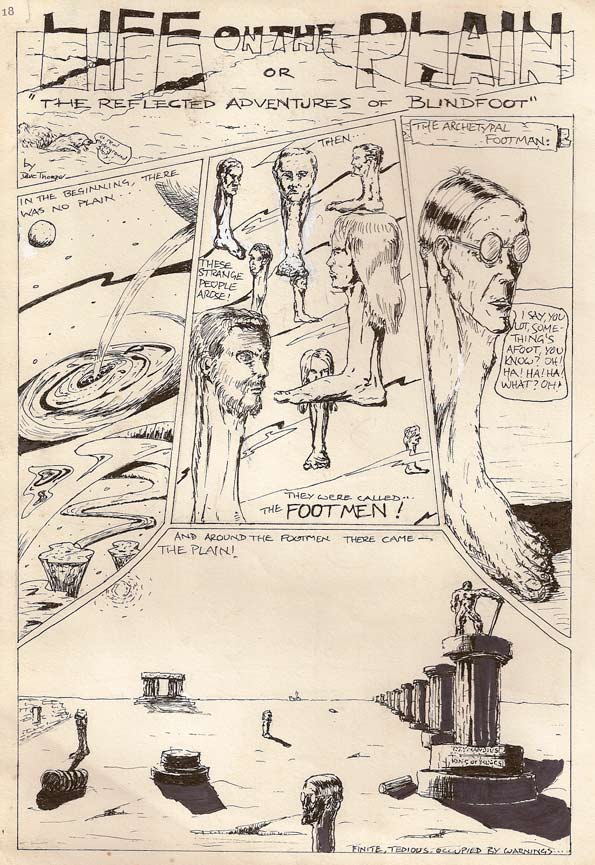
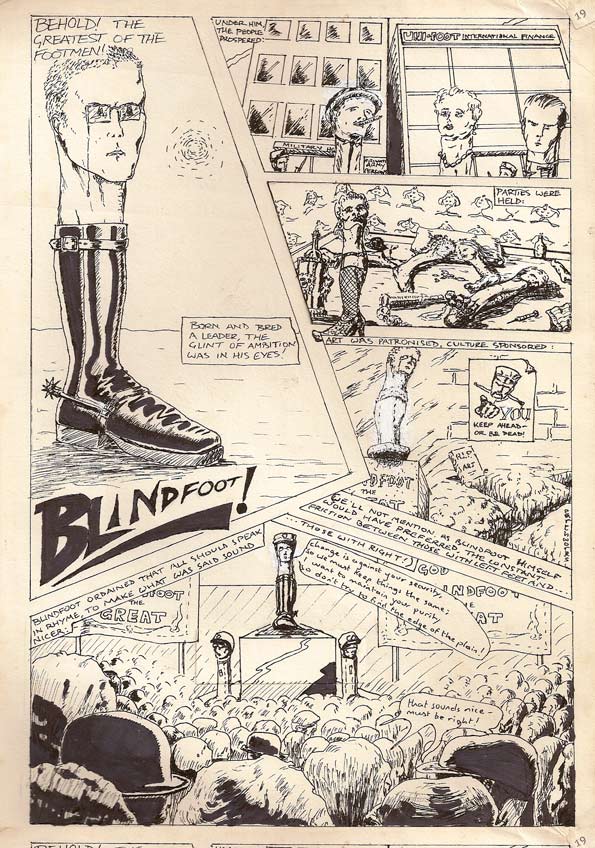
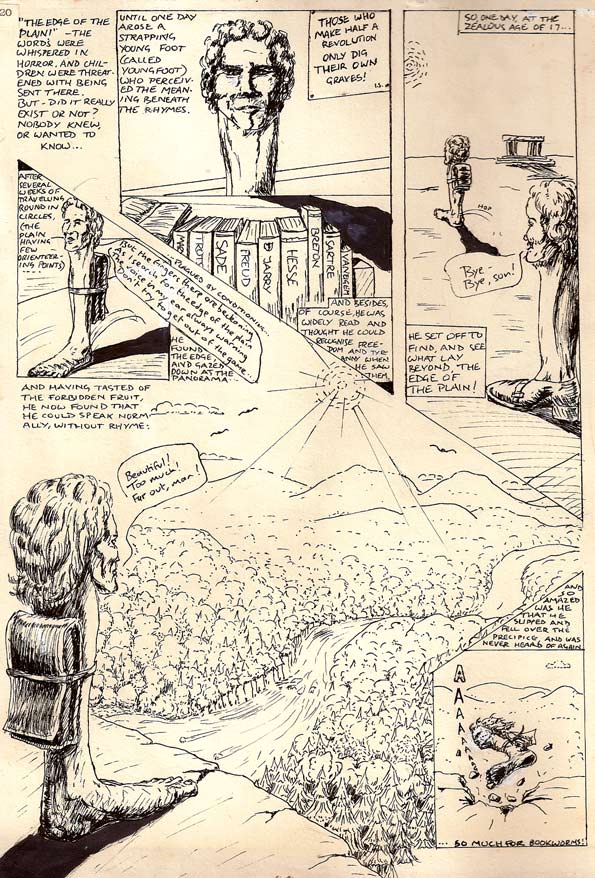
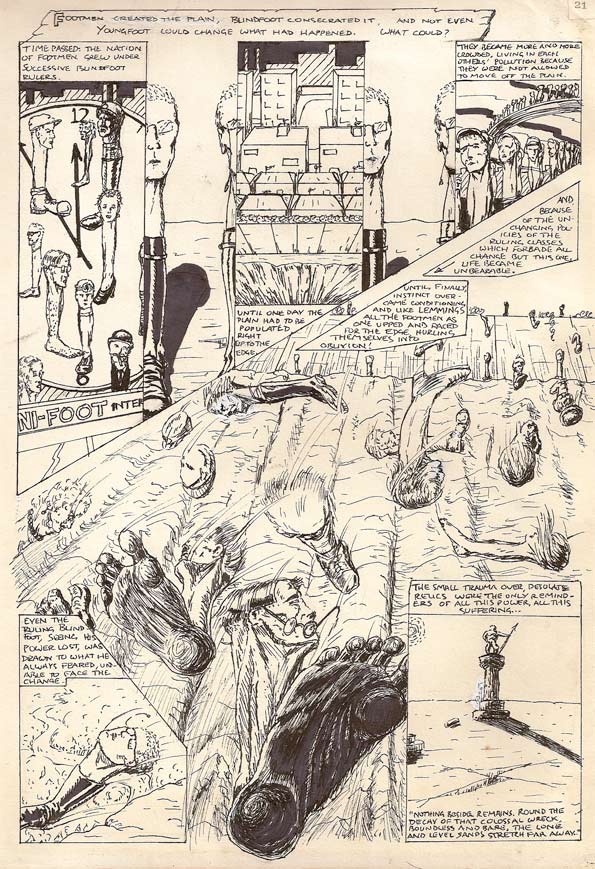
Tuesday, October 21, 2008
Wales for Africa - Stories of Success

I've had the privilege of meeting many selfless, inspiring people while researching this - including Wales' only black fair trade producer, Martha Musonza Holman of Abergavenny, and Angela Gorman, who has saved many lives of pregnant mothers in Chad.
The 12 case studies will be published by Cynnal Cymru - Sustain Wales next month, in print and on their web site.
Friday, October 17, 2008
Satirica is out!
 I have two stories in this hardback collection of satirical speculative fiction published by Cowboy Logic in the States. They are Perfection, and a Doc Chaos story - The Last Laugh.
Perfection is a cautionary allegory about addiction, glamour and politics.
The Last Laugh contemplates the end of civilisation - and imagines the glee of Doc Chaos as we fell prey to the lies we wanted to believe.
You can buy it on Amazon for around £9 - for 24 hardcore tales.
I've also just finished working on a book of case studies - 'Wales 4 Africa' for the Welsh Assembly Government - and meeting totally inspiring people!
Thursday, September 18, 2008
Let's run the banks like e-Bay and Wikipedia
Let’s not despair that human nature always causes ruin just because the banks are collapsing. Individuals can make a fantastic difference, and together, given a leap of imagination, can find a solution to global financial inequality in an unexpected place.
In a week when capitalism's Goliaths have fallen so swiftly, not by the action of many Davids, but because they were made rotten to the core by their own rapacity, I have been gleaning potential solutions to some of the world's most pressing economic problems from a quite different quarter.
I am researching a book on links between individual and communities in Africa and Wales. This means I am travelling around Wales talking to people who are changing the lives of others thousands of miles away, and whose lives themselves are being transformed in the process. Individuals like Angela Gorman, who, just because she saw a BBC documentary in 2005 about women dying in Chad during childbirth for want of a simple and cheap compound, has given up her job to raise money to help them, and as a result slashed the mortality rate from 17% to under 2.5%, exceeding a Millennium Development Goal. These drugs cost just 60p a pop, and a woman would need five to seven of them. Yet they had, until her straightforward intervention, been dying by the hundred. In short she has achieved in a year what the United Nations failed to, so much so that they have asked her to repeat her success in neighbouring Liberia. [http://www.hopeforgracekodindo.org/]
On Wednesday I met Denise Lord from Pen-y-Craig, in the Rhondda, an ex-coal-mining area classed as 'deprived' in the lexicon of EU or government grant-dispersing bodies, and which has had millions poured into it in an attempt to help its children. Although Denise says the kids she runs workshops for are "materially rich, with their mobile phones and Sky boxes" compared to those she has visited in the slums of Cape Town, the problem is that compared to the Cape Town kids they are "spiritually poor, while the Cape Town kids are spiritually rich and materially poor". [http://www.valleyskids.org/news_details-13198.html]
I asked her to explain. "We have so much to learn from these people," she replied, "And I think among the most important is humility. The kids there have to struggle to get to school so they value it. The kids here take it for granted, so they don't. They bunk off and think it's cool to drop out and get into trouble."
'We have so much to learn from these people' is a phrase I've heard from every one of these extraordinary-yet-ordinary individuals I have talked to so far. But Martha Musonza Holman is one apart. She left her two sons, aged 9 and 12, behind when she fled Zimbabwe in 2001 to come to Wales, where she now resides running a fair trade business called, appropriately, I Love Zimbabwe [http://ilovezimbabwe.co.uk]. She and her partner David struggle to import crafts made by people from her community back there to sell here, so she can send the profit back.
It might be easier to trade in hedge funds. To start with she has to contend with officials in Zimbabwe who demand a cut which puts the price up. "You may think they're corrupt," she says, "like some financial traders. But they're just trying to survive themselves in the worst of economic conditions. However we have a consignment of ceramics that has been sitting in a port for three months and we can't bring it here to sell."
The bankers on Wall Street and in the City, who paid themselves billions of dollars in bonuses, don't have the excuse that they were just trying to survive.
"The last consignment we received cost us £1130 to bring here, but I can only sell it for £1200," she complains. Furthermore, sometimes she sits in the Abergavenny market all day and sells nothing. "People in Zimbabwe think it's simple. We are all rich in the West, they believe, so it's easy for me to sell their crafts. But it is not!" The market decides what sells. If no one buys, or if the profit is miserable, her people back home will starve, fair trade or not.
Here is a clear case where the market needs intervention, to help the poorest. That is exactly why the Welsh Assembly Government has commissioned me to write this book and help Martha and all the others to find a bigger market.
Fair Trade is about transparency. Those who pay can see, should they choose, that their money benefits the community where the producers live, and that the producers receive a fair wage. Should not all trade be fair? Should not all banks be transparent? Why do we expect one system to apply to one type of financial transaction, and another, of supposedly far greater import, to be shrouded in secrecy and occluded by hopelessly obscure rules?
The few exceptional people I am meeting are passionate, inspirational, hard-working and often unpaid, as they try in every way they can to help people so far away. Why do they do it? Because their own spirits are enriched and their lives gain meaning by doing so - without the need for religion.
I struggle to understand human nature when I compare their generosity to the insatiable greed of the equally exceptional few bankers who have sucked dry the trough that millions, also far away, are now unable to feed from.
So what is the solution I am advocating, besides transparency, fairness and humility? I believe that it is glaringly obvious. It's a solution dreamed up by ordinary people and millions use it every day. It is a model which others have proselytised for other spheres of human endeavour but few have dared suggest could equally apply to the financial world. When I suggest it you will doubtless laugh. You will snort. But after you've done that, consider it further with me.
We all know that a lack of regulation has brought the crisis upon us. We all know that this has encouraged human greed. I believe that particular aspects of human nature, multifarious as it is, are manifested in different environments purely as a result of what is acceptable in that environment. If you approve excess, excess is what you get. If you reward honesty, then that is what you get.
Every day, millions of people use e-Bay and Amazon and other online marketplaces, buying and selling to other invisible individuals whom they will never meet. They do so with trust and faith because they can clearly see their trading history. Bad deals get bad feedback, and we can all read it. Yes, sometimes scams occur, and sometimes people get ripped off because they don't bother to check the trader's history. But compared to the majority of transactions these are rare.
If, thirty years ago, I had told you that in the future people would trade to this extent with others whom they would never meet and, by and large, have faith that they would not be defrauded, you would have called me hopelessly idealistic. You would have said that such a thing was only possible in a small community where everyone knew everyone else and the high probability of repercussions for bad behaviour would help to curb it. Yet here we are, and, thanks to simple rules, effective monitoring, and modern technology, it happens all the time and millions of dollars change hands every day.
Furthermore, Credit Unions [http://en.wikipedia.org/wiki/Credit_Unions] and community banks trade cash and help individuals and communities bootstrap themselves up without recourse to high interest rates or rapacious moneylenders. In these constituted environments individuals or groups invest money, and other individuals or enterprises borrow it, in a transparent way. They are owned and controlled by their members. The average U.S. credit union has $93 million in assets versus $1.53 billion in assets for the average U.S. bank, so they are commonly smaller - not a bad thing, since if one fails it is not the end of the world.
So here is my horribly naive, simplistic and obvious solution, in outline, to the problem of global financial ineqality and the dark side of capitalism. Here is my mad plan to render these monstrous predatory dinosaurs of banking and insurance extinct once and for all. Here is the route to allow small and medium sized traders - everyone in the world, eventually - access to capital fairly and in confidence: use modern technology, e-Bay type rules and checks and balances, transparency and fairness, to apply a credit union style model to mutual one-to-one exchanges.
Even if those traders be large concerns, they must still follow the same rules of transparency. Everyone's credit history will be visible to all. And if you can see your own history so plainly, would you not be more prudent yourself?
The same rules would apply to everyone, not one set of rules for us and another for the bankers. As with peer-to-peer networking, file-sharing, and indeed Wikipedia-style collaborations of any sort, we would all be bankers, whether lenders or borrowers. If millions of otherwise unconnected people working together can build something as essential and huge as Wikipedia or e-Bay, why can't they build lending institutions, independent of banks? I am not an accountant, or a banker. I can't work out the nitty-gritty of how it would work. i don't need to. I believe in human nature - someone else will, or a crowd of people working together.
If this were done then maybe, just maybe, we might learn some spiritual wealth and humility; by doing things the slightly harder way - and following some simple rules that we collaborate on to make up.
In a week when capitalism's Goliaths have fallen so swiftly, not by the action of many Davids, but because they were made rotten to the core by their own rapacity, I have been gleaning potential solutions to some of the world's most pressing economic problems from a quite different quarter.
I am researching a book on links between individual and communities in Africa and Wales. This means I am travelling around Wales talking to people who are changing the lives of others thousands of miles away, and whose lives themselves are being transformed in the process. Individuals like Angela Gorman, who, just because she saw a BBC documentary in 2005 about women dying in Chad during childbirth for want of a simple and cheap compound, has given up her job to raise money to help them, and as a result slashed the mortality rate from 17% to under 2.5%, exceeding a Millennium Development Goal. These drugs cost just 60p a pop, and a woman would need five to seven of them. Yet they had, until her straightforward intervention, been dying by the hundred. In short she has achieved in a year what the United Nations failed to, so much so that they have asked her to repeat her success in neighbouring Liberia. [http://www.hopeforgracekodindo.org/]
On Wednesday I met Denise Lord from Pen-y-Craig, in the Rhondda, an ex-coal-mining area classed as 'deprived' in the lexicon of EU or government grant-dispersing bodies, and which has had millions poured into it in an attempt to help its children. Although Denise says the kids she runs workshops for are "materially rich, with their mobile phones and Sky boxes" compared to those she has visited in the slums of Cape Town, the problem is that compared to the Cape Town kids they are "spiritually poor, while the Cape Town kids are spiritually rich and materially poor". [http://www.valleyskids.org/news_details-13198.html]
I asked her to explain. "We have so much to learn from these people," she replied, "And I think among the most important is humility. The kids there have to struggle to get to school so they value it. The kids here take it for granted, so they don't. They bunk off and think it's cool to drop out and get into trouble."
'We have so much to learn from these people' is a phrase I've heard from every one of these extraordinary-yet-ordinary individuals I have talked to so far. But Martha Musonza Holman is one apart. She left her two sons, aged 9 and 12, behind when she fled Zimbabwe in 2001 to come to Wales, where she now resides running a fair trade business called, appropriately, I Love Zimbabwe [http://ilovezimbabwe.co.uk]. She and her partner David struggle to import crafts made by people from her community back there to sell here, so she can send the profit back.
It might be easier to trade in hedge funds. To start with she has to contend with officials in Zimbabwe who demand a cut which puts the price up. "You may think they're corrupt," she says, "like some financial traders. But they're just trying to survive themselves in the worst of economic conditions. However we have a consignment of ceramics that has been sitting in a port for three months and we can't bring it here to sell."
The bankers on Wall Street and in the City, who paid themselves billions of dollars in bonuses, don't have the excuse that they were just trying to survive.
"The last consignment we received cost us £1130 to bring here, but I can only sell it for £1200," she complains. Furthermore, sometimes she sits in the Abergavenny market all day and sells nothing. "People in Zimbabwe think it's simple. We are all rich in the West, they believe, so it's easy for me to sell their crafts. But it is not!" The market decides what sells. If no one buys, or if the profit is miserable, her people back home will starve, fair trade or not.
Here is a clear case where the market needs intervention, to help the poorest. That is exactly why the Welsh Assembly Government has commissioned me to write this book and help Martha and all the others to find a bigger market.
Fair Trade is about transparency. Those who pay can see, should they choose, that their money benefits the community where the producers live, and that the producers receive a fair wage. Should not all trade be fair? Should not all banks be transparent? Why do we expect one system to apply to one type of financial transaction, and another, of supposedly far greater import, to be shrouded in secrecy and occluded by hopelessly obscure rules?
The few exceptional people I am meeting are passionate, inspirational, hard-working and often unpaid, as they try in every way they can to help people so far away. Why do they do it? Because their own spirits are enriched and their lives gain meaning by doing so - without the need for religion.
I struggle to understand human nature when I compare their generosity to the insatiable greed of the equally exceptional few bankers who have sucked dry the trough that millions, also far away, are now unable to feed from.
So what is the solution I am advocating, besides transparency, fairness and humility? I believe that it is glaringly obvious. It's a solution dreamed up by ordinary people and millions use it every day. It is a model which others have proselytised for other spheres of human endeavour but few have dared suggest could equally apply to the financial world. When I suggest it you will doubtless laugh. You will snort. But after you've done that, consider it further with me.
We all know that a lack of regulation has brought the crisis upon us. We all know that this has encouraged human greed. I believe that particular aspects of human nature, multifarious as it is, are manifested in different environments purely as a result of what is acceptable in that environment. If you approve excess, excess is what you get. If you reward honesty, then that is what you get.
Every day, millions of people use e-Bay and Amazon and other online marketplaces, buying and selling to other invisible individuals whom they will never meet. They do so with trust and faith because they can clearly see their trading history. Bad deals get bad feedback, and we can all read it. Yes, sometimes scams occur, and sometimes people get ripped off because they don't bother to check the trader's history. But compared to the majority of transactions these are rare.
If, thirty years ago, I had told you that in the future people would trade to this extent with others whom they would never meet and, by and large, have faith that they would not be defrauded, you would have called me hopelessly idealistic. You would have said that such a thing was only possible in a small community where everyone knew everyone else and the high probability of repercussions for bad behaviour would help to curb it. Yet here we are, and, thanks to simple rules, effective monitoring, and modern technology, it happens all the time and millions of dollars change hands every day.
Furthermore, Credit Unions [http://en.wikipedia.org/wiki/Credit_Unions] and community banks trade cash and help individuals and communities bootstrap themselves up without recourse to high interest rates or rapacious moneylenders. In these constituted environments individuals or groups invest money, and other individuals or enterprises borrow it, in a transparent way. They are owned and controlled by their members. The average U.S. credit union has $93 million in assets versus $1.53 billion in assets for the average U.S. bank, so they are commonly smaller - not a bad thing, since if one fails it is not the end of the world.
So here is my horribly naive, simplistic and obvious solution, in outline, to the problem of global financial ineqality and the dark side of capitalism. Here is my mad plan to render these monstrous predatory dinosaurs of banking and insurance extinct once and for all. Here is the route to allow small and medium sized traders - everyone in the world, eventually - access to capital fairly and in confidence: use modern technology, e-Bay type rules and checks and balances, transparency and fairness, to apply a credit union style model to mutual one-to-one exchanges.
Even if those traders be large concerns, they must still follow the same rules of transparency. Everyone's credit history will be visible to all. And if you can see your own history so plainly, would you not be more prudent yourself?
The same rules would apply to everyone, not one set of rules for us and another for the bankers. As with peer-to-peer networking, file-sharing, and indeed Wikipedia-style collaborations of any sort, we would all be bankers, whether lenders or borrowers. If millions of otherwise unconnected people working together can build something as essential and huge as Wikipedia or e-Bay, why can't they build lending institutions, independent of banks? I am not an accountant, or a banker. I can't work out the nitty-gritty of how it would work. i don't need to. I believe in human nature - someone else will, or a crowd of people working together.
If this were done then maybe, just maybe, we might learn some spiritual wealth and humility; by doing things the slightly harder way - and following some simple rules that we collaborate on to make up.
Wednesday, September 10, 2008
Campaign for the book Charter 2008
A few days ago i mentioned this campaign, described by Alan Gibbons at the Children’s Writers and Illustrators Group of the Society of Authors conference last month. It is about to be formally launched and already has 245 signatories including Michael Rosen, Philip Pullman, Anne Fine, Sue Palmer, Beverley Naidoo. Malorie Blackman and David Almond.
But why have such a campaign? The 2008 Year of Reading has been a great success. There have been many exciting initiatives such as the Boys into Books campaign. In many ways, reading has never been more popular. Millions of books are bought and devoured by a huge reading public. Many authors are major figures in public life.
These successes can disguise very serious problems, however which are undermining the place of the book and reading for pleasure in national life. Here are some of the challenges we face:
Given the present economic difficulties, many of these challenges are likely to become more pressing.
We, the signatories of this Charter commit ourselves to campaigning for the following:
Supporters of the Campaign for the Book do not see themselves as competitors with professional associations, trade unions and existing library or school campaigns. We seek to create a national network to help coordinate the efforts of all who want to protect the status of the book and reading for pleasure. We will offer our support to local campaigns and initiatives.
It is time to stand up for reading.
It is time to campaign for the book.
For further information contact Alan Gibbons at: aagibbons@blueyonder.co.uk.
Alan took paprt in a debate on the writers' and publishers' podcast show Litopia. You can listen to it by accessing: http://podcast.litopia.com/?p=212.
But why have such a campaign? The 2008 Year of Reading has been a great success. There have been many exciting initiatives such as the Boys into Books campaign. In many ways, reading has never been more popular. Millions of books are bought and devoured by a huge reading public. Many authors are major figures in public life.
These successes can disguise very serious problems, however which are undermining the place of the book and reading for pleasure in national life. Here are some of the challenges we face:
- public library closures- sixty last year and more planned
- a loss of professional library staff- down 13% between 1995 and 2005
- more untrained volunteers instead of qualified library staff
- fewer books in schools, (according to one report, a 15% reduction while there has been 28% rise in spending on education)
- a shift from books to computer services
- the closure of school libraries to make way for ICT suites
- the sacking or down grading of both public and school librarians
- the closure of school libraries
- the marginalisation of reading for pleasure and the reading of whole books in many schools as teaching to the test replaces the pleasure of acquiring knowledge for its own sake
Given the present economic difficulties, many of these challenges are likely to become more pressing.
We, the signatories of this Charter commit ourselves to campaigning for the following:
- The central place of reading for pleasure in society
- A proper balance of book provision and Information Technology in public and school libraries. We welcome the integration of new technologies but believe that they must not erode the key place of books and the need for a healthy and expanding book stock
- The defence of public libraries and librarians from attempts to cut spending in a ‘soft’ area
- An extension of the role of the school librarian and a recognition of the school library as a key engine of learning. All staff employed in school libraries to have access to appropriate and adequate support and training
- The recruitment of more school librarians. It is a national scandal that less than a third of secondary schools has a trained librarian
- The defence of the professional status of the public and school librarian. We oppose downgrading. In some places this has reduced librarians’ salaries by up to half
- The promotion of reading whole books in school rather than excerpts
- A higher profile for reading for pleasure in schools, including shadowing book awards, inviting authors and illustrators to visit, developing school creative writing magazines
- To support the sustainability and future development of Schools Library Service provision nationally.
Supporters of the Campaign for the Book do not see themselves as competitors with professional associations, trade unions and existing library or school campaigns. We seek to create a national network to help coordinate the efforts of all who want to protect the status of the book and reading for pleasure. We will offer our support to local campaigns and initiatives.
It is time to stand up for reading.
It is time to campaign for the book.
For further information contact Alan Gibbons at: aagibbons@blueyonder.co.uk.
Alan took paprt in a debate on the writers' and publishers' podcast show Litopia. You can listen to it by accessing: http://podcast.litopia.com/?p=212.
Friday, September 05, 2008
A gathering of authors
I don't know if there is a collective noun for a gathering of authors, but last weekend I went to the Society of Authors conference for children's writers and illustrators in Cambridge. There were certainly a lot of them.
I enjoyed meeting a lot of people I had only either read or chatted to online, as well as some old friends.
Highlights were:
- William Nicholson's extremely funny account of his life and writing career -- how he started off wanting to be Proust, and ended up writing Gladiators and Shadowlands
- Philip Pullman's tub thumping, a barnstorming speech against age banding in which he said that if we allow it to go ahead all of civilisation will grind to a halt and the earth will turn to a desert. This won riotous applause. We all then felt terribly sorry for the publisher from Scholastic who had to get up and follow him and speak in defence of age banding. At the end of it most of us were still against age banding, and the publisher apologised that they never consulted all the writers before going ahead with it, and promised that no writers will have to suffer age banding on their book covers without consultation. Of course this does not necessarily mean that it will not go ahead....
- Alan Gibbons launched his campaign in support of reading, as lots of libraries are being closed by local authorities and schools seeking cutbacks, and they are also not appointing qualified chartered librarians to fill vacancies. Writers who sign up to the campaign -- and I will post the website later -- as well as teachers, local authority staff, librarians themselves, and anybody else, will be asked to sign petitions against specific closures that we find out about, and perhaps speak at a public meetings.
- Michael Rosen, who lamented the fact that kids nowadays can go through the whole of their school years without reading a whole book, just extracts, and are not taught to enjoy reading for pleasure merely reading functionally and to help them fit into the job-centred world.
- Malorie Blackman, who is lovely and immensely approachable.
- David Almond, ditto. He spoke with Polly Dunbar about his collaboration with her on My Dad's a Birdman
Thank you to everybody who organised it, in particular Enid Stephenson.
I enjoyed meeting a lot of people I had only either read or chatted to online, as well as some old friends.
Highlights were:
- William Nicholson's extremely funny account of his life and writing career -- how he started off wanting to be Proust, and ended up writing Gladiators and Shadowlands
- Philip Pullman's tub thumping, a barnstorming speech against age banding in which he said that if we allow it to go ahead all of civilisation will grind to a halt and the earth will turn to a desert. This won riotous applause. We all then felt terribly sorry for the publisher from Scholastic who had to get up and follow him and speak in defence of age banding. At the end of it most of us were still against age banding, and the publisher apologised that they never consulted all the writers before going ahead with it, and promised that no writers will have to suffer age banding on their book covers without consultation. Of course this does not necessarily mean that it will not go ahead....
- Alan Gibbons launched his campaign in support of reading, as lots of libraries are being closed by local authorities and schools seeking cutbacks, and they are also not appointing qualified chartered librarians to fill vacancies. Writers who sign up to the campaign -- and I will post the website later -- as well as teachers, local authority staff, librarians themselves, and anybody else, will be asked to sign petitions against specific closures that we find out about, and perhaps speak at a public meetings.
- Michael Rosen, who lamented the fact that kids nowadays can go through the whole of their school years without reading a whole book, just extracts, and are not taught to enjoy reading for pleasure merely reading functionally and to help them fit into the job-centred world.
- Malorie Blackman, who is lovely and immensely approachable.
- David Almond, ditto. He spoke with Polly Dunbar about his collaboration with her on My Dad's a Birdman
Thank you to everybody who organised it, in particular Enid Stephenson.
An interview in Brazil
The Brazilian version of Hybrid Nation has just published an interview with me. For those of you who can't speak Portuguese, here it is in English:
1- How Hybrids was born? Does your work as an environmental journalist influenced your writing in this book?
Hybrids was born alive and kicking in a nest made from all my obsessions! Some of its roots lie in an earlier work, Doc Chaos, some in a postcard I picked up on holiday in Barcelona in 1984, while others are to do with my disability -- I have mild cerebral palsy -- and my interest in comics and the work of Philip Pullman. I try to keep out most of my environmental knowledge, except in my description of the landscape around the Centre for Genetic Rehabilitation, and the swollen snake of the River Thames which has flooded part of London due to global warming. Hybrids is about our obsession with technology and the human, emotional and political repercussions of fear of plague. Some of this comes from a work by Susan Sontag called Illness as Metaphor. In an earlier version of the story set in the Hybrids story world, it was a comics script called the Gene Police, and Major Winter was the main character if you can believe that! I sold options to Marvel comics and to Eclipse comics but neither actually published it. That was in the 1990s. There is much more in some 2007 posts on my Sympathy For The Moon blog. I talk about the difference between a hybrid, a mutant, an android and so on.
2- Some people say that great novel transports the reader and it's like watching a movie. Hybrids can evoke that same experience and maybe one of the reasons is the book's structure that seems wrote to be easily adapted to the silver screen. Do you agree with this and if so, was it something intentional?
Yes this is completely intentional. The turning point for me as a writer was when I did a course in scriptwriting for film and television. I have written TV and film scripts, and plenty of comics which I have also edited. I see things in my mind's eye and write them down. I try to keep the suspense going. However I am not too specific -- it's best to let the reader make their own images in their minds.
3- I'm curious in how exactly Creep works. In Hybrids we have people with guns and musical instruments attached to their bodies. How low the technology can be to "merge" in a human body?
Creep can only work in connection with a gadget that works on electricity. Some guns have electronic parts, at least they do in my future, and this is what Thom Gunn has. The musical instruments are electric guitar and electric bass. Later on in the projected Hybrids series, as scientists discover more about how Creep works, this is related in the narrative. We already know from volume 1 that it is to do with nanotechnology.
4- What was your reaction when you knew that Hybrids would have a Portuguese translation and be published in Brazil?
Absolutely delighted! I have just received a package with the book in and all the publicity material and it looks fantastic. I can use my English and Portuguese editions side by side now to try and learn Portuguese! I think Brazil is a fantastic country of many contrasts and a vibrant culture, and I love much of the films and television that I've seen from your country.
5- Do you have plans to visit Brazil someday?
I can't wait to visit you. It's also an amazing coincidence that the artist I have been working with on adapting Hybrids to comics, Felipe Cunha, lives near Sao Paulo and I will take the opportunity to meet him for the first time as well. I would also like to go and see some rainforest and visit Curitiba.
6- What can you tell us about the sequel?
Books two and three are plotted out. The climax is amazing. Something happens to Johnny and Kestrella that as far as I know has never been put in a book for teenagers before! The journey is full of surprises. The plot thickens and gets much darker with much more at stake. I can't give any details away however.
1- How Hybrids was born? Does your work as an environmental journalist influenced your writing in this book?
Hybrids was born alive and kicking in a nest made from all my obsessions! Some of its roots lie in an earlier work, Doc Chaos, some in a postcard I picked up on holiday in Barcelona in 1984, while others are to do with my disability -- I have mild cerebral palsy -- and my interest in comics and the work of Philip Pullman. I try to keep out most of my environmental knowledge, except in my description of the landscape around the Centre for Genetic Rehabilitation, and the swollen snake of the River Thames which has flooded part of London due to global warming. Hybrids is about our obsession with technology and the human, emotional and political repercussions of fear of plague. Some of this comes from a work by Susan Sontag called Illness as Metaphor. In an earlier version of the story set in the Hybrids story world, it was a comics script called the Gene Police, and Major Winter was the main character if you can believe that! I sold options to Marvel comics and to Eclipse comics but neither actually published it. That was in the 1990s. There is much more in some 2007 posts on my Sympathy For The Moon blog. I talk about the difference between a hybrid, a mutant, an android and so on.
2- Some people say that great novel transports the reader and it's like watching a movie. Hybrids can evoke that same experience and maybe one of the reasons is the book's structure that seems wrote to be easily adapted to the silver screen. Do you agree with this and if so, was it something intentional?
Yes this is completely intentional. The turning point for me as a writer was when I did a course in scriptwriting for film and television. I have written TV and film scripts, and plenty of comics which I have also edited. I see things in my mind's eye and write them down. I try to keep the suspense going. However I am not too specific -- it's best to let the reader make their own images in their minds.
3- I'm curious in how exactly Creep works. In Hybrids we have people with guns and musical instruments attached to their bodies. How low the technology can be to "merge" in a human body?
Creep can only work in connection with a gadget that works on electricity. Some guns have electronic parts, at least they do in my future, and this is what Thom Gunn has. The musical instruments are electric guitar and electric bass. Later on in the projected Hybrids series, as scientists discover more about how Creep works, this is related in the narrative. We already know from volume 1 that it is to do with nanotechnology.
4- What was your reaction when you knew that Hybrids would have a Portuguese translation and be published in Brazil?
Absolutely delighted! I have just received a package with the book in and all the publicity material and it looks fantastic. I can use my English and Portuguese editions side by side now to try and learn Portuguese! I think Brazil is a fantastic country of many contrasts and a vibrant culture, and I love much of the films and television that I've seen from your country.
5- Do you have plans to visit Brazil someday?
I can't wait to visit you. It's also an amazing coincidence that the artist I have been working with on adapting Hybrids to comics, Felipe Cunha, lives near Sao Paulo and I will take the opportunity to meet him for the first time as well. I would also like to go and see some rainforest and visit Curitiba.
6- What can you tell us about the sequel?
Books two and three are plotted out. The climax is amazing. Something happens to Johnny and Kestrella that as far as I know has never been put in a book for teenagers before! The journey is full of surprises. The plot thickens and gets much darker with much more at stake. I can't give any details away however.
Tuesday, August 26, 2008
Johnny Online launches Hybrids in Brazil
Hybrids - Hibridos in Portuguese - was launched last week at the Sao Paulo bookfair. They hired an actor to play Johnny Online - here are some great pictures!


Terrific DCL editor Camile Mendrot with Johnny Online:
Terrific DCL editor Camile Mendrot with Johnny Online:
Friday, August 08, 2008
Now Brazil has a Hybrid Nation!
Now, Johnny Online fans have started a Portuguese version of his blog, Hybrid Nation: nacaohibrida.com. and, if you use the social networking tool of choice in South America, Orkut, you can be his friend! He has his own profile here.
Tuesday, July 22, 2008
Meet Johnny and Kestrella at the São Paulo bookfair!
Hybrids is to be published in Brazil next month, by Editora DCL. It will be their lead title and will be heavily promoted at the 20th International Book Biennial of São Paulo between 14-24 August.
Events promised so far include a "Johnny Online" and a "Kestrella" walking around the Bookfair to talk about the book (an actor and an actress dressed like the characters with make-up and hybrid add-ons to make the characters alive)!
They will give away a vacuum packaged bunch of goodies including the book previews with a label or a tag informing that the contents are free of any virus and is safe to touch and read!
More later...
Events promised so far include a "Johnny Online" and a "Kestrella" walking around the Bookfair to talk about the book (an actor and an actress dressed like the characters with make-up and hybrid add-ons to make the characters alive)!
They will give away a vacuum packaged bunch of goodies including the book previews with a label or a tag informing that the contents are free of any virus and is safe to touch and read!
More later...
Friday, July 04, 2008
Genre and Literature
I have written this in response to an interesting post by Juliet Marillier on her blog Writer Unblocked. She is discussing whether genre fiction is 'literature' or not. One comment on her blog argues that 'literature' is a genre as well, and I would agree. But my discussion below, argues that all of this is irrelevant.
As I've written earlier, I begin with JG Ballard's assertion that science fiction is the only literature (yes, I'm calling science fiction literature) which has accurately reflected what has happened in the 20th century. Of course he is talking about a particular kind of science fiction, the kind that Star Trek fans would not recognize. His work was often marketed as science fiction and still is, even though everybody knows that it is JG Ballard, basically, and not "proper" science-fiction. In the end, he has succeeded in defining his own genre, kind of in the way that William Burroughs did, an author also originally marketed by Pan as science fiction.
My novel Hybrids was promoted as science fiction by HarperCollins, but for me it was not. Just because it had people merging with bits of electronic commodities didn't make it science fiction for me, although you might call me naive as a result. It was the themes that counted.
I've gone down this road even more with my latest work, and the touchstone which I am using is Kazuo's Ishiguro's Never Let Me Go. There has been much written about whether this is science fiction or literature, and everybody generally agrees that although the subject matter -- cloning and breeding people for operations and spare parts -- is in the ballpark of science fiction, the treatment of it is not. And the reason is -- and this contradicts what Juliet says -- that it does not present a consistent storyworld.
A science fiction writer would normally create a whole self consistent world and describe its features. Kazuo doesn't do this because he is interested in the emotional lives of the characters, not explaining the wider world in which they find themselves. We already know what our 'real world' is like, we don't need to be told. We accept the 'real world' whether it is self consistent or not (and some would argue that is you not)! So you wouldn't stop the narrative of a 'work of literature' to explain how a mobile phone works when a character starts using one. And yet science fiction writers do sometimes stop the narrative to explain something about their story world for readers.
Whatever label you put on a book defines its readership to an extent until the writer is sufficiently well known that people will follow his/her work. S/he will break out of the genre. Terry Pratchett is Terry Pratchett. Interestingly, the Raw Shark Text, by Steven Hall, although arguably fantasy, was marketed as non-genre by Canongate Books, presumably in order to maximise its potential readership.
Then again there is the old chestnut of whether someone like Franz Kafka or George Orwell would be marketed as science fiction nowadays.
It doesn't really matter -- they are unique, and perhaps what we should all be doing as writers is concentrating on finding our unique voice and not worrying about genre.
As I've written earlier, I begin with JG Ballard's assertion that science fiction is the only literature (yes, I'm calling science fiction literature) which has accurately reflected what has happened in the 20th century. Of course he is talking about a particular kind of science fiction, the kind that Star Trek fans would not recognize. His work was often marketed as science fiction and still is, even though everybody knows that it is JG Ballard, basically, and not "proper" science-fiction. In the end, he has succeeded in defining his own genre, kind of in the way that William Burroughs did, an author also originally marketed by Pan as science fiction.
My novel Hybrids was promoted as science fiction by HarperCollins, but for me it was not. Just because it had people merging with bits of electronic commodities didn't make it science fiction for me, although you might call me naive as a result. It was the themes that counted.
I've gone down this road even more with my latest work, and the touchstone which I am using is Kazuo's Ishiguro's Never Let Me Go. There has been much written about whether this is science fiction or literature, and everybody generally agrees that although the subject matter -- cloning and breeding people for operations and spare parts -- is in the ballpark of science fiction, the treatment of it is not. And the reason is -- and this contradicts what Juliet says -- that it does not present a consistent storyworld.
A science fiction writer would normally create a whole self consistent world and describe its features. Kazuo doesn't do this because he is interested in the emotional lives of the characters, not explaining the wider world in which they find themselves. We already know what our 'real world' is like, we don't need to be told. We accept the 'real world' whether it is self consistent or not (and some would argue that is you not)! So you wouldn't stop the narrative of a 'work of literature' to explain how a mobile phone works when a character starts using one. And yet science fiction writers do sometimes stop the narrative to explain something about their story world for readers.
Whatever label you put on a book defines its readership to an extent until the writer is sufficiently well known that people will follow his/her work. S/he will break out of the genre. Terry Pratchett is Terry Pratchett. Interestingly, the Raw Shark Text, by Steven Hall, although arguably fantasy, was marketed as non-genre by Canongate Books, presumably in order to maximise its potential readership.
Then again there is the old chestnut of whether someone like Franz Kafka or George Orwell would be marketed as science fiction nowadays.
It doesn't really matter -- they are unique, and perhaps what we should all be doing as writers is concentrating on finding our unique voice and not worrying about genre.
Thursday, July 03, 2008
Hybrid Nation - Johnny Online's own blog
Unbelievable - Johnny Online has started his own blog - just like in the book, Hybrids. It is here, at Hybrid Nation
Saturday, June 07, 2008
The kids are alright, Hail Lewisham, publish Hybrids 2, and stop age banding!
 There's such a lot of great work going on to encourage children to read widely.
I was down in Lewisham and Forest Hill School last Thursday where they presented me with a lovely trophy for winning the Lewisham Book Award.
 Then they got me asking questions at their annual books quiz. There were teams of three or four Year 9 children from each of seven schools in the area. There were seven rounds of 10 questions each, along the lines of who wrote what book, which book does this character belong in, and which book is this the first sentence of? There was a very wide range of books covered, and not all children's literature or contemporary. I would say Roald Dahl was the most frequently cited author.
There was even a section on So You Think You Know Shakespeare, which was one of the highest scoring rounds - they do know him alright. I'm not going to say who the winner was, because all the kids did extremely well and I was really impressed with how widely they read and their enthusiasm.
The campaign to persuade HarperCollins to publish Hybrids 2
Oh, yes, and that the kids, teachers and librarians in Lewisham all like Hybrids so much, that they are writing to Gillie Russell, the head of children's books for older readers at HarperCollins, to ask her to commission the next books in the series.If any of you want to see this happen too, far be it from me to suggest that you write to Gillie Russell yourself as well... It wouldn't be such an awful mistake for them, as the first book's so popular, would it?
No one can understand why they're so far refusing to publish it.
No To Age Banding
I've also added my name to Philip Pullman's campaign No To Age Banding, to stop publishers age banding books. Books choose their readers and readers choose their books, they don't need marketing people telling them what to read or not to read.It's patronising and condescending and doesn't help anybody, in my humble opinion. If you agree, sign up yourself on that web site.
Tuesday, May 13, 2008
Ribbon cutting and techno-addictions
I felt very honoured to be asked to open a new school library at St Matthew Academy, London, last week. This is another brand new Academy building, a bit weird in the contrast between its corporate grey steel-and-glass scale and some of the kids who are as young as 3!

So I had to cut a ribbon and then had a very interesting discussion with a lot of Year 7 and 8 kids on young peoples' attitudes to computers, mobile phones and their technology use, some of the themes of Hybrids.
Nearly all said they themselves thought they used technology (PCs, mobiles) too much. This contrasted with just one third of the group (140 kids) I'd asked the same question of in Sefton borough, Merseyside, where Hybrids is shortlisted for another regional award.

I'd been there the previous day and met 140 kids from ten schools, signing in two days about 150 books. The event was in the Crosby Civic Centre, which is near the beach where Anthony Gormley's Another Place sculptures stare out blankly at a new windfarm out to sea. People were sunbathing.
I put the difference in response between the two groups down to the perceived danger of being on the streets in south London - where a teenager was killed just a mile away two days later. They said they didn't know what else to do with their time.
When I modestly suggested "read" this was a weird idea for some! They thought this was probably due to the addictive nature of technology use and - as pointed out by one girl who'd recently arrived in the UK - because the technology is so cheap, that everyone owns it and uses it to communicate with everyone else.

I have been invited back to Lewisham to formally receive the Lewisham Schools Book Award and host a quiz for the kids on June 5 at Forest Hill School, Dacres Road, London, SE23, at 1.30pm. I'm so looking forward to this, as i love meeting the kids and hearing their viewpoints!
The Sefton SuperReads award is announced on June 21.
So I had to cut a ribbon and then had a very interesting discussion with a lot of Year 7 and 8 kids on young peoples' attitudes to computers, mobile phones and their technology use, some of the themes of Hybrids.
Nearly all said they themselves thought they used technology (PCs, mobiles) too much. This contrasted with just one third of the group (140 kids) I'd asked the same question of in Sefton borough, Merseyside, where Hybrids is shortlisted for another regional award.
I'd been there the previous day and met 140 kids from ten schools, signing in two days about 150 books. The event was in the Crosby Civic Centre, which is near the beach where Anthony Gormley's Another Place sculptures stare out blankly at a new windfarm out to sea. People were sunbathing.
I put the difference in response between the two groups down to the perceived danger of being on the streets in south London - where a teenager was killed just a mile away two days later. They said they didn't know what else to do with their time.
When I modestly suggested "read" this was a weird idea for some! They thought this was probably due to the addictive nature of technology use and - as pointed out by one girl who'd recently arrived in the UK - because the technology is so cheap, that everyone owns it and uses it to communicate with everyone else.
I have been invited back to Lewisham to formally receive the Lewisham Schools Book Award and host a quiz for the kids on June 5 at Forest Hill School, Dacres Road, London, SE23, at 1.30pm. I'm so looking forward to this, as i love meeting the kids and hearing their viewpoints!
The Sefton SuperReads award is announced on June 21.
Thursday, May 01, 2008
On the road - in Merseyside and London next week
Next week I'm coming out of my hermit's cave in deep mid-Wales and hitting the road.
On Wednesday 7th May I'll be making two appearances at the Civic Hall in Sefton, Merseyside, answering questions from kids from the local schools and anyone else who cares to drop in (at 11.15am and 2.15pm) and signing copies of Hybrids.
Then it's off to London where that evening I'll be at a Children’s Book Circle event 'Are Series Books Ruling The Shelves?' at Penguin Books on the Strand.
The following day, 8th May, I'm opening a new library at the brand new St Matthew Academy, St Joseph's Vale, Blackheath (11am) (I must sharpen my scissors for the ribbon-cutting!), and again there's a signing.
If you're in the neighbourhood, consider dropping in!
On Wednesday 7th May I'll be making two appearances at the Civic Hall in Sefton, Merseyside, answering questions from kids from the local schools and anyone else who cares to drop in (at 11.15am and 2.15pm) and signing copies of Hybrids.
Then it's off to London where that evening I'll be at a Children’s Book Circle event 'Are Series Books Ruling The Shelves?' at Penguin Books on the Strand.
The following day, 8th May, I'm opening a new library at the brand new St Matthew Academy, St Joseph's Vale, Blackheath (11am) (I must sharpen my scissors for the ribbon-cutting!), and again there's a signing.
If you're in the neighbourhood, consider dropping in!
Wednesday, April 23, 2008
Tagged!
Oh dear I've been tagged - by Jane Volker.
The rules of this game are:
a. Link to the person who tagged you.
b. Post the rules on your blog.
c. Write six random things about yourself.
d. Tag six random people at the end of your post by linking to their blogs.
e. Let each person know they have been tagged by leaving a comment at their blog.
f. Let your tagger know when your entry is up
I have to come up with 6 random things about myself. This is hard. Anyway here goes:
The six people I am tagging are:
What a long time this takes. Now I got to tell everyone too...
The rules of this game are:
a. Link to the person who tagged you.
b. Post the rules on your blog.
c. Write six random things about yourself.
d. Tag six random people at the end of your post by linking to their blogs.
e. Let each person know they have been tagged by leaving a comment at their blog.
f. Let your tagger know when your entry is up
I have to come up with 6 random things about myself. This is hard. Anyway here goes:
- I was a co-scriptwriter on an awful movie made for Comic Relief in 1989 and starring Jerry Hall - we had a day to write it and 3 days to shoot it and it was called The Fastest Forward!
- My favourite dessert is probably sherry trifle - but without custard - and my favourite drink is Irish Coffee
- I sometimes confuse blues and greens and left and right
- I'm a vegetarian (but like seafood and very occasionally some organic duck!)
- I love cycling and swimming, but hate running
- My favourite band is Muse.
The six people I am tagging are:
What a long time this takes. Now I got to tell everyone too...
Friday, April 18, 2008
Two stories in a new anthology
I have two stories being published in the summer in an anthology of satirical speculative fiction, Satirica.
They are Perfection and Doc Chaos the Last Laugh.
Perfection follows the story of a young man who finds the secret of success and happiness, not just for himself, but the whole country.
Doc Chaos the Last Laugh revisits the subject of my novella, Doc Chaos: The Chernobyl Effect. The great doctor is at the end of civilisation. And guess what? He wants to take all the credit for humanity's downfall. But will he, poet Arthur Rambo, or arch-Taoist Yin-Yang Bradley, all sharing the same fortified mountain retreat, be the last one standing?
Satirica is out in hard cover edition this summer. Paperback edition next summer. The publisher is US based Cowboy Logic.
Other authors include:
They are Perfection and Doc Chaos the Last Laugh.
Perfection follows the story of a young man who finds the secret of success and happiness, not just for himself, but the whole country.
Doc Chaos the Last Laugh revisits the subject of my novella, Doc Chaos: The Chernobyl Effect. The great doctor is at the end of civilisation. And guess what? He wants to take all the credit for humanity's downfall. But will he, poet Arthur Rambo, or arch-Taoist Yin-Yang Bradley, all sharing the same fortified mountain retreat, be the last one standing?
Satirica is out in hard cover edition this summer. Paperback edition next summer. The publisher is US based Cowboy Logic.
Other authors include:
- Edward Morris
- Tomas L Martin
- R.J. Astruc
- Victor Giannini
- John Parke Davis
- Bill Housley
- Steven J. Dines
- Joshua Allen
- Dudgeon
- Gary Cuba
- Mike Philbin
- Kevin Spiess
- Roger Haller
- Jason K. Chapman
- Dan Kopcow
- Paul Mannering
- Lawrence R Dagstine
- Anden Sharp
- Dan Marcus
Tuesday, April 15, 2008
A novel for barcode readers

In the future, novels will be written for machines to read.
When they have merged with machines, some hybrids will have barcode scanners.
For their benefit here are the first few pages of Hybrids in barcode language.
This means Hybrids is the first novel to be published in barcodes. Awesome, eh?
(Now, presumably, novels will begin to be written by machines... Maybe some already are!)
Saturday, April 05, 2008
At the mercy of publishers
Author Jane Volker has written a nice piece about Hybrids and HarperCollins and the plight of writers vis-a-vis some publishers on her blog, Pastures New. Thanks Jane!
Friday, April 04, 2008
Buy signed copies!
My web site has just been updated and you can now by signed copies of both my novels direct from me using PayPal.
Click here to visit it.
Also, I’ve just been contacted by the commissioning editor at Chicken House, my favourite children’s book publisher, to ask to meet me to discuss some book proposals I sent. We’ll meet next Friday. Fingers crossed!
Click here to visit it.
Also, I’ve just been contacted by the commissioning editor at Chicken House, my favourite children’s book publisher, to ask to meet me to discuss some book proposals I sent. We’ll meet next Friday. Fingers crossed!
Thursday, April 03, 2008
Hybrids wins the Lewisham Schools Book Award
When I blogged last month that the winner of the presentations competition of the Lewisham Book Award was a team from Prendergast and Knight’s Academy, what I didn’t say was that they were presenting my book Hybrids.
I have just found out that also Hybrids has won the Lewisham Book Award, which is a joint event between Lewisham Secondary Schools and Lewisham Public Libraries celebrating the National Year of Reading 2008. This is wonderful news, and my thanks to them.
Below are slides from the wnning team’s presentation, as presented by: Kate Deedman & Rukshana Uddin Yr8 - Prendergast School and Alexandra Truong & Nicole Akano Yr8 - Knight’s Academy.


Each team was told that they represented a publisher who wanted a bookseller, represented by guest author, Sam Enthoven, to buy their book. They had to persuade him to buy whatever title they were allocated, from the six shortlisted books, even if it was not their favourite. They were given approximately an hour and a half to make notes and to transfer these to a five slide Powerpoint presentation.
The other books on the shortlist were:
The Boy in the Striped Pyjamas by John Boyne
The Black Tattoo - by Sam Enthoven
The Wave Runners - by Kai Meyer
The Book of Everything - by Guus Kuijer
The Outlaw Varjak Paw - by S.F. Said
My thanks also to Natalie & Michael Powell Davies Yr9 & Yr7 & Judy Burnett Yr8 – Sedgehill School who also presented Hybrids very well, and to the organisers of the event and competition Chris Sivajnanam, Sedgehill School Librarian and Joanne Moulton – Children’s and Young People’s advisor - (Public Libraries), and to the judge Sam Enthoven, plus all the other school librarians.
It’s great to see so much enthusiasm into getting kids reading.
Fingers crossed now for the Sefton Super Reads award (Liverpool) where Hybrids is also shortlisted.
Now, come on HarperCollins, commission books two and three!
I have just found out that also Hybrids has won the Lewisham Book Award, which is a joint event between Lewisham Secondary Schools and Lewisham Public Libraries celebrating the National Year of Reading 2008. This is wonderful news, and my thanks to them.
Below are slides from the wnning team’s presentation, as presented by: Kate Deedman & Rukshana Uddin Yr8 - Prendergast School and Alexandra Truong & Nicole Akano Yr8 - Knight’s Academy.
Each team was told that they represented a publisher who wanted a bookseller, represented by guest author, Sam Enthoven, to buy their book. They had to persuade him to buy whatever title they were allocated, from the six shortlisted books, even if it was not their favourite. They were given approximately an hour and a half to make notes and to transfer these to a five slide Powerpoint presentation.
The other books on the shortlist were:
The Boy in the Striped Pyjamas by John Boyne
The Black Tattoo - by Sam Enthoven
The Wave Runners - by Kai Meyer
The Book of Everything - by Guus Kuijer
The Outlaw Varjak Paw - by S.F. Said
My thanks also to Natalie & Michael Powell Davies Yr9 & Yr7 & Judy Burnett Yr8 – Sedgehill School who also presented Hybrids very well, and to the organisers of the event and competition Chris Sivajnanam, Sedgehill School Librarian and Joanne Moulton – Children’s and Young People’s advisor - (Public Libraries), and to the judge Sam Enthoven, plus all the other school librarians.
It’s great to see so much enthusiasm into getting kids reading.
Fingers crossed now for the Sefton Super Reads award (Liverpool) where Hybrids is also shortlisted.
Now, come on HarperCollins, commission books two and three!
Monday, March 17, 2008
Well done kids!

The picture above shows a team of students from Habershers’ Aske's Knights Academy secondary school. in Lewisham. They are involved in voting for the best book in a shortlist of 6, one of which is mine, in all the secondary schools in Lewisham, south London.
I met them a month ago when I was invited to the school, and their presentation has been judged the best in a competition run at a local library.
I’m not surprised. I was totally impresesd by this school. Run by a charity that took over a failing state school, it has been turned around, keeping the same students and teachers, in just two years, to achieve outstanding results.
The new school building, while seeming corporate, is conducive to focussed learning. Boys and girls are taught separately. There is a fantastic sports hall also available to the people on the surrounding council estate.
When I asked the English teacher who was my contact there what the secret of its success was, she said it was the fact that the new headmistress was always available, always popping in and out of classrooms, and not tucked away in an office.
The staff felt there was always back-up when they needed it and the kids seemed to have a very positive attitude that I know only comes when they are taken seriously. The head’s philosophy is that ALL children inately want to learn and the staff’s job is to facilitate this.
Why can’t all schools be like this? Good luck to them all!
Sunday, March 16, 2008
An interview with me
 The literature 'zine 'Neonbeam' has published in its latest issue (4) a long interview with me. It's full of all kinds of highly revealing stuff.
I am quizzed about my approach to life, how I go about trying to find the truth and strive for simplicity at the same time, where I get inspiration, what I am working on now, and the conflict between wanting to change the world and being content with what I have. I am asked whether writing is an agency for change, or an end in itself, and what's the most important thing in the world: friendship or writing. I give an answer, but I'm still unsure.
You can download Neonbeam 4 here.
Thank you Sammi.
The State and Religion

Buddhist monks are standing up for freedom and self-determination of their country's people again - and being killed for it.
This time, in contrast to Burma, the US and UK are less supportive because we can not apparently upset China. There is too much trade between UK plc and China plc,unlike with Burma.
This raises once again the vital question of the role of religion in politics.
We are supposed to think nowadays that religion is bad and produces bad politics.
But there is a very interesting piece on religion and secularism that attacks the anti-God squad of Dawkins and friends by John Gray in yesterday's Guardian.
He argues that -
- forms of socialism and communism have led as much to war and torture as monotheism;
- secular states are still open to religion and still promulgate war and torture (the US, UK);
- you can no more eradicate religion than religion would like to eradicate the sexual drive;
I would add:
- the same applies to war and torture;
- except when you consider Buddhist states!
Gray uses the word 'religion' almost exclusively to refer to monotheism and not to Buddhism, like that in Burma and Tibet/Nepal, and other non-monotheistic religions.
I do not want to be a Buddhist; I am a humanist; I believe in the power of myth - the power of the stories we tell ourselves to move the human spirit to extraordinary places; I believe liberal democracy to be the most advanced form of society yet conceived; but that it is still self-deluding and highly vulnerable as a result; it contains notions of individual freedom that have been allowed to be exploited by unfettered capitalism; I believe that while education is a good thing (Dawkins believes it should be used to eradicate the illusions of religion), the content of education must be more open-ended and evidence-based; I believe liberal democracy does not have to be allied to capitalism but there is no example of a successful model of this.
And I believe there is no difference between the behaviour of modern China and that of a modern large corporation, benefitting its directors.
What we're seeing in Lhasa is a graphic and direct version of what happens more slowly, invisibly and less directly everywhere as a result of this type of behaviour, which is no more driven inevitably by religion or even secularism than is the will to trade.
I believe instead that the potential of human nature is manifold, to behave or manifest in any number of ways; and that therefore it is necessary as a society and as an aim of good global governance, to develop social and legal structures which reward and encourage constructive human behaviour and do the opposite to destructive tendencies...
Whether this happens through religion or through law and education is ultimately immaterial, as long as we recognise the means as being contingent, not absolute, which evangelical religion does not.
Sunday, March 02, 2008
What about a ’fair trade’ ’organic’ publishing imprint?
As a writer I feel the same way towards the retailer and publisher as a farmer feels towards the supermarkets - they call the tune, if the profit margin isn't right and the niche targetted it doesn't matter how quality your product is, you're out.
Editors expect agents to do their work for them. Agents expect you to have paid one of the legion of bottom-feeding 'consultants' to get your submission up to scratch so they'll even look at it.
It's a buyers' market and you have to be not just excellent, marketing driven, and very lucky, but prepared to be poor, especially if you're relying on the internet for your audience. Only a few can get to the top of the pyramid.
It's similar in the music industry. Music currently is going thru a big shakedown. My partner's got a band and her own label and finds it almost impossible to get paid gigs - how do you make being a musician pay when everyone expects music to be free?
She reckons in a couple of years musicians are going to have to come up with some radical new ways to get noticed and an income stream. The market's super-saturated.
Writing's the same.
So where can we go from here? In the end, the way things ar now, I think the reader is losing out.
Here's an idea: what about a 'fair trade' 'organic' label where you know the writer gets a good deal and the editor really cares? As with supermarkets, the industry might find the public will pay the premium.
Editors expect agents to do their work for them. Agents expect you to have paid one of the legion of bottom-feeding 'consultants' to get your submission up to scratch so they'll even look at it.
It's a buyers' market and you have to be not just excellent, marketing driven, and very lucky, but prepared to be poor, especially if you're relying on the internet for your audience. Only a few can get to the top of the pyramid.
It's similar in the music industry. Music currently is going thru a big shakedown. My partner's got a band and her own label and finds it almost impossible to get paid gigs - how do you make being a musician pay when everyone expects music to be free?
She reckons in a couple of years musicians are going to have to come up with some radical new ways to get noticed and an income stream. The market's super-saturated.
Writing's the same.
So where can we go from here? In the end, the way things ar now, I think the reader is losing out.
Here's an idea: what about a 'fair trade' 'organic' label where you know the writer gets a good deal and the editor really cares? As with supermarkets, the industry might find the public will pay the premium.
Thursday, February 28, 2008
David Ian Rabey
My good friend David Ian Rabey has a new book out.
He's celebrating his fiftieth biurthday and the success of the fact that he is now one of the few British Playwrights to have all his work in print, as Intellect books have completed his written work so far with the publication last week of -
Lovefuries, which contains three plays The Contracting Sea, The Hanging Judge; Bite or Suck, (ISBN 9781841501840)
My favourite is Bite or Suck, an erotic love-hate story.
David's work is uncompromising, and risk-taking. We share a passion for comics and JG Ballard and this shows in his work.
More info: Doollee.
_________
There's a new item on the lowcarbonkid blog where I alert everyone to the fact that the nuclear industry wants to relax the rules on the transportation of radioactive materials. Don't let them do it! Write to your MP! The world is dangerous enough already.
He's celebrating his fiftieth biurthday and the success of the fact that he is now one of the few British Playwrights to have all his work in print, as Intellect books have completed his written work so far with the publication last week of -
Lovefuries, which contains three plays The Contracting Sea, The Hanging Judge; Bite or Suck, (ISBN 9781841501840)
My favourite is Bite or Suck, an erotic love-hate story.
David's work is uncompromising, and risk-taking. We share a passion for comics and JG Ballard and this shows in his work.
More info: Doollee.
_________
There's a new item on the lowcarbonkid blog where I alert everyone to the fact that the nuclear industry wants to relax the rules on the transportation of radioactive materials. Don't let them do it! Write to your MP! The world is dangerous enough already.
Friday, January 18, 2008
Hybrids - the comic: sneak preview

The first inked page of a comics version of Hybrids - by Brazilian artist Felipe Cunha. Currently seeking a publisher.
Sunday, January 13, 2008
Hybrids shortlisted for regional award
Hybrids has been shortlisted for theSefton Super Reads award – secondary schools in the Sefton borough of Merseyside.
School librarians have chosen books, and groups of pupils will read them all, and meet regularly to discuss and review them.
At the end of May each group votes for their 1st, 2nd and 3rd favourites (from 6 titles) and from this vote an overall winner is chosen.
School librarians have chosen books, and groups of pupils will read them all, and meet regularly to discuss and review them.
At the end of May each group votes for their 1st, 2nd and 3rd favourites (from 6 titles) and from this vote an overall winner is chosen.
Subscribe to:
Posts (Atom)