Tuesday, April 26, 2016

It's 30 years since Chernobyl. Let's have a party!

It's 30 years since the world's worst nuclear accident. Something worth celebrating? Only if you have the darkest sense of humour.

But that is precisely what Doc Chaos has.

With such a dire subject – an accident that was the product of farcical behaviour within a maniacal industry – gallows humour is a perfectly legitimate response.

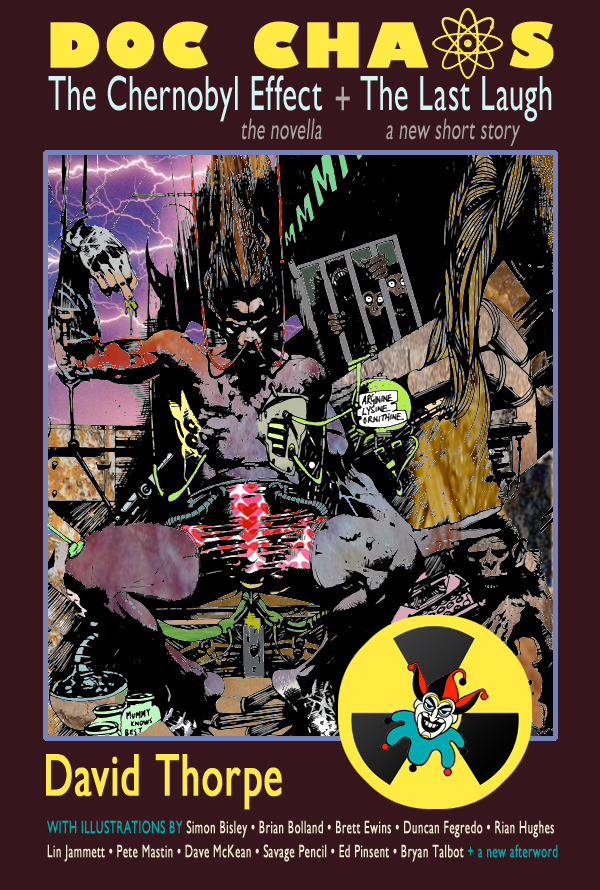
That's what I thought at the time and I still do. My response was to write my satirical novella: Doc Chaos: The Chernobyl Effect. Published by Hooligan Press in 1988 and illustrated by the finest of comics artists at the time, it was a great success in the independent publishing world.

Front cover
Back cover


I donated the proceeds to the World Information Service on Energy, which campaigned then, and still does now, against nuclear power. They provided an afterword to that edition.

Four years ago the story was published in a new e-book edition together with a new Doc Chaos short story, The Last Laugh.


I continue to campaign against nuclear power and was recently invited to join the Nuclear Consulting Group.

One of its members has published an article to coincide with today's anniversary, assessing the death toll of the accident, in which he reaches the not very surprising conclusion: "[Chernobyl] raises the vexed question of trust in governments and international agencies, which, for many people, does not exist or has been eroded after Chernobyl and Fukushima."

No kidding.

Who is Doc Chaos? He's the radioactive peddler. As he says in The Last Laugh:
"The first time around, I gave them the promise of cheap energy and a Cold War that must have saved millions of lives. The second time, I gave them low carbon energy, and prolonged their illusions by a couple of decades. I play the long game. Don't worry I'll be back."
How can you trust the authorities when they are so gullible to the peddlers of nuclear technology like EDF, who promise the world and either fail to deliver or spike your drink with caesium. then try to reassure you that everything is just fine.

Later, the good doctor muses:
"I am the smiling conman, the artful bodger, the devil spawn of Prometheus, the quantum Quixote, the quixotic salesman with the quack cure, the fast-talking, fusion-pushing fantassin of plenty, peddling the fantasy of foison forever. And they bought it.
"'Do you remember,' I reminisce wistfully, 'How I persuaded them that despite Chernobyl and Three Mile Island, and terrorists running around with truckloads of depleted uranium, that I could save them from global warming?'
We share a gentle chuckle as the shadows lengthen.
'Those were the best of days... Feted at high level conferences, brokering billion-dollar deals, shafting the anti-nuclear do-gooders, sweet-talking the politicians.'"
The last laugh – you've got to have it.

You can buy Doc Chaos: The Chernobyl Effect here

Is the end in sight for the Very Hungry Caterpillar?

Once upon a time, about 4,000,000,000 years ago, the world began, in the era called the Hadean. A very long time later came the human race, just 200,000 years ago, altering the planet forever as it spread.

From the beginning it's likely mums and dads told stories to their children, to preserve social memory and teach them what they needed to know to survive. These stories always changed over time according to need and circumstance.


It's suggested that we are now in a new geological epoch, the Anthropocene, that's to say an epoch overwhelmingly defined by the influence of one species over all other factors: ours. What influence, if any, is this having on the stories we give our children today?

Some of the writers on this website grew up reading stories published around or before the mid-20th century. This period is now being suggested as a likely candidate for the beginning of the Anthropocene, and this will be confirmed in a few months when the body set up to evaluate this (a working group of the Subcommission on Quaternary Stratigraphy, sitting within the International Union of Geological Sciences (IUGS), whose job is to set international standards for global geological time-scales), has finished sifting through the geological evidence for the start of the Anthropocene.

Since this epoch began, we have seen a vast increase in human population, from 2.5 to over 7 billion; an increase in mass extinctions; the deposition of nuclear isotopes around the world; and of plastic waste; climate change; massive destruction of natural habitats; mass resource extraction; and mass exodus from the countryside to cities.

This last represents the biggest change for children, since most children growing up now will not be near where the wild things are, but will be ringed by concrete, tarmac and cars.

This changes the way young readers will respond to the stories told just seventy years ago – even twenty years ago. When Rudyard Kipling wrote his Just So allegories, the rhinoceros, the leopard and the elephant weren't endangered.

Just So stories by Rudyard Kipling cover


When most meat for the table is battery-reared, a commodity in an industrial process, doesn't this turn picture books of farm animals in the farmyard into modern fairy stories?

Illustration for a Google farmyard app for children
Peddling nonsense to kids: an illustration for a Google farmyard app for children. What on earth has this to do with reality?

What are most children to make of forests featured in traditional fairy tales such as Red Riding Hood and Hansel and Gretel, when they've never seen a real one? Perhaps they will never have the opportunity to even read these tales because publishers will no longer see them as relevant. Has this already happened? I don't know.

Hansel and Gretel peer out of the forest at the house of danger
Hansel and Gretel peer out of the forest at the house of danger.

Children in recent decades were treated to cautionary tales warning them of the impending danger of the extinction of big mammals and the destruction of rainforests. The guilt of adults was laid onto them with the vain hope that, when grown up, they might work to prevent the inevitable. Yet today, most of the trends that trace biodiversity remain travelling in the wrong direction.

RainForest by Helen Cowcher

For children, tales of anthropomorphic animals offer the chance to objectivise human emotions and traits – but say little about the animals themselves. Tales of dark forests present opportunities to confront subconscious fears. Stories set in wild nature nurture a fantastic imagination.

But all three types of story at least place humans within the planetary context, a biosphere, an ecology within which we play just one part among millions.

The Anthropocene, if it is a useful concept at all, reminds us that we have tended to see the rest of the world as just a reflection of ourselves, there if not for us to plunder, then to entertain us, that we regard ourselves as the most important and dominant species on the planet. What hubris! What a change from the stories our distant ancestors and tribal people told their children, which nurtured respect for the wild world around them.

But if we are to save nature, and therefore ourselves, then we must first empathise with nature, on its own terms, not on ours. I've written before about some of the great books that do this.

But this post is asking a different question: are modern published books for young readers whose experience of the world is largely urban interiors, vehicles and digital entertainment now being set primarily in this world, because that is what they recognise? Or is a fake nostalgia for a way of life now gone (if ever there) being peddled by editors and publishers?

I wrote in my novel Hybrids about how we are becoming enmeshed with technology. Modern children, from the day of their conception, grow within a lacework of electronic connectivity, becoming quickly familiar with the means to extend their sensory and social reach to the far side of a world that they do not yet appreciate.


The system that they perceive to be supporting them is as much virtual as tangible, vibrating with the power of circuitry, translucent filaments of data threatening to fuse with their nerves and dendrils, seeming more immediate and visceral than the mesh of life itself – our perfect atmosphere, the churning soil, the miracle of life that is distant from the street, seen as just a thin strip of blue above and between the buildings, ragged pigeons squabbling on the windowsill, a windowbox.

Storybooks for young readers: should they then reflect this reality? Are they doing already? I don't know.

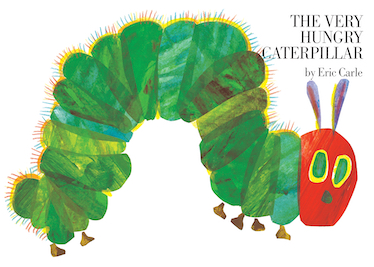
But if so, one can imagine a scene a few decades hence, in a warmer and more impoverished world: a child picking up an ancient, well-thumbed copy of The Very Hungry Caterpillar, found in a dusty box in attic belonging to a grandparent, and asking: "Mummy, what's a caterpillar?"


David Thorpe is the writer of the Sci-Fi YA novel Hybrids and the cli-fi YA novel Stormteller.

Monday, April 04, 2016

Goodbye house

When the childhood home is gone, a part of your childhood leaves too.

This month I have to clear out my parents' house ready for sale – the house I grew up in and which I have been visiting ever since.

With some help from my cousin and his wife, I clear out the patterns of family life that had accrued over 58 years. It is both physically and emotionally gruelling.

The bedroom I occupied as a child is, now, nothing like it was when I inhabited it. But the shades of those times have lingered.

Out of the corner of my eye, or in the dim twilight, I can watch the ghosts of our former selves going about their business, engaged in their familiar habits.

It is in the nature of habits to strive to live long after they are needed.

A house has its own habits: the timing and the manner of the closing and opening of curtains; the operation of doors and windows; the simple management of cookers and washing machines.

A child experiences these habits as the given scaffolding supporting its life, unquestioned. An adult maintains the habits without much thought.

As the possessions disperse from the house, as my father's paintings leave the walls and the furniture is lifted off the floors, their impressions remain, paler or darker shapes, the evidence of their former existence. Cobwebs and dust are revealed to admonish the change.

The rooms look bigger. Voices echo. The light is harsher.

The child within me wanders around the house trying to make sense of it.

He finds schoolwork and project work he had forgotten about. He sniffs his grandmother's compact case, kept all these years by his mother, and suddenly she is there again after thirty years, brought to life by the scent of her.

It's what happened in the house. All the good times and the not so good.

Collections of material are unearthed that once interested him. He wonders if any modern collectors would want them, rejects the idea and they are cast into the recycling pile.

Every object in the house is sifted and a spontaneous decision made: to keep or to abandon? The weight of responsibility feels huge.

It is not the objects themselves, but the stories they represent. It is not the house itself but the shifting pattern of relationships it reveals.

The stories of the objects are held in the minds of those who knew them and lived with them. They die when those people die. To anyone else, these objects are just objects, with no further meaning. To know the stories is to know the meaning of the objects.

I think of the antiques emporia and the car boot sales around the country which are full of such objects now bereft of their stories, that nobody knows any more. They are in search of new stories.

It's the good times I want to remember.

As I dismantle the house, I feel that I am murdering the stories that are embodied within it, one by one.

Here is where I first wrote and decided I wanted to be a writer. Here is where I sat up in bed late at night, scribbling in my notebooks.

I would read by torchlight under my bed clothes when my parents thought I was asleep. Look: here is the space where my books and comics collection once lived.

A new family will live here. I've met them. There is a 12 year old girl. She is very bright.

When it emerged that I was a writer she was very interested. I gave her my last novel, Stormteller, and she began reading it straightaway.

She will create her own stories in this house. She will read late at night under the bed clothes.

Who knows? Perhaps she will become a writer too.

Perhaps that is the real habit of this house: to nurture writers.

Goodbye, house.


David Thorpe is the writer of the Sci-Fi YA novel Hybrids and the cli-fi YA novel Stormteller.

Tuesday, January 26, 2016

The Call of the Wild

An argument in eight parts:

1.

January is the time of year for soul-searching questions about one's life in the future, yet questions like these are asked constantly by teenagers all the year round: Why am I here? Why am I not more popular? Why am I not more beautiful/fit/clever/likeable? How will I pass these exams? How can I bear to go to school tomorrow knowing that those people detest me so much? What can I do about my enemies? Why does nobody understand me? Why am I so alone?


2.


Things get too straight
I can't bear it
I feel stuck, stuck on a pin
I'm trying to break in
But I know it's not for me
And the sight of it all
Makes me sad and ill
That's when I want - some weird sin
Just to relax with
Yeah, some dumb, weird sin
For a while anyway
With my head on the ledge
That's what you get out on the edge.

 Some Weird Sin – Lyrics by Iggy Pop


The song describes the feeling of alienation, when all the choices available to you are no good. The pressure's too much, you need an escape, a way out, otherwise you will explode.

What could it be?

3.


Self-harm, eating disorders, poor mental health, suicidal feelings, porn addiction, the huge obesity problem, alcohol and drug abuse, mobile phone/screen addiction. The list goes on. Pressures on children and teenagers are greater than they ever have been. The effect of this is seen in statistics on the increasing prevalence amongst children and teenagers of damaging behaviour.

In a UNICEF study released in 2007, the UK came bottom of a list ranking industrialised nations in terms of child wellbeing.

Yet despite all of this, many youngsters still courageously manage to achieve higher grades than ever before and are opting for healthy diets.

But whichever choice they make, the need for an escape is crucial when children and teenagers feel powerless and under pressure, as they too often do.

Where can they go?


4.


"How has childhood become so unnatural? Children are enclosed indoors, caged and shut out of the green and vivid world in ways unthinkable a generation ago.

"[Seeking the answer to] the riddle took me to the spirit of childhood... the importance of woodland for the psyche; the secret world of a child's soul where the stories of childhood are whistled with a deft and fragile panache of poetry."

– from Jay Griffith's introduction to her incredible book about childhood and the need for the wild, of which Philip Pullman said: "Kith could have been written by no one but Jay Griffiths. She has the same visionary understanding of childhood that we find in Blake and Wordsworth. Her work isn't just good - it's necessary." (It's also published as A Country Called Childhood.)


5.


"I used to love reading to my children at bedtime. The song about Mike TV's fate in Charlie and the Chocolate Factory was a favourite. In it, Dahl vents his wrath on the hated television: 'They sit and stare and stare and sit until the hypnotised by it.' ... What would Roald Dahl think now?

"The need to be close to nature is in our DNA... Wildlife Trusts work with many children to reverse the trend of young people not having access to the wild: in schools, in parks, in wild places. A wild childhood is good for health, well-being and nature. We want every child to be wild."

Stephanie Hilborne, Chief Executive of The Wildlife Trusts in her editorial in the latest issue of the publication Natural World. (Coming events for children are listed here.)


6.


If you are a teenager, what do you think about when you're lying in bed trying to sleep? What kinds of thoughts go round and round in your head when you are waiting in queues, walking, commuting? Would they be your worries, your troubles, the demons of self-doubt? How can you avoid their persistent nagging?

One way that is not self-damaging is to escape into stories you are reading. You imagine yourself as the protagonist of a great adventure, misunderstood, vilified, ignored or even obstructed by authorities, but determined to overcome every obstacle with your special powers to achieve success. So much more empowering, distracting and fun than to be dragged down into the dark, hopeless swamp of your own psyche.

Some of the children doing this may even make up their own stories and become the writers of tomorrow.

The Awakening of Childhood Heroes by Charlotte Soileh

7.


When I am lying in bed trying to sleep, or when I am waiting in queues, driving, cycling or commuting, I spend hours solving the problems that my writerly life has set me: problems of plot, research, character, tone and structure. If I did not do this I do not know what would occupy my mind except the interminable, grotesque treadmill of self-doubts.

And when that fails, too, you can find me in the woods at the end of my garden, in the hills, by the sea.

In the wild.

Me kayaking in the stunning Mawddach Estuary
This is why I wrote The One Planet Life and why my kids grew up in and love the Woodcraft Folk.

8.


“There is an ecstasy that marks the summit of life, and beyond which life cannot rise. And such is the paradox of living, this ecstasy comes when one is most alive, and it comes as a complete forgetfulness that one is alive.

"This ecstasy, this forgetfulness of living, comes to the artist, caught up and out of himself in a sheet of flame; it comes to the soldier, war-mad in a stricken field and refusing quarter; and it came to Buck, leading the pack, sounding the old wolf-cry, straining after the food that was alive and that fled swiftly before him through the moonlight.”
― Jack London, The Call of the Wild


David Thorpe is the writer of the Sci-Fi YA novel Hybrids and the cli-fi YA novel Stormteller.

Monday, January 11, 2016

In Memory of David Bowie

Bowie
David, I loved you so much.

He was the chameleon
Changed with every day
He was the one I liked to remind me of
He dreamed himself up, came from Mars
Fell to Earth with a Venusian woman
Sold us the World and made it his home
And we all fell in love
With Aladdin Sane and the blinding white Duke.

The odd eyes had it, Supercreepy
He uplifted us, we were all Stardust
We only danced Outside, lovers by the Wall.
He sped through life, not all Hunky Dory
Low times hit, we were scared by the Monsters
The stranger from suburbia became a Young American
Reality rusted the Tin Machine
Post the Last Day it's Ashes to Ashes

But Major Tom orbits on.

Sunday, January 03, 2016

We need more writers who can make us feel

In November, fellow author Dianne Hofmeyr posted her response to the Paris terrorist attacks with a picture of bicycle locks.


The repercussions of the attacks led to the following Sunday's planned marches about climate change in the city being banned.

The organisers of the march instead asked people to place shoes where they would have marched. This led to the following image, one amongst many photographs that were taken on the day.
“The shoes are marching for us” @nicoleghio via Twitter
In the context of the loss of life caused by the terrorist attacks the sight of these empty shoes takes on an added poignancy.

Children and teenagers were either directly or indirectly affected by these attacks. Children and teenagers are also affected by the war conducted by and against ISIL. They are affected by climate change too.

To say that writers and artists cannot address social issues like these in their work is pointless. Social issues affect children in as many ways as they affect adults but children lack the conceptual apparatus to contextualise and understand them.

Both of the above pictures remind me of artwork by Ai Weiwei that I saw at his Royal Academy exhibition, which I visited after I went on the climate change march in London in December.

For example this piece contains hundreds of steel reinforcing bars, straightened after being mangled and twisted in the Sichuan earthquake of 2008, the number of bars corresponding to the number of victims, whose names are listed on the wall behind.


And, continuing the bicycle theme begun by Dianne Hofmeyr, this is a chandelier made from bicycles:


In all cases, repetition serves to reinforce the message, adding weight to the impact.

There was controversy surrounding the choice of David Almond's novel A Song for Ella Grey for the Guardian children's fiction prize, just as there often is for the Carnegie Medal children's book prize, because the winning books frequently address social issues.


Anyone who thinks that books for children that address social issues should not win literary prizes does not appreciate what it is like to be a child these days.

Whether directly – at home, on the streets and in the playground – or indirectly – on their screens – children are exposed to violence, drugs, crime, sex, exploitation, commercial pressures, manipulation, pollution, ugliness, danger and a whole Pandora's box of other pressures.

What should children do?

Most children strive to understand what they are experiencing. Unfortunately they don't always get the opportunity to discuss what is troubling them with either their friends or adults.

At least if they see that writers and artists are addressing these issues, this can help them think about them in new ways. They can find catharsis by empathising with stories that make them cry and laugh. Reading these books can provide a jumping off point for discussion too.

Children, and teenagers especially, worry more than anything else about whether what they are experiencing in their minds is "normal" or if there is somehow something wrong with them.

Again, art and books can help them to find an answer.

Even in fantasy and so-called escapist fiction, true to life characters can be found who struggle with problems that their readers can and do relate to. Often it's easier to relate to characters in fantasy novels or films, because they are removed from close-by reality.

At the rally in Westminster at the culmination of the climate change march, the enlightened organisers put poets and singers on the bill. But of course.

It was incredibly moving to see and hear Kate Tempest reading her new poem ‘Europe Is Lost’. Hundreds of young people were there to hear her. It actually made me cry. She is a poet for the new generation.

pic from @KateTempest

Almond's books move me too. His latest is a retelling of the myth of Orpheus and Eurydice. Orpheus was the greatest poet of his time who had to suffer enormous loss in order to find poetic truth. It is probably my favourite myth.

Now, more than ever before, we need writers and artists to articulate what we feel.


David Thorpe is the writer of the Sci-Fi YA novel Hybrids and the cli-fi YA novel Stormteller.

Monday, December 21, 2015

Wishing you the very best for the festive season

2015 has been a significant year for me and for my company, Cyberium. I began by continuing to promote my two books that had been published at the end of 2014: Stormteller, the cli-fi novel for teenagers, and The One Planet Life, the big book of everything about how to lead a sustainable lifestyle. The highlight of this was two appearances at the Hay Literature Festival. 

During the year I completed or contributed to four more non-fiction titles: 
  • Pocket Reference books on Passive Solar Architecture and Solar Energy, to be published in 2016 by Routledge
  • Best Practices and Case Studies for Industrial Energy Efficiency Improvement, An Introduction for Policymakers, with Steven Fawkes and Kit Oung, to be published soon by the United Nations, and
  • a free ebook, Green Bonds and Property – just published and which you can download here. Do you know how many billions are going into these bonds?
I also completed a new novel, Till The End of Time, which hopefully will see the light of day in 2016. 

New clients include Australian publisher The Fifth Estate and work supporting the Environmental Defense Fund's Investor Confidence Project on energy efficiency. Inspiring new partnerships include with Tina Perinotti in Sydney, Australia and Clare Taylor in Brussels. 

Cyberium spent the first half of the year working with the Sustainable Cities Collective but I was sad to have to say goodbye to them. We continued supporting the work of the One Planet Council and working as a member of the Cambria Publishing Co-operative.

On the web front, Cyberium completed several new websites for existing clients, and the big success and privelege was to help Awel Aman Tawe, a community windpower co-operative, with a public share issue that exceeded expectations, realising £721,000. Our role was the web, online and social media work. You can still buy shares with estimated 7% interest here until the end of January. What are you waiting for?

We look forward to continuing our successful relationship with you in 2016. Have a truly sustainable year, help to build on the success of the Paris Agreement, and remember: 

With imagination we can change the world!

Friday, December 11, 2015

At last! A Welsh Branch of SCBWI!

I am pleased to announce the formation of a new Welsh chapter of the Society of Children's Book Writers and Illustrators (SCBWI – known affectionately as Scoobies).

For anyone who's been off-planet for a decade, SCBWI is a great international membership organisation that provides support to lots of creatives who are starting out in this field, as well as to many have been around for awhile. It's launched quite a few careers as well as some great friendships. A more supportive crowd of people you could scarcely find anywhere.

There hasn't been a Welsh branch for a while, the main problem being the huge geographical spread of the country. It's not that there is a dearth of creatives in the land of the bards, but it can take over three hours to get from one end to the other.

And many of us are salted away in the hills scribbling in secluded valleys or wandering (and wondering) pensively on deserted beaches and mountaintops. The spirit of Taliesin pervades the landscape, and myth and magic abound (even in Port Talbot!).

About seven years ago I tried to start a Scoobie branch here, when I lived in mid-Wales, and we met two or three times, but holding it together was difficult because of the travel times. Out of it grew, if memory serves, the Dragontongue blog, which merged with the Awfully Blog Adventure about four or five years ago? (Correct me if I'm wrong.)

I moved to near Swansea about four years ago and since then a few new members have joined who happen to live in various parts of South Wales.

So at the moment it's mostly South Walians (Hwntws – as opposed to the Gogs of North Wales). Who knows, maybe another branch will form in North Wales?

[Using the word 'branch' brings to mind the four branches of the Mabinogion, that collection of ancient Celtic stories from the oral tradition of Wales. Kind of appropriate, no?]

As a group we've only met three times so far, and I don't pretend to speak for the group here. The Facebook group has 12 members and at the last meeting we celebrated the fact that Claire Fayers had received an advance copy of her new swashbuckling magical pirate story that unfortunately will not be published until next summer – in separate editions in America and the UK. That's a shame because we all wanted to get hold of a copy straightaway it looked so exciting.

Claire was in the SCBWI Undiscovered Voices 2014 anthology and was snapped up by Gemma Cooper of The Bent Agency. Well done, Claire. It just goes to show how effective the network is.

We, the south Welsh branch, are making links with the English SouthWest group and hope to meet up with Candy Gorlay in Swansea soon.

If there are other writers and illustrators in Wales reading this, I encourage you to join SCBWI and get in touch with the network organiser Marie Basting.

Tuesday, November 10, 2015

If 80% of 'Young Adult' books are bought by adults, should we keep the label?

Did you know that 80% of Young Adult (YA) books are bought by adults? Why do you think this is? And what does this mean for the future of this label, for publishers and readers? As a writer of books for young adults, who has just completed what might be described as a young adult/crossover novel, this subject interests me intensely.

Some fascinating insights into children's book reading habits and book sales were recently revealed by market research company Nielsen Books at its second annual Children’s Book Summit at Convene, NYC, on September 15. Before moving on to a discussion of the YA label, here are some key other points:

BOOK SALES UP: For the time period between January 2014 to September 2015, children’s book sales were up 12.6% in the U.S., 28% in Brazil, and 10% in China, with 11 of the 20 bestselling books in the U.S. being children’s titles.

TABLET READING AGE DOWN: The spread into households of tablets and other digital devices has meant that children start reading e-books from the age of five, rather than seven previously. And, children from as young as a year-and-a-half are using tablets and engaging with content.

PRINT BOOK SALES UP: But this does not seem to be harming the sales of printed books: board book sales have grown by 20% over the last three years. Only 10% of children's books were e-books compared to 19% of all books in the last quarter of 2014.

MANY YOUNGER READERS SEEM TO PREFER PRINT OVER DIGITAL: There was speculation over why: Kristin McLean, Nielsen Book’s Director of New Business Development, said: "Partly they like to share them. Teens also like to carry books around, show off what they’re reading. Partly because [print books are] easier to get without a credit card, they like to use the library."

THERE ARE INTERESTING VARIATIONS AROUND THE WORLD: Mostly children's book publishing takes around 34% of all book sales on average around the world, a striking exception being in Australia and New Zealand where it is almost 50%. (What that says about adult reading habits is not mentioned, although it is mentioned that print sales of adult fiction and non-fiction have dropped in the US while the juvenile market has concomitantly grown 40% in the last decade. It's the categories of religion, today's and non-fiction that have seen the greater increase in sales and surprisingly e-books are down 14% this year so far.

WOMEN ARE THE MAIN PURCHASES OF CHILDREN'S BOOKS: no surprise there.

MORE BOOKS ARE BEING BOUGHT ONLINE: With the demise of the Borders chain, sales in chains generally are down too. Sales from independent bookstores are stable but sales from school book clubs have increased.

5-8 IS THE BEST SELLING AGE GROUP: The most important age group for children's books in terms of market share was 5-8, accounting for 38% of sales to all children.

The Curious Case  of the Young Adult Label

Then the event came to the topic that interests me most. As we found out, rather surprisingly, earlier this year, a staggering 80% of all YA books that are selling are not being bought by teenagers but by adults.


To find out why this is happening, Nielsen asked a panel of eight adult consumers of young adult novels. They "seemed to suggest that the YA label can be limiting", they reported. YA isn't a genre, it's an age designation, so it doesn't help to say what the book is about.

But one member of the panel, a mother of two teenagers, said it was a useful label when trying to identify books that were appropriate for her children.

Many of these readers come across the books in bookshops, attracted by the cover design, or by hearing of movie in TV adaptations, through the Internet via GoodReads and twitter.

They overwhelmingly prefer fiction. And, their motivation for reading is that they enjoy getting into the character's head and growing along with them. One panellist said the YA label should be changed to YAH – Young at Heart. I find this patronising. I don't think it will catch on!

But the fact that she said this is illuminating. It tells us why older people are reading books for teenagers: they are still asking the questions and trying to understand the changes that are supposed to only happen during teen years. Maybe what it says is that we never stop growing up, contrary to how we are supposed to feel as adults.

Nielsen also brought along a panel of suburban teenagers who also had something to say about the label YA, namely that they don't take much notice of it because it doesn't say what kind of a book it is. Instead they are definitely attracted by movie releases when choosing what to read, as well as the Internet and Amazon's suggested books feature and Wattpad.

So where does this leave YA? I don't think it's going to go away any time soon, since it does help books to reach a market. But if we write is no most of our readers aren't even going to be teenagers but older, this should liberate us to write about more adult subjects and help us be less reticent about using certain kind of language. In other words, we can let our imaginations go further.

I very much like this idea.

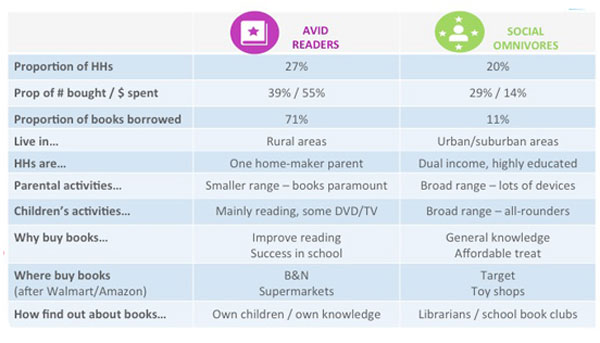
Below, find some more infographics from the presentations.

How readers find books:


David Thorpe is the writer of the Sci-Fi YA novel Hybrids and the cli-fi YA novel Stormteller.

Friday, September 11, 2015

Writing for TV: The Market for SF/Fantasy is Stronger Than Ever

This blog is usually addressed at writers of children's books but there are other markets for children's writers, such as comics, graphic novels, television and film which are worth considering.

This month I did a short survey of the state of the market for science fiction and fantasy television series for the producer optioning my own SF book, Hybrids for tv. I looked at series that were not necessarily just for children, but many of which may be watched by young people, that are on our screens this year or in development up to 2017. (Of course just because something is in development does not mean it will be produced or reach the screens, but even so writers may be paid to produce scripts or plots.)

I was astonished to find over 60 series in this SF&F category alone. The market has expanded hugely as television has become more international and companies like Netflix and Amazon enter the market, and I feel very encouraged by this.

Of these 60+, around half are adapted from books: 12 from the UK and 21 from the USA. Six are adapted from comics, continuing the trend of taking Marvel and DC characters to small screens. They include X-Men, Daredevil, Supergirl and Luke Cage.

Many of you might have seen Tatau, an eight-part paranormal series for a younger audience for BBC3 set in the Cook Islands and New Zealand, written by Richard Zajdiic, who got his tv break writing for EastEnders, then moved onto This Life and Attachments, an interesting series about an Internet start-up that was developed by the brilliant veteran scriptwriter Tony Garnett and was probably ahead of its time.

Richard gives his own advice for writers who want to break into the market:
"It's not just about talent. Luck is a huge factor too - being in the right place at the right time - so perseverance and tenacity are equally important. Remember, it's a marathon not a sprint. Hang on in there and hopefully you'll win one eventually.
"There are so many factors in getting a show made, let alone recommissioned, most of which are totally outside your control. I've had several development scripts praised by all parties involved, even one where the director (Peter Kosminsky, no less) was scouting locations and sending me pictures of where he was going to shoot my scenes but then, crushingly, the coveted green-light somehow failed to materalise. I also wrote on the prison drama Buried which won a BAFTA for best drama series and gained widespread critical acclaim. Channel 4 cancelled it. Go figure."
Anyone who is in this business needs perseverance. Life On Mars was rejected for years by all the channels before finally being resurrected. There are plenty of resources out there, the principal one in the UK being the London Screenwriters Workshop (which I helped to get going a long time ago) and the London Screenwriters Festival.


Tatau: Kyle (Joe Layton), Aumea Vaipiti (Shusila Takao) BBC/Touchpaper, Photographer: Kirsty Griffin

Historical fantasy is popular in the wake of Game of Thrones and the BBC’s adaptation of Susanna Clarke’s Jonathan Strange & Mr Norrell. It is being further capitalised upon big time by the BBC with three series:

  1. a historical eight-part series The Last Kingdom, from the creator of Sharpe, Bernard Cornwell; 
  2. The Living And The Dead, an original period horror set in 1888. Both of these have been developed in partnership with BBC America for the American market;
  3. and World's End, in which a group of children from diverse backgrounds are taken to a mysterious remote Scottish castle which houses a secret army research centre for an unknown purpose. This is written by Danny Spring and Diane Whitley.

ITV is not being left out with The Frankenstein Chronicles, a six-part series being made for ITV Encore following in the wake of Penny Dreadful.

Children's writer Charlie Higson (best known for the young James Bond) continues the classic horror theme with a 10 part version of Jekyll & Hyde to be set in the 1930s. Robert Jekyll is the grandson of the original doctor. It will begin screening on ITV in October.

[While we're on the subject, did you know that Anthony Horowitz was offered the chance to write that Young Bond series and turned it down? Never mind, he's since been picked to update another classic character, Sherlock Holmes and to write The House of Silk and Moriarty, and a new Bond novel Trigger Mortis, to be published later this year.]

Mary Shelley's richly resonant and prescient novel Frankenstein also inspires another series called The Frankenstein Code, that's being developed by Michael Cuesta for 20th Century Fox television and written by Rand Ravich and Howard Gordon, set to air next year. However it actually has little to do with Frankenstein apart from the fact that a corrupt sheriff is brought back to life in the body of a younger man.

The BBC has a kind of Humans for children, a gentle comedy about a family who have to share the house with the world's first fully sentient artificial person, called, with a stroke of originality, Eve. It's written by David Chikwe amd Emma Reeves.

There are quite a few comedy SF dramas. The one I'm looking forward to most is Tripped, a four-part comedy drama for E4 from the writers of BBC crime series The Missing, Harry and Jack Williams, adapted from an E4 pilot titled Alt, written by Doctor Who's Jamie Mathieson. It features a lad called Danny and his stoner friend Milo, who trip through alternate worlds, meeting different versions of themselves.

Dystopian drama tends to be crossover: both adults and older children like it. The theme is expressed by another series of Charlie Brooker's Black Mirror, Legends of Tomorrow, a kind of retro futuristic story about a ragtag group of heroes and villains trying to prevent the Apocalypse, Programmed about aliens taking over the human race, one actually called Dystopia about a virus that has rendered mankind infertile, plus several more, but apart from Black Mirror it feels like scraping the barrel.

Two dramas address the 'what if' idea of Nazi terror still being around today: Timeline Alpha and the probably much more interesting adaptation of another novel by the infinitely exploitable Philip K Dick, The Man In The High Castle.  I can't wait to see this 10 episode alternate history, having watched the pilot shown in January, that is being released on 20 November from Amazon Prime Instant Video, and is executive produced by Ridley Scott.

There are so many more, but I can't sign off without telling you about something you will no doubt have missed, so bad was it: a Christian science fiction series recently aired on the The CW Television Network that was apparently deliberately contrived to influence children. In The Messengers the devil (in the form of The Man) turns five normal people into angels with supernatural gifts that might be the only hope for preventing the impending Rapture. The storytelling was so convoluted and confusing it has, I'm very sorry to say, because it was so much fun to watch for all the wrong reasons, not been recommended for a second series.

At any rate, what's for sure is that the hunger for science fiction and fantasy is stronger than it has ever been. Good news for the prospects of Hybrids at any rate.


David Thorpe is the writer of the Sci-Fi YA novel Hybrids and the cli-fi YA novel Stormteller.

Tuesday, September 08, 2015

Help the world to read on International Literacy Day!

As it is International Literacy Day I thought I'd share this infographic with you, and use it to support this organisation: Firstbook.org, which donates books to children in need. Literacy is a door-opener to wondrous worlds of possibilities, both real and imaginary. I can't imagine not being able to read, and yet 757 million over-15s around the world are illiterate. Please support them.

  Literacy Day

Credit for the graphic: Grammarly.

Friday, August 07, 2015

Using Suspense to Mess With Narrative Structure

So how do you make suspense work?

I'll tell you later.


cheeky grin emoticon

First, the necessary info:

The #MSWL tag on Twitter stands for "manuscript wish list" and both agents and editors use it and the related website to alert writers to what they are looking for. It is extremely useful and greatly simplifies the process of manuscript submission and selection for both sets of actors.

Now, a flashback:

The other day, when I was monitoring the wish lists for manuscripts aimed at older children, teenagers or young adults I was struck by the number of requests for novels that had an unusual structure or played with the traditional narrative form, or even had unreliable narrators.

Why should it be that editors and agents think that readers in the age range from older children to young adults are looking for something other than stories with a traditional structure of beginning, middle and end, in that order? Perhaps they have had enough of such structures already in their short lives, or perhaps there is something else?

Writers nowadays have to compete with a plethora of other media – films and streaming television, Instagram, YouTube and video games – to grab the attention of teenage readers, who are hungry for an immediate hit and possess a comparatively short attention span.

Diving into the story at the deep end is one way to do this.

The traditional structure means that in act one, known as the set up, the writer takes the time to introduce the context and the characters before coming to the main problem which the protagonists has to solve. Several writers, including myself, on this blog have written about it before.

This takes time and maybe modern readers don't have the patience to plough through all this. They want to cut straight to the chase.

One way around this problem which writers frequently use is to open with a prologue containing high action that is either part of the back story or a flash forward (e.g. the Young Bond stories written by Charlie Higson) before  commencing act one. (This is a device often found in early Spielberg films such as Raiders of the Lost Ark.)

The disadvantage of this approach is that you still have a slow pace in act one. Modern readers are wise to this and the risk is that they may lose patience. For these readers there must be either almost constant drama or humour depending on the genre to keep them hooked.

Yet from time to time as storytellers we have to give the readers information such as descriptions of characters, places, and other incidental but necessary plot information. So how might we be able to do this while playing with traditional narrative structure? Conveying this information can slow the pace unless it is deftly mixed into the narrative flow like adding seasoning to a dish.

When the information is what would have been in the set-up it will seem like a flashback. The flashbacks are dropped into the main chronological sequence to add relevant backstory on an ongoing need-to-know basis.

Now writing courses will tell you that flashbacks slow the pace, but that isn't necessarily true. The key to good storytelling is to maintain the suspense, to get the readers turning those pages. What if we use flashbacks in order to keep the suspense going for longer?

Let's say you're telling a friend about something exciting that happened to you. Some way into your story you realise that they won't understand who a certain character is who has appeared on the scene, so you have to spend a couple of sentences filling in who they are. Then you pick up your narrative.

The listener will be grateful because it helps them understand what's going on but they will keep listening because they know they are going to find out what happens next pretty soon. It's the suspense that lets them do this. Of course if you spent too long telling the life story of this person they will end up forgetting where they are in your main story, or lose interest and walk away. So you keep the insertion as long as it needs to be and no longer.

So the storyline reaches a cliffhanger, which doesn't have to be a big deal, just something you know will make the reader pant a little to find out what happens next, then you drop in the flashback. The more of a deal the cliffhanger is the longer the flashback can be. All the time they're reading this they're also wanting to get to where the storyline picks up again.

That's the key to this form of playing with structure.

So how do you make suspense work?


Told you I'd get to it.

Suspense works on different levels of timescale. A short timescale may be, say: what is behind this door? Will the prisoner reveal the answers to the questions being demanded by their captor? Will the boy tell the girl how he feels about her? The longest timescale for suspense in your story is the one set up near the beginning that you resolve at the end. In between there are other ongoing questions being set up and resolved (or not) over different timescales, not just in your main narrative but in any subplots.

When looking at your structure you should be particularly aware of all of these suspense elements.

Here is a metaphor to illustrate this idea. Imagine a guitar fretboard.

fretboard


At one end is the beginning of your narrative and the other end is the conclusion. Each fret is a plot point – the tension rises and the pitch gets higher as you move along the fretboard. All of the suspense elements in your book are like rubber bands stretched between nails hammered into the fretboard. (Please don't spoil a real guitar by hammering nails into it!)

These suspense elements (rubber bands) will overlap: some will be short and some will be long. The more you have and the more they overlap, the more of a page turner you have.

So, at each point in your narrative, on every page, you can ask yourself the following questions for each of the narrative strands:

  1. What does the reader know?
  2. What do they want to know?
  3. When shall I tell them?

This will allow you to keep track of the suspense elements.

Okay, armed with this information we can go back and look at the structure of your book. Where are the moments of heightened drama? To keep high both the tension and the attention of the reader, you would need to keep these high drama moments coming thick and fast. But after a high point the reader needs to catch their breath. This is when you can insert the flashback containing the necessary back story information that the reader needs in order to make sense of what's going on.

Of course if these scenes themselves contain drama, so much the better.

This is just one way in which you could scramble the narrative structure. But whatever method you choose there needs to be a good dramatic reason for it, perhaps linked to the journeys of your main characters. It should not be arbitrary.


David Thorpe is the author of YA speculative fiction novels Hybrids and Stormteller.

Friday, July 24, 2015

When YA Books Tackle Heavy Stuff


This month I was lucky enough to take part in the first panel discussion session to be held on climate fiction at the Hay Festival (or perhaps at any litfest?). Also on the panel were YA writer Saci Lloyd (third from left), and an expert in communication on climate change, George Marshall (right). The panel was convened by Jane Davidson (second from left), who's responsible for sustainability at one of the main Welsh universities, Trinity St. David's.

Saci is the author of The Carbon Diaries 2015 (written in 2007) and 2017 (written the following year). She discussed how she felt about writing about the year she is now living through... Which although not exactly as described in her book, is prescient in some ways.

In front of an audience of about a hundred, she related how she's been talking in schools and to other gaggles of teens for 10 years about climate change. "Compared to superheroes or music it looks to them at first as a pretty dull subject, but I've learned that the best way to get my message across is to be passionate, completely committed. Gradually they move from being apathetic to – 'What? Why didn't we know any of this!'"

We discussed why we feel the need to write about climate change in fiction for teens – basically, because it's hardly taught in schools. "If you do geography or science, then you might touch on it," said Saci. "But it's not a core subject, so it's quite possible to go through school and come out the other end not knowing anything about climate change."

There's nothing wrong with using fiction to talk about heavy subjects. Children's writers have been doing this since Charles Kingsley wrote The Water Babies about child chimney sweeps in 1862 (which I was given to read as a children's book when I was about six!). Yet when I said as much to the audience, my words got picked up by a young Daily Telegraph journalist sitting on the front row and turned into a headline in the following day's printed version of the paper: "Climate activists: 'We must infect children's minds'".

That headline was deliberately a come-on. To start with that first noun should have been singular! But the article itself is ok, although obviously a lot more was said. They quote me as saying that I like writing for teens because:

"They are asking all sorts of questions about how the world is working. Their minds haven't been tainted by ideological bias, they are still open minded about it.
"You can try to be seriously subversive and try to infect their minds with these viral ideas that they can explore on their own to make it exciting. When I was that age I loved having my mind boggled."

I stand by what I said, although I was speaking playfully – tongue-in-cheek – but naturally I also said a lot more (and so did the other three), and when talking about ideological bias I was referring to what George Marshall had said previously about the research he had done showing that adults generally only give credence to arguments put forward by others with whom they share the same ideological bias.  Usually children's minds are a lot more open and enquiring.

Perhaps the Telegraph is not used to the fact that writers for young adults often deal with heavy subjects, and we do so for a number of reasons, and not just because they are not covered adequately at school. We also write about them because children need to read about things that are bothering them, especially when nobody else is talking about it with them, because they're asking all kinds of questions about what they see around them, and because we want them to continue to enquire, to take nothing for granted, and to seek out answers of their own. At the same time hopefully we're telling a good yarn ("boggling their minds" as I put it).

With the predictable inevitability of the Internet, the deliberately sensationalistic bias of the headline was soon picked up by the nutters and climate sceptics who lurk as trolls on the 'net. The next thing I knew I was being accused on Twitter and certain websites of corruption of minors, child molestation and even, in one tweet from fundamentalist Jewish organisation, of being Hitler. All over the course of three days, which just goes to show the truth of Godwin's Law, written as long ago as 1990, which says that any Internet argument will inevitably lead to somebody being accused of being a Nazi.
It was up to the Telegraph's environment editor, Geoffrey Lean, to put things right three days later with a more balanced article, suggesting that in fact there is a lot of common ground between those who believe in climate change and think something ought to be done about it, and those who don't. This, however, does not justify the paper itself deliberately stirring things up and giving plenty of space to a certain climate sceptic well known for his deliberate misrepresentation of science. No wonder people are confused.

And no wonder we need to write stories which attempt to tackle this heavy stuff from a different angle.

David Thorpe is the author of cli-fi YA fantasy Stormteller and the YA SF Hybrids.

Monday, May 11, 2015

I'm at Hay-on-Wye Literature Festival this Month - Come See Me

I'm very excited because this month I am to achieve a long-time ambition of being on stage at a literary festival. Not just any literary festival, but Hay, and not just once but twice! I'm not at all nervous, no.

Both events are part of the festival's 'green' strand.

The first will be about my new non-fiction book The One Planet Life where I will be in conversation with Jane Davidson, director of INSPIRE and a fellow patron of the One Planet Council.

The second will be to do with children's writing and climate fiction, where I will be joined by Saci Lloyd, Jane, and climate change campaigner George Marshall. I hope other members of the Facebook group of cli-fi authors will be there, too.

Saci, plus other cli-fi authors, took part in a week of activity on the Guardian's children's books website last month about writing about ecological and environmental matters for children, culminating in a Twitter chat [#GdnEcoChat] on the evening of World Book Night with Frank Cottrell-Boyce, Kate Kelly, Sarah Holding, Tony Bradman and others.  The Guardian's record of it is here.

One of the questions that was asked was: is cli-fi just a passing fad? My answer, which was favourited a few times, was: 'NO! We've only just begun! One day all books will contain an element of cli-fi. They'll have to.'

It's now recognised by almost everybody that climate change is real and happening and caused by human beings burning fossil fuels. Any story that is set in the future which paints a picture of a world that hasn't been affected by climate change in one way or another will just look daft, especially if read in a few years' time.

It doesn't have to have disasters in it, it doesn't have to be a dystopia and it doesn't have to be science fiction. The lives of any characters, whether living 10, 50 or 200 years in the future, will have been affected in one way or another, whether it is how they get about, what the technology is like, what their home is like, or where they live.

I usually write about the near future. Stormteller and Hybrids both take current trends and extrapolate them, but the former is almost exclusively cli-fi and the latter only contains one tiny nod to it: a description of a swollen River Thames in London.

The novel I'm writing now is set in 2089-2104 and, while it is not about climate change at all, I still have to describe the ways that people get about (in their self-driving electric cars, rapid transit buses, or high-speed trains), the buildings that people live and work in (where attempts have been made, successfully or not, to retrofit them to save and/or generate electricity and to bring nature back into cities), the food they eat and where it comes from, the energy they use (all kinds of renewables), where the coastline happens to be (usually not where it is now) and what has happened to former seafronts.

This is a radical reimagining of life. It's neither dystopic nor utopian, just looking at how life and society might have to adapt in one way or another.

In this election there has been little talk of climate change, but all of the main parties (even UKIP, but with the striking exception of the DUP) recognise the huge contribution the low carbon or clean technology sector already makes to the UK economy, employing as it does close to one million people. Inevitably this contribution will continue to rise. Some parties (LibDems, Greens) attach more importance to the way that green jobs can make life better and improve the economy generally. It's a win-win-win scenario.

Yes, predicting the future is notoriously difficult, but the predictions about climate change have, ever since 1993, been consistent in saying that a certain list of impacts is likely to happen; exactly when is less certain.

We also know that human nature tends to leave everything to the last minute, only responding to disasters when they are imminent or actually happening.

Put the two together and you begin to get an idea of the way things might go; except that climate change is not one disaster but a whole succession of transformations with all sorts of ramifications that will continue for the next few centuries.

In the past, quite a few writers who have tried to predict the future have found life imitating art, such as Ray Bradbury's description of “little seashells… thimble radios” that brought an “electronic ocean of sound, of music and talk and music and talk” in Farenheit 451; John Brunner’s description of electric cars powered by fuel cells and Detroit as an abandoned wasteland in Stand on Zanzibar; tablet computers in Arthur C Clarke's 2001: A Space Oddysey; Google Glass type goggles in Willliam Gibson's Neuromancer; not to mention ubiquitous people watching (CCTV) in Orwell's 1984.

Not written for kids? Actually, almost all of these books I read as a teenager.

I will leave you with two thoughts: encouragement to contemporary writers not to ignore developments that are consistent with a world predicted by climate science, and the infographic below that I discovered, which records many predictions made by writers that have come to pass.


David Thorpe is the author of cli-fi YA fantasy Stormteller and the YA SF Hybrids.